Showing posts with label afghanistan. Show all posts

Thursday, August 03, 2023

Terrorism Quickbrief: The Haqqani Network (HQN): Tracing the Origins, Historical Evolution, and Tactical Approach of a Notorious Insurgent Group

The Haqqani Network (HQN) is a formidable and notorious insurgent group that operates primarily in Afghanistan and parts of Pakistan. With a history dating back several decades, HQN has established itself as a prominent player in the Afghan conflict, posing significant challenges to security and stability in the region. This article delves into the origins, historical development, and tactical approach of the Haqqani Network, shedding light on its complex role in the ongoing conflict.

Origins and Founding:

The Haqqani Network's origins can be traced back to the Soviet-Afghan War in the 1980s. Jalaluddin Haqqani, a prominent Afghan mujahideen commander, emerged as a key figure during the resistance against Soviet forces. Haqqani received significant support from the United States and Pakistan during the war, and his network developed close ties with intelligence agencies in both countries.

Historical Evolution:

Following the Soviet withdrawal from Afghanistan in 1989, the Haqqani Network remained active and engaged in various armed struggles. During the 1990s, the group became entwined in the Afghan civil war and the rise of the Taliban regime. Jalaluddin Haqqani and his network played a crucial role in supporting the Taliban's efforts to establish control over Afghanistan.

Tactics and Insurgency:

The Haqqani Network is known for its sophisticated and deadly tactics in conducting insurgency operations. The group has demonstrated a high level of military proficiency, often launching coordinated and complex attacks against Afghan security forces, government installations, and foreign troops. HQN is notorious for employing suicide bombings, kidnappings, and targeted assassinations to further its objectives.

Territorial Influence and Safe Havens:

Over the years, the Haqqani Network has established a considerable territorial influence, particularly in eastern Afghanistan and parts of Pakistan's tribal regions. The group has found safe havens and support among local communities in these areas, making it challenging for security forces to dismantle its networks fully.

Ties with Al-Qaeda:

The Haqqani Network's links with Al-Qaeda have been a subject of concern for regional and international stakeholders. The group has provided shelter and support to Al-Qaeda operatives, and the two organizations have collaborated in joint attacks against common enemies. The presence of Al-Qaeda-affiliated elements within HQN further complicates efforts to combat the insurgency.

Impact on Security and Peace:

The Haqqani Network's activities have had profound implications for security and peace in Afghanistan. The group's relentless attacks have resulted in civilian casualties and posed significant challenges to the Afghan government's efforts to maintain stability. Moreover, the presence of HQN and its ties to Al-Qaeda have hindered progress in peace negotiations between the Afghan government and the Taliban.

Designation as a Terrorist Organization:

The United States and other countries have designated the Haqqani Network as a terrorist organization. This designation has led to targeted sanctions and measures aimed at disrupting the group's financing and operations. The international community's stance on HQN reflects its commitment to countering terrorism and supporting Afghanistan's stability.

Future Prospects:

The future prospects of the Haqqani Network remain uncertain as Afghanistan navigates complex security and political challenges. The group's role in the country's peace process and its willingness to engage in negotiations will be critical in determining its trajectory and the prospects for lasting peace in the region.

Conclusion:

The Haqqani Network's origins as a resistance force during the Soviet-Afghan War have evolved into a powerful and deadly insurgent group with significant territorial influence. Its tactics, links with Al-Qaeda, and impact on security have made it a formidable adversary in the Afghan conflict. Addressing the challenges posed by HQN requires a multifaceted approach that involves addressing the root causes of the insurgency, fostering peace negotiations, and building a stable and inclusive Afghanistan.

Friday, October 16, 2015

Obama adjusts troop levels for continuing Afghanistan mission


By Cheryl Pellerin, DoD News, Defense Media Activity / Published October 15, 2015

WASHINGTON (AFNS) -- President Barack Obama announced at the White House Oct. 15, that he will keep U.S. troops in Afghanistan through 2016 and a lesser number into 2017 to sustain coalition efforts to train and strengthen Afghan forces.

Joining Obama at the podium were Vice President Joe Biden, Defense Secretary Ash Carter and Marine Corps Gen. Joseph F. Dunford Jr., the chairman of the Joint Chiefs of Staff.

As part of a four-step plan that he said would best ensure lasting progress in Afghanistan, Obama said he would maintain the current posture of 9,800 troops in Afghanistan through most of 2016.

Rather than reduce troop levels to a normal embassy presence in Kabul by the end of 2016, Obama said the U.S. will maintain 5,500 troops and a small number of bases, including at Bagram Airfield and Jalalabad Airfield in the east and Kandahar in the south.

The mission in Afghanistan will not change, the president said.

Critical missions

“Our forces … will remain engaged in two narrow, but critical, missions,” the president said, “training Afghan forces and supporting counterterrorist operations against the remnants of al-Qaida.”

Obama said he decided on new troop levels after a request in March by Afghan President Ashraf Ghani for continued support and following consultations with his national security team, international partners and members of Congress, and with Ghani and Afghan Chief Executive Abdullah Abdullah.

“America's combat mission in Afghanistan is over, but the commitment to Afghanistan and its people endures,” Obama said.

The final parts of Obama’s plan are to work with allies and partners to align the U.S. plan with their own presence in Afghanistan after 2016, and to continue to support Ghani and the national unity government as they pursue critical reforms.

“In Afghanistan,” Obama said, “we are part of a 42-nation coalition, and our NATO allies and partners can continue to play an indispensable role in helping Afghanistan strengthen its security forces, including respect for human rights.”

Delivering progress

In an Oct. 14 conversation with Ghani and Abdullah, Obama said he told the Afghan leaders that their efforts to deliver progress and justice for the Afghan people will continue to have strong U.S. support. They also discussed American support of an Afghan-led reconciliation process, he added.

Said sanctuaries for the Taliban and other terrorists must end, the president said.

“Next week, I'll host Prime Minister (Nawaz) Sharif of Pakistan,” Obama continued, “and I will continue to urge all parties in the region to press the Taliban to return to peace talks and to do their part in pursuit of the peace that Afghans deserve.”

Carter said Afghan forces have proven themselves capable and resilient fighters who can provide security for their nation.

Difficult fight

“They have performed admirably this fighting season, the first for which the responsibility to fight the Taliban has fallen squarely on their shoulders,” the defense secretary said. “But Taliban advances in parts of the country underscore the reality that this is and remains a difficult fight.”

Afghanistan still needs help, he continued, and through NATO’s Resolute Support mission, the Defense Department is working closely with the Afghan national defense and security forces and the country’s security ministries to ensure they’re prepared to protect the Afghan people and set conditions for stability in the region.

“This extends beyond our U.S. military presence and includes the important financial commitments we will need to make in support of the Afghan security forces,” Carter said.

The U.S. military’s presence and financial sustainment will send a strong message to the international community that the U.S. is committed to Afghanistan and is intent on fostering long-term stability, he added.

U.S. commitment

“We anticipate that the U.S. commitment will in turn garner the commitment of other members of the coalition that U.S. forces have operated with,” Carter said. “I have already initiated consultations with key allies to secure their continued support for this mission.”

Over time, he added, “we will reduce our footprint in Afghanistan, but not our commitment to the country and its people.”

In a statement from Kabul, Army Gen. John F. Campbell, the commander of U.S. forces in Afghanistan, said Obama’s decision “provides us the ability to further develop a lasting strategic relationship with our Afghan partners, and allows us to counter the rise of violent extremism in a volatile part of the world.”

He added, “Our continued efforts to stabilize Afghanistan will benefit the entire region and in turn offer greater security for the U.S. homeland and Americans abroad and at home.”

Vital mission

Before Obama left the podium, he spoke directly to the Afghan people, to the men and women in uniform and to the American people.

To U.S. service members, the president said he doesn’t send them into harm’s way lightly.

“It's the most solemn decision that I make,” Obama said. “I know the wages of war in the wounded warriors I visit in the hospital and in the grief of Gold Star families. But as your commander in chief, I believe this mission is vital to our national security interests in preventing terrorist attacks against our citizens and our nation.”

Thursday, October 08, 2015

Afghanistan at 'Critical Juncture', Campbell Says


By Lisa Ferdinando DoD News, Defense Media Activity

WASHINGTON, October 8, 2015 — Afghanistan is at a critical juncture, the commander of NATO’s Resolute Support mission and U.S. forces in Afghanistan told a House panel here today.

Afghan forces need to be strengthened in order to meet the myriad challenges they face, including the rise of the Islamic State of Iraq and the Levant, Army Gen. John F. Campbell told the House Armed Services Committee.

"If we think that this is going to be cleared up in a couple of years, we're fooling ourselves," he said. "We have to position ourselves to ensure that we can do everything we can to mitigate this impact."

The way to mitigate the threat is to apply pressure with the "great men and women that we have in all of our services," and build the counterterrorism capability of Afghanistan and other countries in the region, he said.

While the Afghan army and police have engaged in tough fighting with the enemy and have proven themselves resilient, they cannot handle the fight alone at this point, Campbell said.

"Ultimately, I'm convinced that improved leadership and accountability will address most of their deficiencies. But it will take time for them to build their human capital," he said.

The Way Forward in Afghanistan

The plan, Campbell said, is to continue to build the Afghan security forces so they can protect their people, and have a stable government that can provide for its people.

"The Afghans welcome the opportunity to share their destiny, but they still desire, need and deserve our assistance," the general said, adding, "Working together, we can be successful."

He noted it was envisioned in 2014 the U.S. would transition to a normalized embassy presence by January 2016. But much has changed in Afghanistan since that time, Campbell said.

The general, echoing what he told a Senate panel earlier this week, said he offered President Barack Obama several options for the U.S. presence in Afghanistan in 2016 and beyond.

US Presence in Afghanistan

Afghanistan has extremely limited close air support capability, Campbell said, and is up against an enemy who is taking advantage of gaps in security and the reduced international military presence.

The coalition numbered more than 140,000 military personnel a few years ago, he said.

Now, there are about 14,000 coalition troops, including 9,800 U.S. service members who are serving in the NATO-led Resolute Support mission to train, advise and assist Afghan forces.

"If we withdraw from Afghanistan, the security vacuum will arise and other extremist networks such as [ISIL] could rapidly expand and sow unrest throughout Central and South Asia and potentially target our homeland," the general said.

Afghanistan would once again, Campbell said, become a sanctuary for "al-Qaida and other terrorists bent on attacking our interests and citizens abroad and at home."

Support for Afghanistan cannot be indefinite or unconditional, he said.

"The Afghans must continue to do their part, and if they do, we should continue to exercise strategic patience and sustain our commitment to them," Campbell said.

The U.S. presence equals influence, he added, explaining, "If we're not there to provide influence, somebody else is going to be there, whether it's Russia, China, Iran --you name it."

Deployed Troops Protecting Homeland

"Since 2001 the exceptional efforts and courage of our forces have ensured that another terrorist attack originating from Afghanistan and directed against the U.S. homeland has not occurred," Campbell said.

Without their sacrifice, the people in the United States and Europe would be at much greater risk of terrorist attacks, he said. "I don't think there is any doubt about that," the general added.

Campbell said the service and sacrifices of coalition military personnel and civilians over the last 14 years created the conditions in which the Afghans can and are taking responsibility for their own security and governance.

Tuesday, September 29, 2015

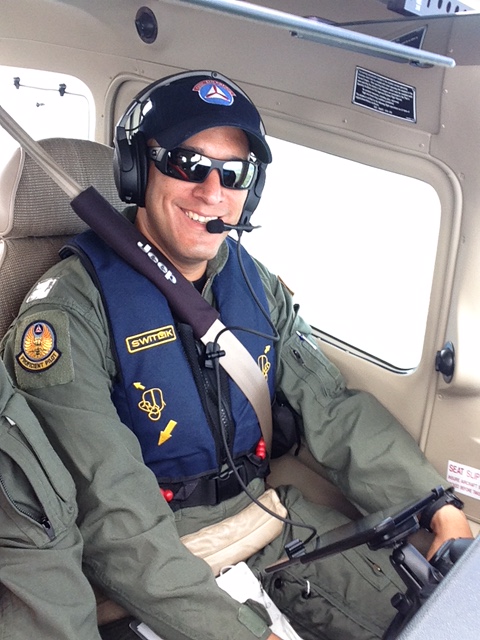
Face of Defense: Civil Air Patrol Airman Deploys to Afghanistan


By Air Force Senior Airman Cierra Presentado 455th Air Expeditionary Wing

BAGRAM AIRFIELD, Afghanistan, September 29, 2015 — An airman deployed with the 455th Expeditionary Communications Squadron here is not only a member of the Air Force, but he’s also a Civil Air Patrol volunteer who dedicates his free time to helping train youth and respond to crisis situations.

The CAP, which has provided support to emergency services as well as the aerospace education and cadet programs for the past 74 years, is now included in the Air Force’s definition of the Total Force. The Air Force updated Doctrine Document Volume 2 to expand the description of the total force and airmen to include active-duty, guard, reserve, civilians and now auxiliary members.

Air Force Capt. Luis Aponte, 455th ECS operations officer and a member of the 156th Airlift Wing with the Puerto Rico Air National Guard, has been a CAP member for three years. Aponte is a former director of operations for the CAP chapter in Puerto Rico. His main mission with the CAP team is to pilot Cessna 172 and 182 aircraft.

Civil Air Patrol Assists Missions

“I’ve been a member of the Civil Air Patrol in Puerto Rico for the past three years. The program has offered me many opportunities, such as being able to fly and support real world missions,” Aponte said. “We work with the Air Force and Coast Guard and any other agencies that request our help with different missions.”

Now that the Air Force is incorporating CAP into its total force spectrum, leaders are encouraged to consider each part of the Total Force, including auxiliary, when determining the most efficient and effective route to complete the mission.

The CAP currently has a total of 57,000 volunteers and 550 aircraft assigned to more than 1,500 units that are supporting non-combat missions on behalf of the Air Force. Aponte’s unit includes 702 cadets, who are 12 to 18 years old, and 346 senior members.

The CAP members, who fly nearly 100,000 hours per year contributing to various missions such as disaster relief, counter-drug, search and rescue, fighter interceptor training, aerial observation and cadet orientation flights, will now be included in the Total Force and be referred to as airmen during the performance of official duties on behalf of the Air Force.

“We have a good-size group of volunteers in Puerto Rico. There are so many motivated individuals that dedicate their time to helping a good cause without being paid for it,” Aponte said. “It’s great to see that we are bringing light to these individuals by being included in the Total Force.”

Coordinating Training Opportunities

While a member of the CAP team and also a flight commander in the Air National Guard, Aponte also coordinates training opportunities to allow the CAP and Air National Guard to work together.

“When I was the director of operations, I was able to coordinate with my unit with the Guard to come up with some training opportunities for the cadets and the CAP team,” he said. “Our aerospace and educations cadets were able to get some real hands-on training with the Guard. So, it was great being able to work and balance the two programs.”

Aponte said he’s grateful for the opportunity to deploy to Afghanistan. He’s also ready to get back to Puerto Rico to continue his CAP mission.
“Being here at BAF has been great. The airmen have so much motivation and it’s really a pleasure to work with them,” he said. “When I return to Puerto Rico I will have to get recertified in flying, and then I can get back to my CAP mission and back to the Guard. But it has been a great deployment.”