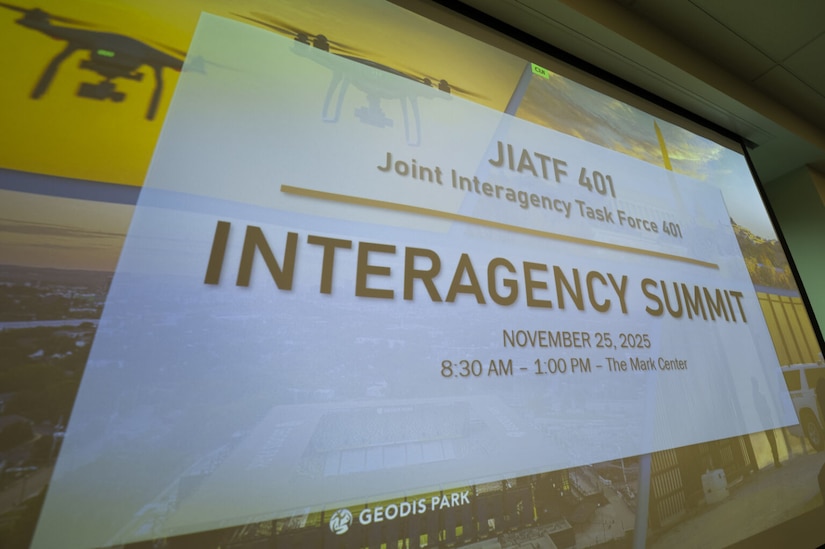
Over 180 experts from the War Department and other
agencies in the federal government met yesterday for a summit to begin a
planned three-year effort to deliver counter-small unmanned aircraft
system capabilities to warfighters and keep the skies over America safe
from dangerous drones.
In August, Secretary of War Pete Hegseth launched the Joint Interagency Task Force 401.
Just two weeks ago, senior leaders from the department and partner
agencies, including Secretary of the Army Dan Driscoll, met at the White
House to discuss how to best leverage the new task force and defend the
homeland.
"My priorities for transformation and acquisition reform include
improving [counter-small unmanned aircraft systems] mobility and
affordability and integrating capabilities into warfighter formations,"
Hegseth wrote in the August memo, which directed Driscoll to stand up
the task force. "[The department] must focus on speed over process by
... establishing JIATF 401 with expanded authorities to execute
capability development and delivery timelines that outpace the threat."
Launching the task force, which Hegseth said will maintain
operational capabilities for 36 months, is fully in line with the
president's direction to reestablish air sovereignty over the U.S.
"[The department] must enhance its [counter-small UAS] capabilities
to protect personnel, equipment and facilities at home and abroad,"
Hegseth said.
Representatives from the War Department, Department of Homeland
Security, FBI, Transportation Department, Federal Aviation
Administration and other agencies — about 50 total — met for the first
time at the Mark Center in Alexandria, Virginia, as part of an
introductory summit for task force partners.
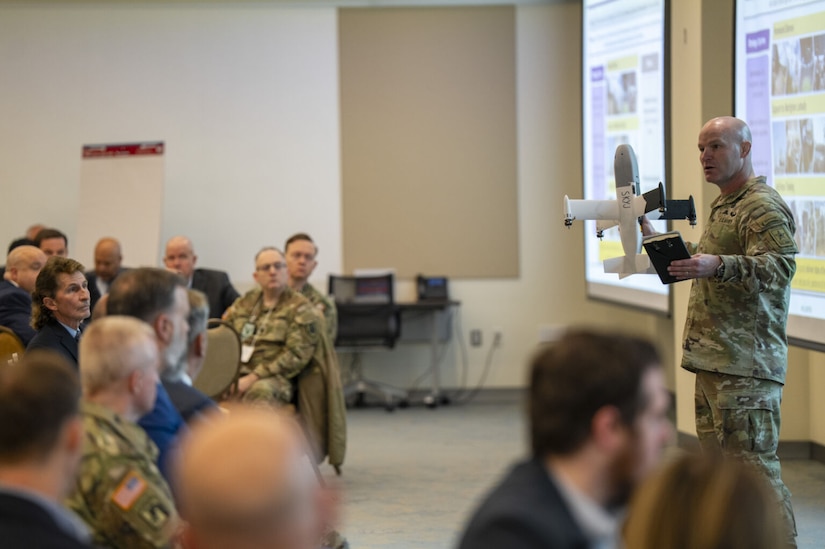
"This was an opportunity to bring together all of the services, all
of our interagency partners that have shared interests and equities with
countering small UAS threats, because no one agency can solve this on
their own," said Army Brig. Gen. Matt Ross, joint task force commander.
"What we're really trying to do is expand the community of interest into
a community of action and make sure we're taking tangible steps to
defeat the UAS threat we face on a daily basis."
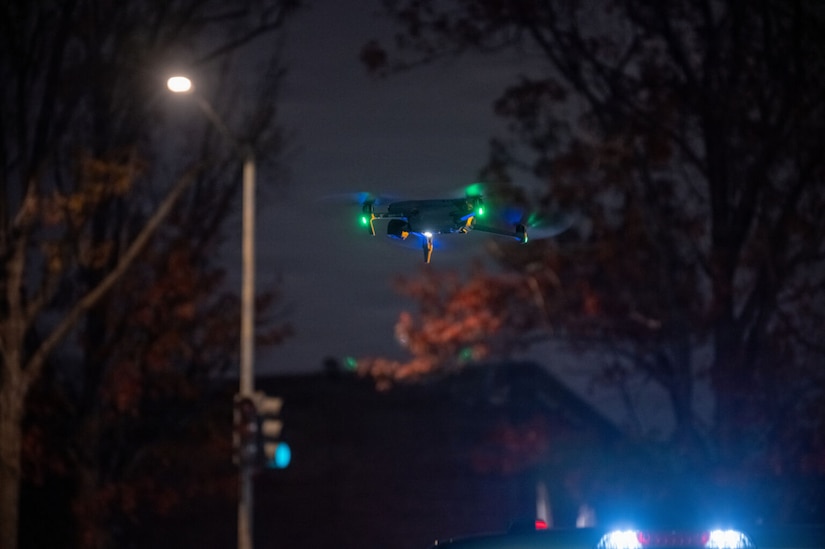
The threat from small UAS is growing, Ross told task force members.
"Unmanned systems are a defining threat for our time, and I say that
because they're prolific, they're evolving quickly, and they're no
longer confined to combat," he said. "The [changing landscape] of drones
is putting exquisite surveillance and precision strike capability into
the hands of individuals and small groups that used to be reserved for
our state adversaries."
Ross emphasized the task force’s three lines of effort to defeat the
counter-small UAS threats: defending the homeland, supporting warfighter
lethality and joint force training.
In the short term, according to Ross, homeland defense will focus on
the area around Washington; the southern border; and supporting the FIFA
World Cup event in June 2026, which is a national special security
event.
U.S. Northern Command and Joint Task Force Southern Border personnel
have reported some 3,000 drone incursions over the border in the past
year and have seen over 60,000 drones just south of the border looking
into the U.S., according to Ross.
Ross affirmed his belief that addressing threats from drones at the
border isn't about a hardware solution; it involves communications and
data sharing.
"We need a common air picture that includes drones," he said. "In
some cases, we need cross-domain solutions that will allow us to see
data that's picked up on a secret radar and an unclassed sensor. We need
to proliferate active and passive sensors that provide air situational
awareness along the southern border."
That kind of integration is what JIATF 401 is all about, and it's
what the task force is expected to bring to bear on the small UAS issue,
according to Ross.
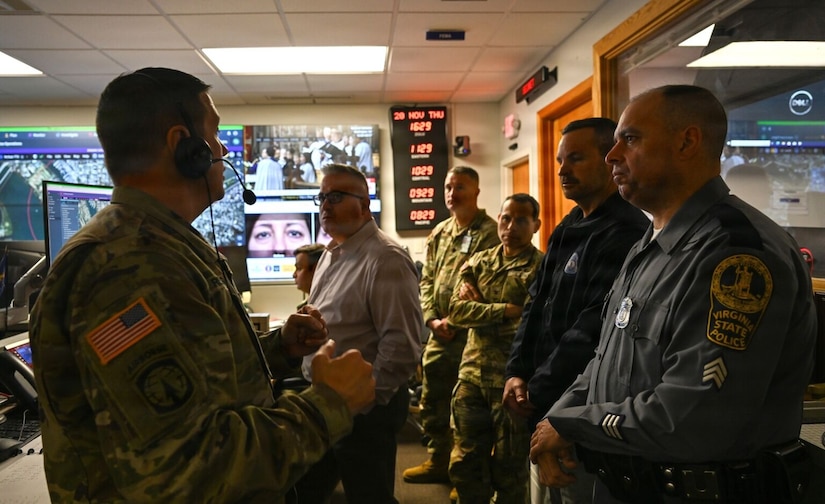
In the National Capital Region, the task force will monitor how
sensors from various agencies are able to track threats as they move
through the sky, how that information can be passed to decision-makers
and how those with the ability to take those threats out of the sky can
be given the authority to do so.
"We're not there yet, but we're making progress," Ross said.
Because the 2026 World Cup is a national special security event, it
is a priority. One focus JIATF 401 has during the World Cup is to ensure
security personnel have access through the Defense Logistics Agency to
purchase counter-UAS capabilities that have been rigorously tested by
the War Department.
Keeping the drone threat at bay and protecting the U.S. homeland —
including people and infrastructure — will take a whole-of-government
approach, Ross emphasized.
"It's important that this is a joint and interagency effort because
nobody can solve this problem alone," Ross said. "[JIATF 401] is a
whole-of-government effort to be able to protect our critical
infrastructure against the threat of unmanned systems. We've got to
partner closely with our local law enforcement and other federal, state,
local, tribal and territorial law enforcement to be able to counter
this threat, see it before it starts to manifest and then to defeat it
before an attack is successful."
Daniel Tamburello, the undersecretary of science and technology for
the Department of Homeland Security, acknowledged that working together
across the federal government will be crucial to mission success.
Both Northcom and DHS are responsible for protecting the homeland, including from drones.
"There's a lot of overlap in those missions," Tamburello said.
"Jointness and interagency cooperation is actually extremely essential
with this."
The threat from drones will only continue to grow.
"The unmanned aerial system threat is one that has become prolific
and widespread, and it's only going to get bigger and more complicated
as more people adopt these systems and learn how to use them,"
Tamburello said. "They've become [accessible], they've become crowd
sourced, ubiquitous and available pretty much anywhere. Any bad actor
who wants to do something has a chance to do it, and we have to stop
them."
The goals for the task force, Tamburello said, include coordinating
with every U.S. agency that deals with the threat posed by counter-UAS
to enable interoperability and open communication.
"That is really going to be the best value for the taxpayer to make
sure that we're acquiring not only the best systems, but we're not
wasting money in the process," he said.
Micheal Torphy, unit chief of the FBI's UAS and counter-UAS programs
within their Critical Incident Response Group, attended the summit. He
said the task force's interagency focus will empower the FBI.
"We're exceptionally excited about this initiative, and we do believe
it will enhance our ability to work with our partners to disrupt
threats," he said.
One of the things the FBI is bringing to the table is the National
Counter-UAS Training Center, which recently opened in Huntsville,
Alabama.
"Its purpose is to train state, local, tribal and territorial law
enforcement officers on counter-UAS, getting them ready for the World
Cup, America 250 [celebration] and ultimately the Olympics and other
events," he said.
Torphy also said he thinks the interoperability inside the task force
is going to make it easier for the FBI to work hand in hand with other
partners to contribute to the mission of keeping the skies over America
safe.
"The way this has been rolled out has been extraordinary," he said.
"Gen. Ross and his team have been fantastic in getting us involved very,
very early. We're really excited about the future."






 Posts
Posts

