Aug. 26, 2026 |
Before a blast of shrapnel to his leg and arm changed his life forever, Marine Corps Lance Cpl. Noah Smith spent more than 100 grueling hours holding the line against a desperate sea of humanity.
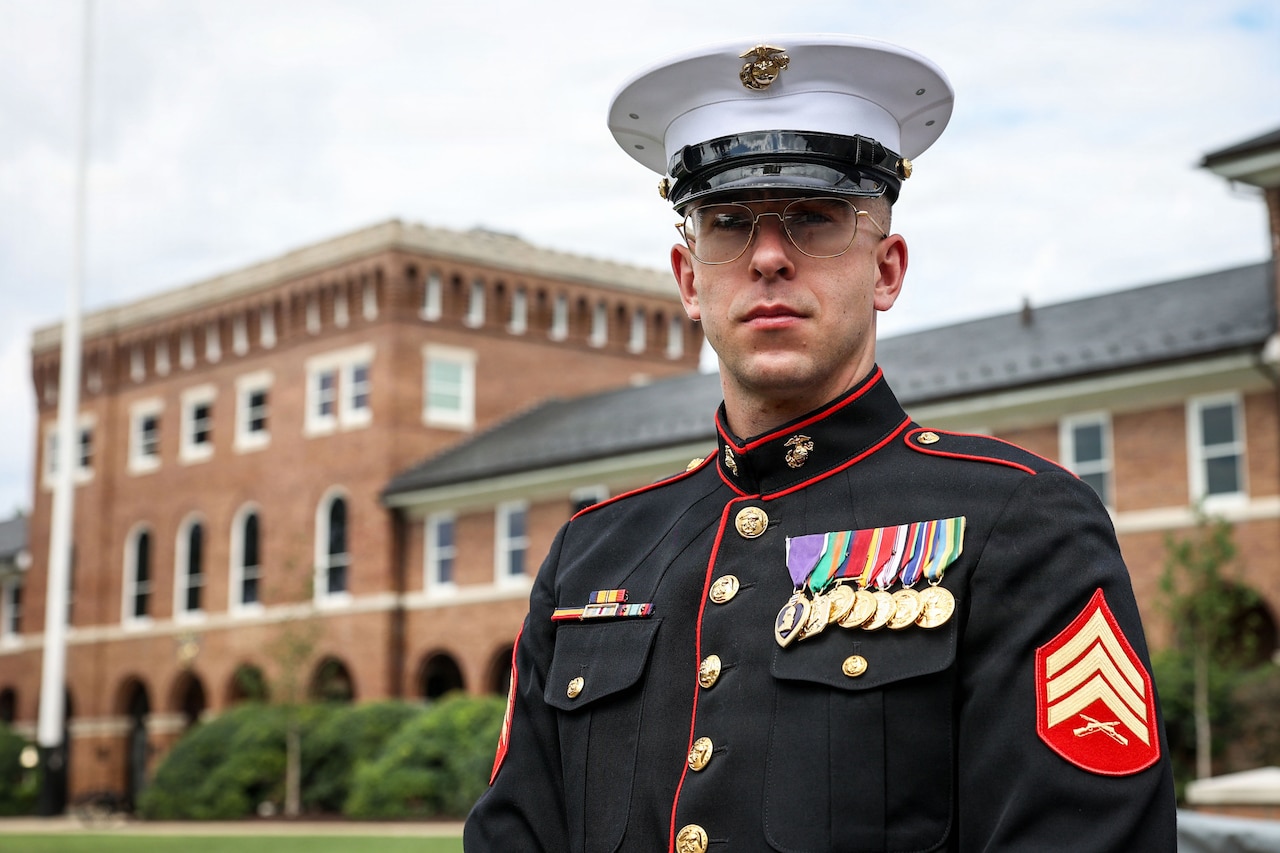
His journey to the gates of Kabul, Afghanistan, began in August 2021,
when he was deployed to Jordan with Golf Company, 2nd Battalion, 1st
Marine Regiment. Their mission to guard a communications hub was quiet,
isolated and normal; then, the world changed overnight. Word trickled
down from their company commander, Marine Corps Capt. Geoff Ball, that
the unit was moving to Kabul.
Early the next morning, Smith was pulled for guard duty in the
intelligence room. On the screens, he watched drone footage of Kabul's
airport. Desperate Afghan civilians had massed by the thousands on the
airfield. They were holding onto the landing gear of departing planes,
desperate to escape the advancing Taliban.
"It was the first tipoff," Smith recalled. "Like, OK, wow ... this is a really real thing that's happening."
When the call came to leave, the massive C-17 Globemaster III aircraft
was packed to its limits. Smith stood 6 feet, 5 inches tall and weighed
nearly 270 pounds in full combat gear, which included heavy armor plates
and loaded magazines.
"My buddy right behind me was carrying the M240 machine gun; he was
exhausted. I probably stood for four out of the six hours of that flight
just to give the boys a little more space."
When his legs finally gave out, it took five minutes shifting bodies just to sit down.
"My buddy's 240 was between his legs, muzzled up past his shoulder and that weapon basically became my backrest," Smith said.
The aircraft made a steep, fast landing to avoid antiaircraft threats,
touching down in Kabul at roughly 1 a.m. Stepping off the ramp into
total darkness, squad leaders gave the order to get weapons ready. They
loaded their weapons and pulled back the bolts.
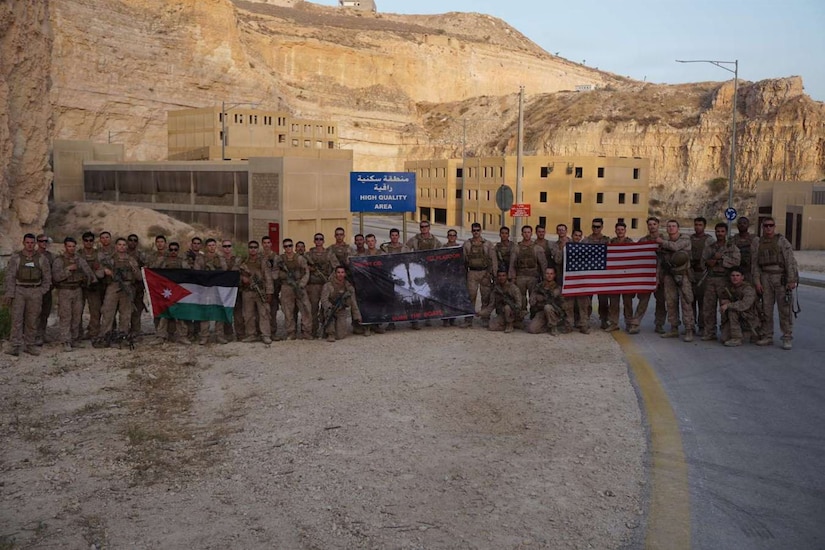
As the ramp dropped, the squad leaders gave the order: condition one. Smith said an administrative or supply Marine was walking down the ramp alongside them, looking on with wide eyes.
"He looked over and asked, 'Did you just go condition one?'" Smith looked back at him and said, "Dude, we're in Afghanistan, and based on what I watched on the drone footage 36 hours ago? Yeah, that's exactly what I did. As you just heard, the echoes around the ramp as everyone else ran their bolts."
By sunrise, the Marines stripped their gear down to small backpacks for what they were told would be a 48-hour mission outside the airport's Abbey Gate — that time estimate turned out to be completely wrong. Outside the massive steel door, a crowd of desperate people waited. Smith said they threw the doors open into what felt like 50,000 to 100,000 people. When the Marines held the line, people were literally being crushed and suffocated to death by the sheer force of the crowd.
Because of his size, Smith was pushed to the front of pure chaos. During a surge, a British soldier struggling with an Afghan man yelled for Smith to fire warning shots. Relying on his strict training, Smith refused. He told the soldier his orders were to shoot only to kill, and that Marines do not fire warning shots. Moments later, Marines threw tear gas. Canisters filled the concrete hallway with choking smoke, creating a needed gap between the troops and the civilians.
"By Day 4 of wearing that flak with CS crystals digging into your shoulder ... it just starts to feel like your flak is growing into your traps," Smith said. "You're just one with it. Day 1, you're sore. Day 2, it hurts. Day 3, it doesn't really hurt anymore; it's just mush. Everything starts to blend. Your Kevlar helmet is your pillow at that point."
That afternoon, Golf Company pushed forward into the outside road. They fought inch by inch for hours to claim about 500 meters of ground to set up a checkpoint. They held that line for 104 hours without relief. Smith remembers this period as "100 hours of hell," as their heavy helmets and body armor never came off.
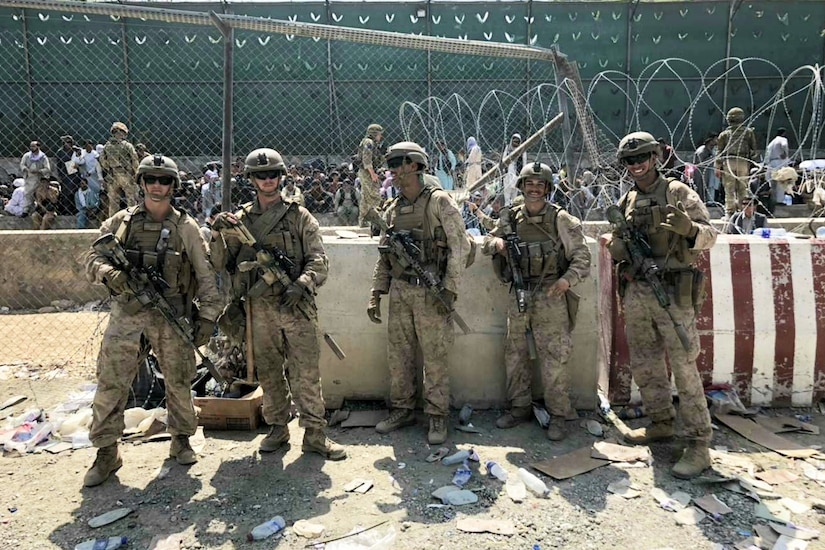
On Aug. 26, 2021, the crowd grew increasingly tense. Marine Corps
Lance Cpl. Kareem Nikoui, one of Smith's close friends, likely weighing
about 145 pounds, was stationed near the sniper tower. He was struggling
against the heavy push of the crowd, so Smith offered to trade places
with him.
"F--- you, I got this," Nikoui said with a grin.
Smith later said he believes that his friend is one of the few reasons
he is alive today, noting that Nikoui likely caught a lot of the
shrapnel that would have otherwise hit him.
At roughly 5:38 p.m., Smith had stepped 8 feet away from the wall to
help another Marine. Suddenly, his hearing dropped out entirely. It was
replaced by total silence and a wall of thick, black smoke. Thinking a
stun grenade had gone off, Smith's infantry training took over. He did a
quick check for blood. His right side was clean, but when he grabbed
his left pant leg, the desert fabric turned bright red.
"I went, 'Ah. So that wasn't a flashbang. That was a bomb,'" Smith said.
He dropped into a clear patch of dirt and ripped an emergency tourniquet
from his ankle pocket. Through the clearing smoke, Marine Corps Lance
Cpl. Brock Bemis sprinted over carrying a medical kit. Bemis began
standard combat medical care, frantically trying to keep his patient
awake. Smith replied flatly, "I know. We trained for this." They found a
second wound on Smith's left arm, which required another tourniquet. As
Bemis knelt over him to finish the treatment, a sharp crack pierced
through the air. Dirt exploded exactly where Bemis' head had just been.
Official military records would later claim no enemy rounds were fired
right after the blast, but Bemis did not hesitate. He yanked the
270-pound Smith to his feet, and the two began a messy hobble toward the
gate's interior.
Just as they cleared the fence line, disaster struck again. The
emergency tourniquet Smith had carried in his trousers, and practiced
using for three months, gave way. Tourniquets are strictly single-use
items; the fine desert silt of Kabul had entirely fouled the Velcro,
causing the strap to snap loose. Smith felt the sudden rush of heat and
fluid down his thigh.
"Hey, Bemis, the tourniquet came off! I need another!" he yelled.
They kept hobbling frantically, shouting for help. Just inside the
threshold of Abbey Gate stood Smith's first sergeant, flanked by a
shell-shocked support Marine who looked entirely out of his depth.
"Hey, you, dude! Tourniquet right now!" Smith roared.
The Marine blinked, dazed. "Yeah, yeah ..."
"No, like, I need it right now!" Smith bellowed, his patience entirely evaporated. "My tourniquet fell off. Give me yours!"
The realization finally broke through the Marine's shock. He dropped to
one knee, fumbling with his gear to apply a fresh strap while Bemis held
Smith upright against his shoulder. The Marine's hands were shaking
violently.
"The guy just couldn't do a tourniquet to save his life," Smith
recalled. Eventually, with the help of a passerby, the second leg strap
was secured.
Smith was dragged to a medical point, stripped of his armor and injected
with pain medicine. A hospital corpsman leaned over him and asked, "Hey
buddy, how you doing?"
"I've been better," Smith grunted.
"You want a little painkiller?"
Smith looked at the chaos around them. "You got something to spare? If you don't, you don't."
"Oh no, we're good," the corpsman replied, promptly administering a heavy dose of what was likely ketamine.
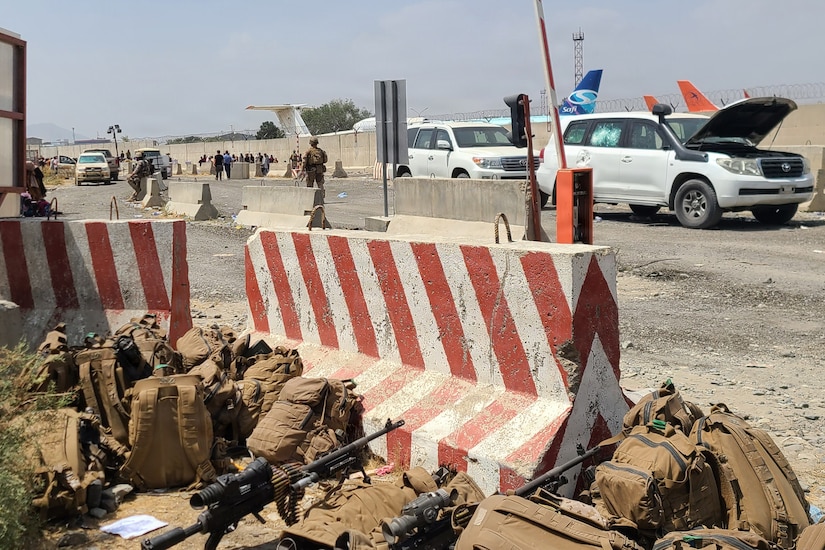
For what felt like an eternity, Smith lay on the gravel as the
medication took effect, watching the sky turn into a slow blur. At the
same time, commanders coordinated transportation to get vehicles through
the debris fields of the gate. Eventually, a female officer began
aggressively directing traffic through the checkpoint. A white utility
truck decorated with orange stripes backed up to the casualty collection
point, its tailgate dropping 5 feet from where Smith lay.
Lifting a 270-pound Marine in full combat gear is a monumental task.
Three Marines grabbed him — one under each arm and one gripping the drag
handle on the back of his gear — and hauled him upright. They forced
him into a half-squat, attempting to bend his left leg, which was
severely damaged by shrapnel and locked rigid by a tourniquet.
From the periphery of the gate, Marine Corps Lance Cpl. Eric Pearce, who
hadn't been on the wall during the blast, spotted the commotion.
Through the dust, he heard Smith's booming voice cut through the air,
screaming defiantly: "Let's f------ go!"
During the frantic drive to the field hospital, a Marine by the name of
Nick Grey kept Smith from passing out by talking about hunting in
Wisconsin.
Smith fought off a blinding feeling that his body was shutting down. He
stayed awake until the truck screeched to a halt outside the building.
Inside the hospital, Smith's barefoot lieutenant and sergeant snuck out
to the company staging area 400 meters away. They went to get the
wounded Marines' personal cellphones. Using an international data plan,
Smith called his mother back in the U.S.
"Hey, Mom. It's Noah," Smith said, trying to keep his voice steady. "I
just want to let you know that, um, there was an explosion here at the
airport. I got hit with some shrapnel. I'm relatively fine. They're
going to be medevacing us to Germany ... and um, I am being charged
every minute that I'm on the phone with you, so I don't want to just sit
here."
Back in the hospital room, Smith repeatedly asked the medical staff about his fire team. Finally, his team leader, a wounded Marine Corps Cpl. Christian Sanchez, delivered the fatal news that Nikoui did not make it out of the gate.
By 1:45 a.m. on Aug. 27, 2021, injured troops were loaded into a medical C-17 aircraft bound for Ramstein Air Base in Germany. Midflight, Smith needed to use the latrine. The medical staff moved to prepare a standard hospital collection tube, but Smith's stubborn, belligerent infantry pride flared up, and he said, "If I can walk, I'm walking to the bathroom."
The aircraft latrine was located at the extreme forward bulkhead of the C-17, roughly 50 feet through the crowded rows of litters. Smith dragged himself out of his rack.
Physically, he could bear weight on the left leg. He could stand straight up without the bone collapsing, and he could step forward with his right leg perfectly. The conundrum came when he tried to swing his left leg forward to take a stride. The shrapnel damage to the anterior muscles meant he lacked the basic neurological functionality to pull the limb forward.
To adapt, Smith had to reach down with his left hand, shove his palm firmly behind his knee, and physically hoist and curl his leg forward with his arm; every single pace was a detailed, mechanical "curly step." By the time he covered 50 feet to the front of the cabin and dragged himself back to his litter, he was completely exhausted, his chest heaving as if he had just completed a full 26-mile marathon. It was, without question, the longest 50 feet of his life.
After three days of care, the wounded Marines were flown across the Atlantic to Walter Reed National Military Medical Center in Maryland. During his two weeks there, the 38th Commandant of the Marine Corps, Gen. David H. Berger, and the 19th Sergeant Major of the Marine Corps, Sgt. Maj. Troy E. Black, visited the hospital to present Smith with the Purple Heart. Even with his severe injuries and no ability to move his left leg, Smith dragged himself out of bed. He stood at strict attention for the ceremony.
Shortly after his older brother spent a four-day weekend hanging out by his bedside, Smith's mother, stepfather and middle brother arrived at Walter Reed. By the second week, Smith began regaining a crude command over his lower limbs, managing to hobble around the ward with a severe, heavy limp.
It was during this window that hospital staff entered the ward with a sudden announcement: "Hey, POTUS is coming through in like five minutes. Stand by."
President Joe Biden visited the wounded. Smith recorded a brief, polite conversation with the president on his cellphone before receiving a presidential challenge coin.
Today, Smith remains a living example of a timeline that shattered in
the dust of Kabul. He is a Marine who stared down death, refused to
give up and lived to tell the story. Smith is just one of the many
Marines' stories from that day. However, his survival is forever tied to
the ultimate sacrifice made by 13 U.S. service members who did not come
home.
The nation remembers the 11 Marines lost that day: Staff Sgt. Darin T.
Hoover, Sgt. Johanny Rosario Pichardo, Sgt. Nicole L. Gee, Cpl. Hunter
Lopez, Cpl. Daegan W. Page, Cpl. Humberto A. Sanchez, Lance Cpl. David
L. Espinoza, Lance Cpl. Jared M. Schmitz, Lance Cpl. Rylee J. McCollum,
Lance Cpl. Dylan R. Merola and Lance Cpl. Kareem M. Nikoui, alongside
Navy Corpsman Maxton W. Soviak and Army Staff Sgt. Ryan C. Knauss. They
held the line so others could live and their names will never be
forgotten.


 Posts
Posts


No comments:
Post a Comment