Friday, May 01, 2026

Roswell Man Sentenced for Making Bomb Threats to Government Offices

ALBUQUERQUE – A Roswell man was sentenced to 21 months in prison for a series of violent threats to government offices across several states.

There is no parole in the federal system.

According to court documents, on February 14, 2025, Jeffrey Ramon Diaz, 44, made threatening calls to several governmental agencies and offices, including a United States Senator’s office, the New Mexico Second Judicial District Court in Bernalillo County, the Doña Ana County Magistrate Court, and the Governor of Pennsylvania’s office.

During the calls, Diaz identified himself by name and made explicit threats of violence and bombings. He told a congressional staffer he was threatening to bomb the Senator’s office. He left a voicemail for a New Mexico state court judge threatening to blow up the judge’s building and harm the judge. He also spoke directly to an employee at the Doña Ana County Magistrate Court, declaring a bomb threat and threatening to set the building on fire. Additionally, Diaz called the Pennsylvania Governor’s office claiming he had placed a bomb in the Governor’s home and threatened to kill those inside.

Diaz pled guilty to four counts of malicious threats to injure by fire or explosive. Upon his release from prison, Diaz will be subject to 3 years of supervised release.

Acting U.S. Attorney Ryan Ellison and A.J. Gibes, Special Agent in Charge of the Phoenix Field Division of the Bureau of Alcohol, Tobacco, Firearms and Explosives, made the announcement today.

The Bureau of Alcohol, Tobacco, Firearms and Explosives investigated this case with assistance from the Las Cruces Resident Agency of the Federal Bureau of Investigation’s Albuquerque Field Office, U.S. Marshals Service, Las Cruces Police Department and Chaves County Sheriff’s Office. Assistant U.S. Attorney Christopher McNair is prosecuting the case.

Thursday, April 30, 2026

Nevada Guard's Civil Support Team Trains for Radiological, Explosive Threats

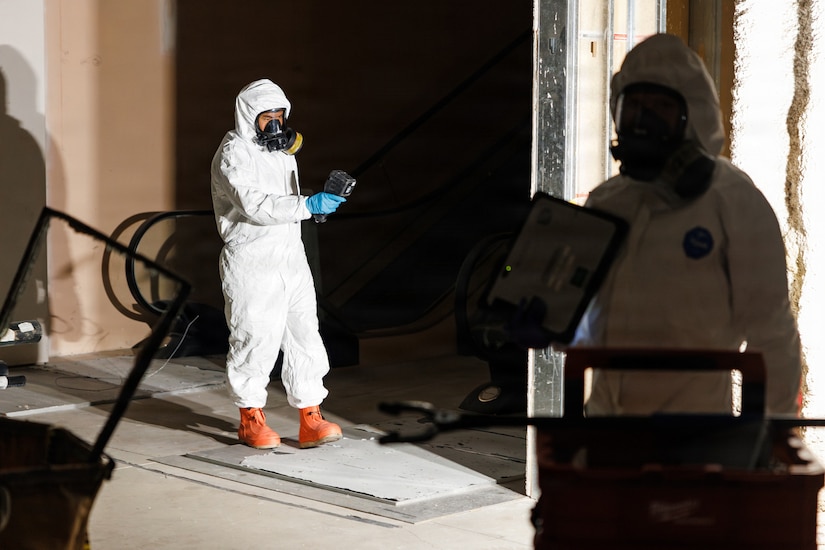
Two people in hazardous material suits monitor an empty room. One of the people holds a radiation detection device while the other person holds a tablet.

The Nevada National Guard's 92nd Civil Support Team conducted its annual "Beta Burn" exercise at the Ormsby House in Carson City, Nevada, April 23, training alongside local and federal partners to respond to simulated radiological and explosive threats.

Beta Burn focuses on preparing agencies to detect and respond to radiological hazards, with this exercise emphasizing homemade explosive threats and coordinated response.

Exercises like this directly prepare the team for real-world operations. Earlier this year, the team supported a multiagency response to a suspected biological laboratory at a Las Vegas residence, assisting in the collection of more than 1,000 samples and providing decontamination capabilities for first responders.

The exercise brought together multiple local organizations and the FBI to strengthen coordination, test response procedures and enhance interoperability during a simulated weapon of mass destruction incident.

Army Maj. Lawrence Alves, the unit's medical officer, served as the incident commander for the exercise, overseeing operations across participating agencies and synchronizing efforts within the incident command system.

Alves said the role provided the opportunity to build relationships with participating agencies.

"It's always fun playing incident commander," Alves said. "You get to talk to all of these different agencies, get to know them on a much more personal basis, and build good relationships with people."

During the scenario, soldiers entered a simulated "hot zone," identified radiological hazards and mitigated threats while relaying real-time information back to command elements. Unit survey team chiefs operated in the hazard area to detect radiological sources and provide situational awareness through specialized equipment that transmitted live imagery to teams outside the zone.

Alves explained the purpose behind the training and its role in preparing for complex emergencies.

"These multiagency exercises ensure our partners know who we are, understand our capabilities and know they can depend on us when there is a threat to the public," he said.

The unit conducts multiple exercises throughout the year, each focused on different weapons of mass destruction threats, including chemical, biological and radiological hazards. These events ensure the unit remains ready to support civil authorities and respond rapidly to incidents that threaten public safety.

The Ormsby House, a large, vacant hotel in Carson City, provided an ideal training environment due to its size and layout. The facility offers extensive indoor space, a large parking area for emergency vehicles and room to establish decontamination lines, allowing units to replicate complex response operations in a controlled setting.

Through exercises like Beta Burn, the 92nd Civil Support Team strengthens unified response, improves coordination across agencies and ensures a rapid, effective response to hazardous threats in Nevada communities. The team also supports local agencies during major public events.

Friday, April 24, 2026

Media Invitation Announced for United States v. Khalid Shaikh Mohammad et al. Pre-Trial Hearing

The Department of War invites media to cover pre-trial proceedings in the case of United States v. Khalid Shaikh Mohammad, Walid Muhammad Salih Mubarek Bin 'Attash, Ali Abdul Aziz Ali, and Mustafa Ahmed Adam al Hawsawi, scheduled for July 13-31, 2026. The defendants are charged in connection with their alleged roles in the September 11, 2001 attacks against the United States.

The proceedings will be conducted at the Expeditionary Legal Complex located in Naval Station Guantanamo Bay (NSGB) Cuba and will be transmitted to a closed-circuit television site at Ft. Meade, Md.

Media choosing to travel to NSGB will pay round-trip airfare ($800); coverage windows are determined by flight schedule. Specific ground rules for coverage at NSGB will follow registration.

The primary purpose of this invitation is to cover the military commissions. Tours of the detention facilities are not available. Requests for reporting on Guantanamo Bay topics unrelated to the military commissions - such as the naval base facilities or personnel - must be coordinated in advance.

Coverage windows, including travel days:

  • July 11 - 18
  • July 18 - 25
  • July 25 – August 1

Registration: Click here for registration. Please select the "Khalid Shaikh Mohammad et al" case from the drop-down selection on the registration form. Enter the specific dates requested as outlined above.

Deadline: All requests must be received no later than noon Friday, May 1. Additional details of travel logistics will be provided separately. By submitting the online request form, interested media will begin the travel process, and the Office of Military Commissions (OMC) will contact the media to assist in travel preparation.

CCTV Site: Media desiring to view this hearing from the media-designated viewing site at Fort Meade, Md., must send requests via email to osd.mc-alex.OMC.mbx.omc-pa@mail.mil with e-mail subject line matching the court case and the following information: name, position, news organization and contact information.

Contact Mr. Ron Flesvig, OMC Public Affairs, for additional questions at ronald.flesvig2.civ@mail.mil or (571) 372-3713.

Case information can be viewed at the Office of Military Commissions website: https://www.mc.mil

Sunday, April 19, 2026

Shadow Leverage: The Role of Terrorism in U.S.–Iran Negotiations

The current negotiations between the United States and Iran, unfolding amid an active military confrontation and fragile ceasefire efforts, reveal a persistent reality in international relations: terrorism and proxy violence function as indirect tools of leverage rather than explicit bargaining chips. While neither side openly acknowledges terrorism as part of formal diplomacy, both operate with an understanding that violence—particularly through proxies—can influence negotiation dynamics. In this context, terrorism becomes a form of “shadow leverage,” shaping outcomes through signals of escalation, restraint, and capability rather than direct negotiation terms.

Iran’s reliance on proxy networks is central to this dynamic. For decades, Tehran has cultivated relationships with groups such as Hezbollah, Iraqi militias, and the Houthis, using them to extend influence while maintaining plausible deniability. U.S. intelligence assessments continue to identify Iran as a leading state sponsor of terrorism, providing financial support, weapons, and operational guidance to militant groups across the Middle East and beyond (Office of the Director of National Intelligence, 2024). These networks serve not only as instruments of regional power projection but also as tools of deterrence and negotiation. When tensions escalate, Iran can activate or signal the potential activation of these groups, raising the perceived cost of continued conflict.

Recent developments in the ongoing U.S.–Iran war underscore this mechanism. Within days of U.S. military actions, Iranian-aligned groups demonstrated their ability to open multiple fronts, including drone strikes on U.S. positions and threats to maritime security (Kharon, 2026). Attacks on commercial shipping and the closure of the Strait of Hormuz have further heightened global economic anxiety and demonstrated Iran’s capacity to disrupt international systems (The Guardian). These actions do not necessarily aim to achieve immediate tactical victories; rather, they serve as strategic signals. By increasing instability, Iran communicates that the cost of failing to reach an agreement will extend beyond the battlefield.

However, escalation is only one side of the equation. Equally important is the strategic use of restraint. During negotiations, Iran can reduce proxy activity to signal willingness to compromise. Reports indicate that U.S. demands in current talks include curbing Iran’s support for militant proxies, highlighting that proxy activity is itself a subject of negotiation (Wall Street Journal). In this sense, the absence of violence becomes a bargaining tool. By limiting attacks or restraining allied groups, Iran can demonstrate good faith while preserving its broader network as a latent source of leverage. This dual capability—escalation and restraint—gives Iran flexibility in negotiations that conventional military power alone cannot provide.

From the U.S. perspective, terrorism enters negotiations through counterterrorism pressure rather than direct use. The United States employs sanctions, military strikes, and intelligence operations to degrade Iranian proxy networks and reduce their effectiveness. This approach seeks to erode Iran’s leverage while simultaneously signaling that continued reliance on proxy violence will be met with escalating consequences. U.S. strategy has increasingly shifted toward dismantling Iran’s regional proxy infrastructure through coordinated military, financial, and intelligence measures (Belfer Center, 2025). By targeting the very networks Iran uses as leverage, the United States attempts to reshape the negotiation landscape in its favor.

At the same time, the United States uses framing as a strategic tool. Labeling Iranian actions—such as disruptions to maritime trade—as “terrorism” or “economic terrorism” reinforces international support and legitimizes countermeasures (New York Post). This rhetorical dimension influences how other states interpret the conflict and whether they align with U.S. policy objectives. In negotiations, legitimacy can be as important as capability. By framing Iran’s actions in terms of terrorism, the United States seeks to isolate Tehran diplomatically while strengthening its own bargaining position.

Despite its utility, the use of terrorism as shadow leverage carries significant risks. One major concern is escalation beyond control. Proxy groups do not always operate with perfect discipline, and actions intended as signals can trigger unintended consequences. The current conflict illustrates this danger, with attacks on shipping, military assets, and regional actors contributing to a volatile and unpredictable environment (The Guardian). Miscalculation could transform limited proxy actions into broader regional or even global crises.

Another risk is fragmentation. Sustained military and economic pressure has weakened Iran’s proxy networks, reducing their coherence while not eliminating their capabilities (Belfer Center, 2025). As these networks degrade, they may become more decentralized and less controllable. This creates the possibility of splinter groups acting independently, complicating negotiations and undermining any agreements reached. In such scenarios, even if Iran commits to reducing proxy activity, it may not fully control all actors operating under its influence.

Finally, the use of terrorism as leverage can undermine long-term diplomatic outcomes. While short-term gains may be achieved through coercive signaling, reliance on proxy violence erodes trust and reinforces adversarial perceptions. For Iran, excessive use of proxies risks provoking overwhelming retaliation and further international isolation. For the United States, aggressive counterterrorism measures can harden Iranian resistance and reduce the space for compromise. Both sides must balance the immediate benefits of coercion against the long-term goal of achieving a stable and durable agreement.

In conclusion, terrorism in the context of U.S.–Iran negotiations operates not as an explicit bargaining chip but as an implicit form of leverage embedded within broader strategic interactions. Iran uses its proxy networks to signal both escalation and restraint, while the United States employs counterterrorism pressure and diplomatic framing to counter that leverage. The result is a complex negotiation environment in which violence and diplomacy are deeply intertwined. As current talks continue amid ongoing conflict, the role of terrorism as shadow leverage will remain a defining feature of the bargaining process, shaping both the risks and the possibilities of a negotiated resolution.

References

Belfer Center for Science and International Affairs. (2025). The degradation of Iran’s proxy model.

Kharon. (2026). In U.S.-Iran conflict, what threat do Hizballah, Houthis and Iraqi militias pose?

Office of the Director of National Intelligence. (2024). Unclassified assessment regarding the regional and global terrorism of the Islamic Republic of Iran.

The Guardian. (2026, April 19). Middle East crisis live: Iran warns it will close Strait of Hormuz if U.S. blockade continues.

The Guardian. (2026, April 19). Middle East crisis live: Iran reportedly rejects U.S. peace talks; tensions escalate in Strait of Hormuz.

The Wall Street Journal. (2026, April 19). U.S. and Iran inch toward framework deal amid ongoing conflict.

New York Post. (2026, April 14). JD Vance accuses Iran of economic terrorism over Hormuz blockade.

Tuesday, April 14, 2026

Joint Task Forces Train on Counter-UASs, Strengthen Homeland Defense

Joint Interagency Task Force 401 and Joint Task Force National Capital Region recently coordinated a training exercise at Fort Belvoir, Virginia, as part of a synchronized effort to advance counter-drone capabilities.

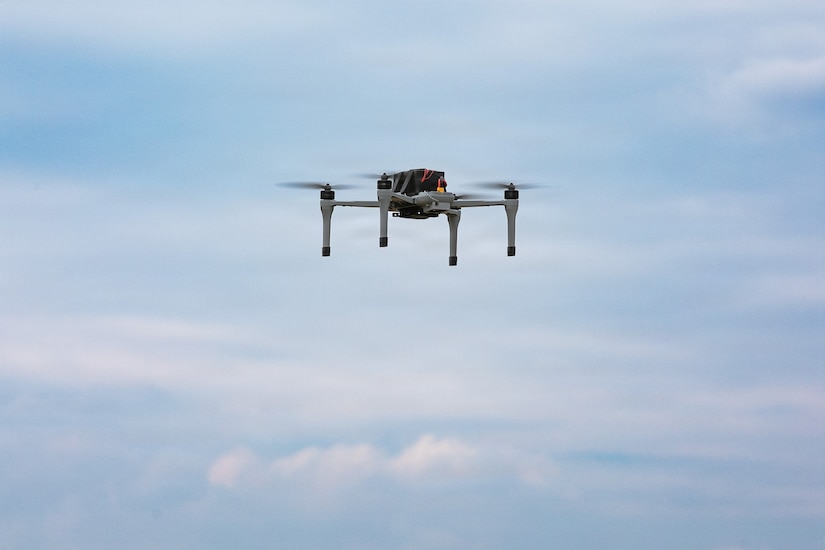
A drone flies in a blue sky with clouds.

Soldiers from the 3rd U.S. Infantry Regiment are undergoing special training on the Bumblebee V1 counter-unmanned aerial system as part of a broader effort to strengthen layered defenses protecting key War Department infrastructure in the homeland. The training focuses on equipping soldiers to detect, track, identify and defeat drones with minimal risk to surrounding personnel and facilities. 
 
"We want to train our warfighters in the national capital region on how best to employ low-cost, low-collateral kinetic effectors," said Army Lt. Col. Alex Morse, JIATF 401 acquisition lead. "The training at Fort Belvoir adds to the layered defense systems that are set up here in the NCR." 
 
The Bumblebee system is a small drone that is being operationally assessed for dual use as a reconnaissance asset and a counter-UAS platform, allowing operators to identify and intercept hostile drones using a controlled, low-collateral approach. 
 
"Bumblebee's improved air-to-air capability will enhance our layered defenses by enabling warfighters to follow drones back to their launch point to identify the operator, or by destroying them in the air with minimal risk to people or property on the ground," said Army Lt. Col. Adam Scher, JIATF 401 spokesperson.

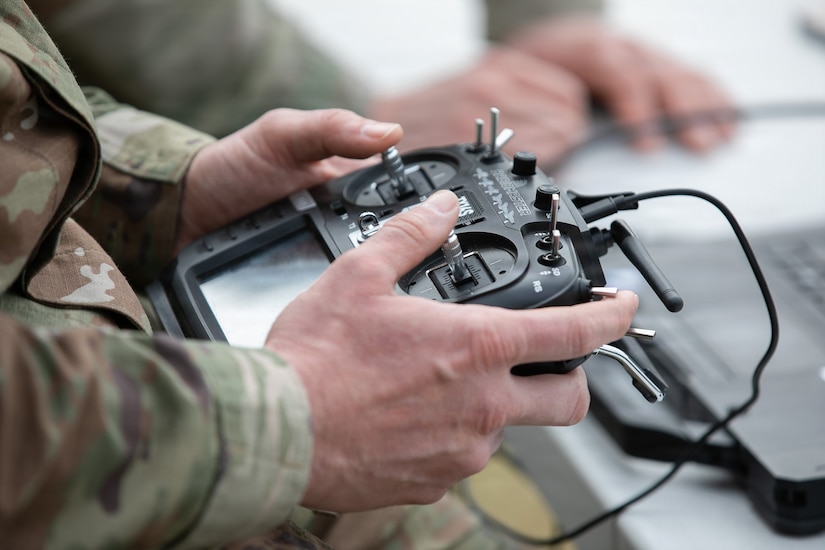
A close-up view of hands holding a remote control used to pilot a drone.

Joint Interagency Task Force 401 is focused on creating a layered defense against drone threats by integrating systems and rapidly increasing capabilities. By synchronizing efforts with Joint Task Force National Capital Region, it is leading a whole-of-government approach to protect the homeland through innovation and interoperability. The addition of Bumblebee systems represents a deliberate step toward expanding the tools available for warfighters to counter the persistent threat of UASs. 
 
"Countering drones is both a battlefield and a homeland defense imperative. We have to work together, share information and leverage the entire joint force along with interagency and law enforcement partners to keep pace with this threat," said Army Brig. Gen. Matt Ross, JIATF 401 director. 
 
As unmanned threats evolve, success will depend not only on acquiring top-tier technology but also on ensuring warfighters are properly trained and possess the necessary permissions to effectively employ counter-UAS technology in defense of the homeland. 
 
"We will not be limited to library-based radio frequency defeat systems as we protect against drone threats," Ross said. "We must be proactive with a layered defense, including kinetic defeat options at every War Department base or facility."

Friday, April 10, 2026

FAA and DOW Sign Landmark Safety Agreement to Protect Southern Border

The Federal Aviation Administration (FAA) and Department of War (DOW) completed a thorough safety assessment of a high-energy laser counter-drone system. This assessment validated that proper safety controls are in place and that while these systems are at the cutting edge of counter drone technology, they do not pose undue risk to passenger aircraft.

The FAA and the DOW completed the safety assessment after observing demonstrations of the system last month. This Administration upholds the highest standard for safeguarding Americans and will build-in this methodology from the start for systems employed in the U.S. Homeland.

"The FAA's top priority is protecting the safety of the American flying public, and we value the collaboration with the Department of War in that effort," said FAA Administrator Bryan Bedford. "Following a thorough, data-informed Safety Risk Assessment, we determined that these systems do not present an increased risk to the flying public. We will continue working with our interagency partners to ensure the National Airspace System remains safe while addressing emerging drone threats."

"This successful test showcases the significant advancements we're making in counter-drone technology to ensure that our warfighters have the most advanced tools to defend the homeland," said U.S. Army Brigadier General Matt Ross, director of JIATF-401. "By working hand-in-hand with the FAA and our interagency partners, the Department of War is proving that these cutting-edge capabilities are safe, effective, and ready to protect all air travelers from illicit drone use in the national airspace."

The DOW will continue to coordinate with the FAA to safely employ this system and ensure civilian aircraft, pilots, navigation equipment, or air traffic services are not impacted. 

Media Invitation Announced for United States v. Khalid Shaikh Mohammad et al. Pre-Trial Hearing

The Department of War invites media to cover pre-trial proceedings in the case of United States v. Khalid Shaikh Mohammad, Walid Muhammad Salih Mubarek Bin 'Attash, Ali Abdul Aziz Ali, and Mustafa Ahmed Adam al Hawsawi, scheduled for June 22-26, 2026. The defendants are charged in connection with their alleged roles in the September 11, 2001 attacks against the United States.

The proceedings will be conducted at the Expeditionary Legal Complex located in Naval Station Guantanamo Bay (NSGB) Cuba and will be transmitted to a closed-circuit television site at Ft. Meade, Md.

Media choosing to travel to NSGB will pay round-trip airfare ($800); coverage window is determined by flight schedule. Specific ground rules for coverage at NSGB will follow registration.

The primary purpose of this invitation is to cover the military commissions. Tours of the detention facilities are not available. Requests for reporting on Guantanamo Bay topics unrelated to the military commissions - such as the naval base facilities or personnel - must be coordinated in advance.

Coverage window, including travel days:

  • June 20-27

Registration: Click here for registration. Please select the "Khalid Shaikh Mohammad et al" case from the drop-down selection on the registration form. Enter the specific requested dates as outlined above.

Deadline: All requests must be received no later than noon Friday, April 17. Additional details of travel logistics will be provided separately. By submitting the online request form, interested media will begin the travel process, and the Office of Military Commissions (OMC) will contact the media to assist in travel preparation.

CCTV Site: Media desiring to view this hearing from the media-designated viewing site at Fort Meade, Md., must send requests via email to osd.mc-alex.OMC.mbx.omc-pa@mail.mil with e-mail subject line matching the court case and the following information: name, position, news organization and contact information.

Contact Mr. Ron Flesvig, OMC Public Affairs, for additional questions at ronald.flesvig2.civ@mail.mil or (571) 372-3713.

Case information can be viewed at the Office of Military Commissions website: https://www.mc.mil

Thursday, April 02, 2026

Joint Interagency Task Force 401 Enhances Counter-UAS Capability to Protect the Southern Border

Joint Interagency Task Force 401 is rapidly delivering counter-unmanned aircraft systems to protect the southern border with advanced technology, an integrated system architecture and expanded authorities. 

JIATF-401, supporting Joint Task Force Southern Border, continues to collaborate closely with interagency partners, including U.S. Customs and Border Protection, to integrate critical counter-UAS components.

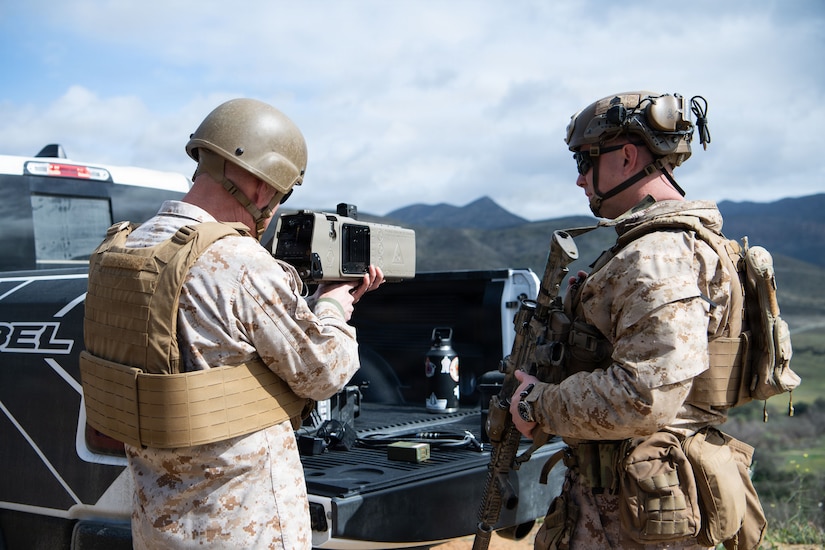
Two service members wearing camouflage military uniforms, helmets and sunglasses stand at the bed of a pickup truck while the man on the left is holding a piece of military equipment.

The interagency task force conducted site surveys at priority sites across the southern border to identify capability gaps and deliver solutions on a rapidly accelerated timeline. With a focus on creating a layered defense, JIATF-401 made targeted investments to integrate advanced sensing, tracking and neutralization systems at key locations along the border. 

As a result, in just four months, more than $20 million in counter-UAS technology was deployed to the border. This equipment includes a network of 13 advanced sensors that expand surveillance coverage and provide early warning of drone activity, paired with seven mobile and fixed-site mitigation systems that enable forces to disrupt or neutralize threats before they reach critical areas.  

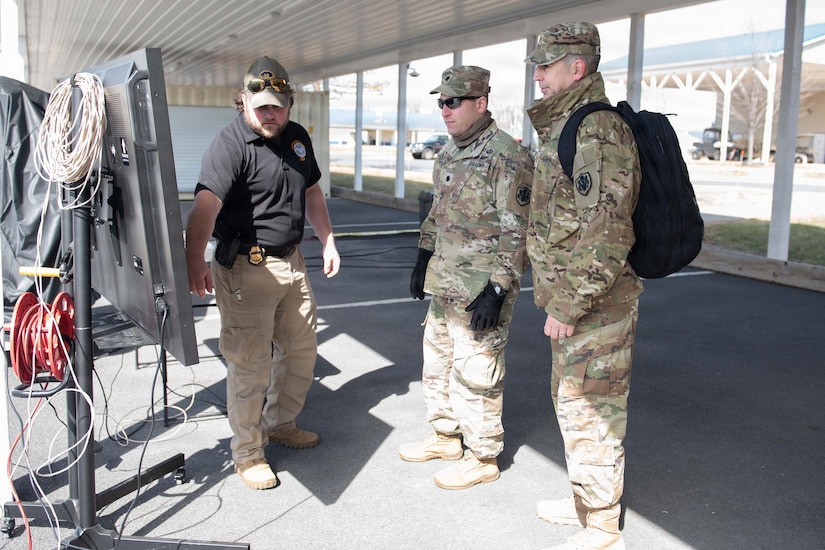
A man wearing civilian attire speaks as he points to a board while two men dressed in camouflage military uniforms look at the board.

Each system adds a layer of defense and functions as part of integrated command and control, and interagency sensor architecture. By directly engaging with end users, the interagency task force is capturing real-time insights that are delivered directly to federal agencies and industry partners to inform future capability development.  

In addition to equipment delivery, JIATF-401 is refining and expanding authorities to more effectively operate and employ counter-small UAS technology along the southern border.   

With the assistance of the Office of the Undersecretary of War for Policy, JIATF-401 spearheaded Pentagon efforts to expand protection from unmanned aircraft for the newly established national defense areas along the southern border. This key expansion empowers warfighters to defend the homeland against adversary drones.

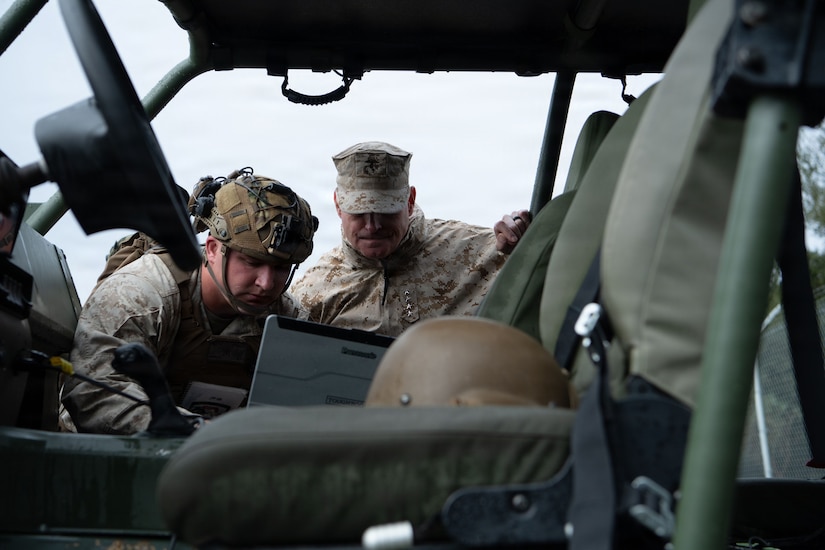
Two service members wearing camouflage military uniforms stand at the opening of a military vehicle and look at a computer screen.

Together, these efforts are not only enhancing national defense but also accelerating the adoption of new technologies across the enterprise. 

"These efforts reflect our focus on rapidly delivering critical capability to the warfighter," said Army Brig. Gen. Matthew Ross, JIATF-401 director. "From the southern border to critical infrastructure across the homeland, we are ensuring operators have the tools, training and permissions they need to detect and defeat UAS threats in their area of operations."

Saturday, March 28, 2026

Gun Store Owner Indicted for Conspiracy and Attempting to Provide Material Support to Designated Foreign Terrorist Organizations

PHOENIX, Ariz. – The owner of Grips By Larry, a former federal firearms licensee (FFL) was indicted last week on charges related to providing material support to Cartel de Jalisco Nueva Generacion (“CJNG”) and Cartel de Sinaloa (“CDS”), Mexican cartels that were designated as foreign terrorist organizations in 2025.

On March 17, 2026, a federal grand jury in Phoenix returned a superseding indictment against Laurence Gray, 65, of Hereford, Arizona, for Attempting to Provide Material Support to a Foreign Terrorist Organization and Conspiracy to Provide Support to a Designated Foreign Terrorist Organization. Gray was arraigned on the indictment in federal court today.

Gray, the owner of Grips by Larry, a federally licensed firearms dealer in Arizona, was previously indicted for firearms trafficking offenses in 2025, alongside a second individual, Barrett Weinberger, 73, of Tucson, Arizona. The original charges against both men included trafficking in firearms, aiding and abetting the straw purchasing of firearms, and aiding and abetting material false statements during the purchase of a firearm. In addition to more firearms charges, last week’s superseding indictment added material support to terrorism charges against Gray.

The indictment alleges that Gray knowingly attempted to provide firearms to CJNG in May of 2025, and knowingly conspired to provide firearms to both CJNG and CDS that same year. Both cartels were designated by the U.S. Secretary of State as foreign terrorist organizations pursuant to Section 219 of the Immigration and Nationality Act on Feb. 20, 2025.

Convictions for Conspiracy to and Attempting to Provide Material Support to a Designated Terrorist Organization each carry a maximum penalty of 20 years in prison, a fine of up to $250,000, or both. A conviction for Trafficking in Firearms carries a maximum penalty of 15 years in prison, a fine of up to $250,000, or both. A conviction for Aiding and Abetting the Straw Purchase of Firearms carries a maximum penalty of 15 years in prison, a fine of up to $250,000, or both. A conviction for Aiding and Abetting a Material False Statement During the Purchase of a Firearm carries a maximum penalty of 10 years in prison, a fine of up to $250,000, or both.

This case is part of Operation Take Back America, a nationwide initiative that marshals the full resources of the Department of Justice to repel the invasion of illegal immigration, achieve the total elimination of cartels and transnational criminal organizations (TCOs), and protect our communities from the perpetrators of violent crime. Operation Take Back America streamlines efforts and resources from the Department’s Organized Crime Drug Enforcement Task Forces (OCDETFs) and Project Safe Neighborhood (PSN).

The Bureau of Alcohol, Tobacco, Firearms and Explosives (ATF) conducted the investigation in this case. Assistant U.S. Attorney Marcus Shand, District of Arizona, Phoenix, is handling the prosecution.

An indictment is a formal accusation of criminal conduct. All defendants are presumed innocent until proven guilty beyond a reasonable doubt in a court of law.

Friday, March 20, 2026

Antifa Cell Members Convicted in Prairieland ICE Detention Center Shooting

Nine North Texas Antifa Cell operatives were convicted today by a federal jury in Fort Worth, Texas for their roles in rioting, using weapons and explosives, providing material support to terrorists, obstruction, and attempted murder of an Alvarado police officer and unarmed correctional officers at the Prairieland ICE Detention Center on July 4, 2025, announced United States Attorney for the Northern District of Texas Ryan Raybould.  

In a 12-day trial that began on February 23, 2026, jurors heard testimony from more than 45 witnesses and considered over 210 exhibits supporting the charges against nine indicted defendants: Cameron Arnold, a/k/a Autunm Hill, Zachary Evetts, Benjamin Song, Savanna Batten, Bradford Morris, a/k/a Meagan Morris, Maricela Rueda, Elizabeth Soto, Ines Soto, and Daniel Rolando Sanchez-Estrada.  Seven others, Seth Sikes, Nathan Baumann, Joy Gibson, Susan Kent, Rebecca Morgan, Lynette Sharp, and John Thomas, pled guilty last year to one count of providing material support to terrorists.

“Antifa is a domestic terrorist organization that has been allowed to flourish in Democrat-led cities — not under President Trump,” said Attorney General Pamela Bondi. “Today’s verdict on terrorism charges will not be the last as the Trump administration systematically dismantles Antifa and finally halts their violence on America’s streets.”

“These guilty verdicts and convictions rightly reflect the vicious, armed attack that these Antifa cell members planned and executed against law enforcement and detention center officers on the night of July 4 last year,” said U.S. Attorney Ryan Raybould. “Their terrorist acts, attempted murder, vandalism, and explosives launched at a detention facility were a far cry from some peaceful protest or First Amendment expression.  Because of the prompt action of first responders that night and tenacious work of our law enforcement partners in tandem with the prosecutors in my office, sixteen people have been brought to justice for these violent acts and their attempts to conceal them.  We will continue in this mission to hold others accountable who perpetrate such violence and fund these ANTIFA groups in the Northern District of Texas.”

“Today’s verdict shows the FBI remains committed to identifying, locating, and dismantling Antifa and its funding networks across the country,” said FBI Director Kash Patel. “Acts of violence against our law enforcement partners will not be tolerated, and we continue our work to protect communities across the country from domestic terrorism.”

“The calculated, violent attack at ICE’s Prairieland facility was an abhorrent way for antifa terrorists to ‘protest’ the way this agency enforces the law — but these verdicts make clear that those who choose violence over lawful expression will face the full force of the American justice system,” said ICE Director Todd M. Lyons. “The men and women who serve at these facilities deserve to do their jobs without facing intimidation or violence. Let today’s outcome serve as a warning: Those who target federal officers with intimidation, ambush tactics or political violence will be investigated, prosecuted and held accountable.” 

“The coordinated attack on the Prairieland Detention Center required a whole of government approach from the initial response throughout the investigation and trial. The FBI’s JTTF led this collective effort resulting in convictions and guilty pleas by those who committed violent acts against our law enforcement partners,” said FBI Dallas Special Agent in Charge R. Joseph Rothrock. “I want to thank all the law enforcement agencies that collaborated with us on this investigation. Our collective goal remains to ensure the safety and security of our communities in North Texas.”

“This case marks a historic moment as it represents the nation’s initial federal indictment targeting a coordinated group of Antifa cell members engaged in violent criminal activity,” said HSI Dallas Special Agent in Charge Travis Pickard. “The charges demonstrate our unwavering commitment to confronting domestic terrorism and protecting our communities from organized threats.”

Testimony and other evidence at trial established that the defendants were members of a North Texas Antifa Cell, part of a larger militant enterprise made up of networks of individuals and small groups primarily ascribing to an ideology that explicitly calls for the overthrow of the United States Government, law enforcement authorities, and the system of law.  An expert testifying in the government’s case told the jury that Antifa’s coordinated efforts involve obstructing Federal law through organized riots, violent assaults, and armed confrontations with law enforcement officers, increasingly targeting agents and facilities related to the U.S. Department of Homeland Security’s Immigration and Customs Enforcement in opposition to the agency’s deportation actions.  

Evidence at trial revealed that most of the Antifa Cell involved in the Prairieland attack looked to Benjamin Song as a leader.  Song acquired firearms that he distributed to co-defendants and recruited members at gun ranges and combat sessions he conducted, as well as from various ideologically aligned groups.  For example, defendants Ines Soto, Elizabeth Soto, and Savanna Batten were part of a group that created and distributed insurrectionary materials called “zines,” according to trial evidence.

Trial testimony reflected that, late at night on July 4, at least eleven of the defendants rioted and attacked the Prairieland Detention Center in Alvarado, Texas, which the U.S. Department of Homeland Security was using to house illegal aliens awaiting deportation.  The defendants dressed in “black bloc”—dark clothing with head and face coverings that concealed their identities—designed to hide each individual’s identity but also to aid and abet those members engaged in illegal acts by making members indistinguishable from one another to law enforcement.  Evidence introduced at trial revealed that the defendants brought eleven firearms, body armor, and eleven military-grade first aid kits with tourniquets and other items for gunshot wounds to the scene of the attack.  Many of these items were introduced by the government as exhibits.  Additionally, fingerprint evidence linked many of the defendants to the items at the scene, and evidence obtained on phone locations supported that those who participated in the attack all turned off their phones or placed them in Faraday bags to prevent tracking on the night of the attack.

After Antifa Cell members arrived at Prairieland, they began shooting off and throwing fireworks (explosives) at the facility and vandalizing vehicles and a guard shack on Prairieland property: 
 

P1

Witnesses testified that an Alvarado police officer responded to the scene after correctional officers called 911.  When the officer began issuing commands to defendant Nathan Baumann, Benjamin Song can be heard on police bodycam video yelling, “get to the rifles!” and then he opened fire on the officers, striking the Alvarado police officer in the neck as the unarmed correctional officers ducked and ran for cover.  Police arrested most of the Antifa Cell shortly after the attack, many near the scene.  Benjamin Song escaped and remained at large with the help of others until his capture on July 15, 2025.

Trial evidence demonstrated that collectively, the Antifa Cell acquired over 50 firearms in the Fort Worth/Dallas area prior to July 4.  During trial, the government introduced numerous chats of the members, who used an encrypted messaging app to coordinate with each other that had auto-delete functions, permanently deleting some Antifa Cell members’ communications.  They also used monikers in group chats to hide their identities, and some of the planning chats included only trusted participants.  The chats introduced at trial revealed that members in this limited group conducted reconnaissance and discussed what to bring to the riot, including firearms, medical kits, and fireworks:
 

-
-

Witnesses who testified during the government’s case included the Alvarado police officer who was shot in the neck by Song, detention officers present that night who also took cover from rapid fire, multiple additional responding officers, numerous investigative agents, and cooperating codefendants, including Baumann, Sharp, Thomas, and Kent.  Among other things, Kent testified that the night before the attack at a “gear check,” Song proposed to free the detainees at Prairieland and told the group that they should wear black bloc and bring rifles, because he (Song) wasn’t going to be arrested.  Evidence at trial also revealed that some of the defendants attended a peaceful daytime protest at Prairieland on July 4—without the gear they brought that night—and that they reported back to other defendants details regarding security at the facility:

p4

The jury convicted the nine defendants of the following offenses:

  • Riot (Count 1), with the intent to commit an act of violence, involving conduct such as shooting and throwing fireworks and explosives, slashing tires on a government vehicle, spraying graffiti on property and vehicles, destroying a closed circuit camera, shooting at officers, and dressing in black bloc.
    • Defendants convicted: Cameron Arnold, Zachary Evetts, Benjamin Song, Savanna Batten, Bradford Morris, Maricela Rueda, Elizabeth Soto, Ines Soto
  • Providing Material Support to Terrorists (Count 2), including property, services, training, communications equipment, weapons, explosives, personnel (including themselves), and transportation.
    • Defendants convicted: Arnold, Evetts, Song, Batten, Morris, Rueda, E. Soto, and I. Soto
  • Conspiracy to Use and Carry an Explosive (Count 3), and Using and Carrying an Explosive (Count 4), during a riot.
    • Defendants convicted: Arnold, Evetts, Song, Batten, Morris, Rueda, E. Soto, and I. Soto
  • Attempted Murder of Officers and Employees of the United States (Count 7), involving the unlawful attempt to kill with malice aforethought the Alvarado Police Officer.
    • Defendant convicted: Song
  • Discharging a Firearm During, and in Relation to, and in Furtherance of a Crime of Violence (Counts 8, 9, and 10), i.e., the attempted murder of two correctional officers and an Alvarado Police Officer.
    • Defendant convicted: Song
  • Corruptly Concealing a Document or Record (Count 11), by transporting a box containing numerous Antifa materials, such as insurrection planning, anti-law enforcement, anti-government, and anti-immigration enforcement documents and propaganda from Sanchez Estrada’s residence to a location in Denton, Texas, intending to conceal the box’s contents and impair its availability for use in a federal grand jury and federal criminal proceeding.
    • Defendant convicted: Daniel Rolando Sanchez Estrada
  • Conspiracy to Conceal Documents (Count 12) and other objects that would implicate Maricela Rueda in the riot and shooting at the Prairieland facility.
    • Defendants convicted: Sanchez Estrada and Maricela Rueda

Song faces a minimum penalty of 20 years and a maximum of life imprisonment. Arnold, Evetts, Morris, Rueda, Batten, Elizabeth Soto, and Ines Soto each face a sentence ranging from a minimum of ten years up to sixty years in federal prison.  Sanchez Estrada faces up to 40 years in federal prison.

The sole count of providing material support to terrorists to which Baumann, Gibson, Kent, Morgan, Sharp, Thomas, and Sikes pled guilty, mirrors the material support offense in the charges presented to the jury at trial.  Each of these defendants face a sentence of up to fifteen years in federal prison.

Sentencing hearings for the sixteen defendants are pending in front of United States District Judge Mark Pittman, who oversaw the trial.

The investigation was conducted by the FBI—Dallas, Homeland Security Investigations (HSI), ATF, the Texas Department of Public Safety, the Alvarado Police Department, and the Johnson County Sheriff’s Office.  Assistant U.S. Attorneys Frank Gatto, Shawn Smith, and Matt Capoccia prosecuted the case.

Wednesday, March 18, 2026

Senior Special Warfare Leaders Highlight Community's Capabilities, Define Its Challenges

The principal civilian advisor to the U.S. secretary of war for all matters related to special operations forces and the most senior military SOF leader provided testimony at a House Armed Services Committee hearing on Capitol Hill today on the SOF community's capabilities and challenges it faces ahead.

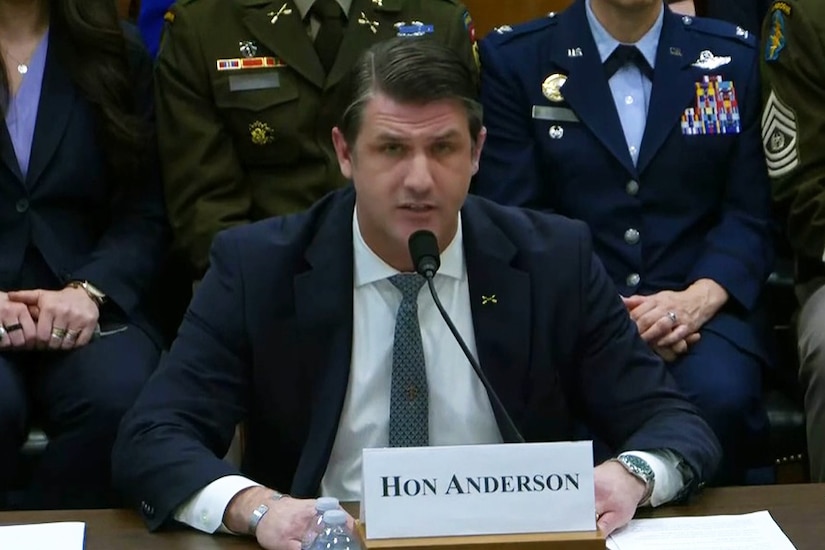
A man in a business suit seated at a table with the sign Hon Anderson" and talks into a mic while three people in military uniform and one in civilian attire sit behind him.

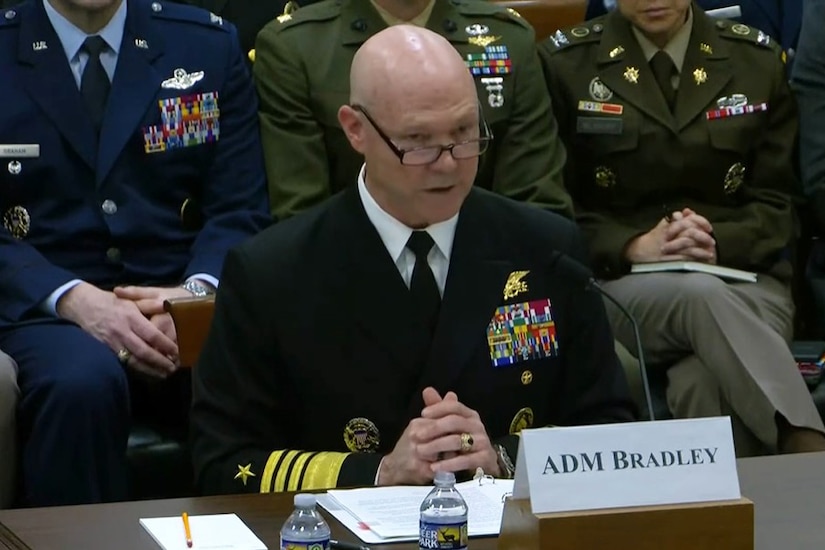
During the hearing, Derrick M. Anderson, assistant secretary of war for special operations and low-intensity conflict, and Navy Adm. Frank M. Bradley​, head of U.S. Special Operations Command, explained how special operations forces are successfully countering U.S. adversaries overseas while comprising just 3% of the joint force and 2% of the War Department's budget.  

"Today's environment rewards forces that can operate persistently and decisively, often below the threshold of armed conflict, generating irregular effects by, through and with our allies and partners in order to produce a whole effect that is much greater than the sum of its parts — your special operations forces provide that capability," Bradley explained during his remarks. 

As an example of this, Anderson pointed out that every major U.S. military operation has a SOF component to it. 

"From the Western Hemisphere, across the Indo-Pacific, to the Middle East, Africa, Europe and beyond, SOF has been decisive in defending the homeland, deterring China and enabling our partners and allies," Anderson said. 

Bradley concurred with that statement, adding that the mission is not accomplished by technology and equipment alone. 

"[Rather,] it is executed by the most decisive advantage that we have: our people," he said. 

Bradley added that the SOF community is strong and getting stronger, empowered by a culture of meritocracy and supported by programs committed to the preservation of SOF personnel and their families.  

During testimony, both leaders explained how building strong partnerships — both between the SOF community and the branches of the joint force and partners and allies around the world — are key to SOF success. 

"When we talk about the military department-to-department relationships, Adm. Bradley and I are 100% working with the other departments not only to give our lessons learned to the Army, the Navy [and] the Air Force, so that their acquisition processes get better, but to learn where [SOF] can get better," Anderson told committee members. 

Bradley said there are presently 6,500 U.S. SOF operators and enablers deployed in about 80 different countries working to build, maintain and sustain generational partnerships and relationships.

A man in military dress uniform sits at a table with a small sign “ADM Bradley" as he talks into a mic. Three people also in dress uniforms sit behind him.

He further explained that such relationships are key to countering influence operations that our adversaries are conducting to prey upon our allies and partners with malign behavior designed to gain unwarned access and leverage over them. 

"Our ability to illuminate that malign behavior, and then to pass it and make our partners aware of it — many times through diplomatic channels, but sometimes directly, mil[itary]-to-mil[itary], security service-to-security service — is a critical way to be able to help undermine our adversaries' actions [overseas]," Bradley said. 

When asked about the top three challenges Socom currently faces this fiscal year, Bradley said that the ability to project force into increasingly contested environment, where our adversaries pose threats to the U.S., is at the top of the list. 

"Our first priority is always to maintain readiness for the current threats that are out there. Crisis response is that top priority for us being able to respond agilely to wherever [the crisis] might present," Bradley said, adding that demands for SOF crisis response have increased 300% over the last five years. 

The second challenge, he said, is to take advantage of the cyber and virtual domain, which he said are critical maneuver spaces. 

"Another aspect of the rapidly evolving, changing character of warfare is the emergence of abundant, lethal autonomy. And yes, that is a threat that we will have to contend with, but it's also one we can leverage," Bradley said. 

"And finally … our people must continue to be our foundation, ensuring they are trained, ready, supported and educated for the future," he said of the third challenge Socom is most focused on this year. 

Looking ahead, Anderson and Bradley said that SOF's transformation and modernization are key to future success. 

"SOF needs sustained partnership, predictable resourcing and continued modernization," Anderson told the committee, adding that congressional support of the SOF community is greatly appreciated. 

"SOF was purpose built for this era of competition, and we can provide an instant, indispensable asymmetric advantage for the joint force and the nation," Bradley told the committee.  

"And with your continued support, we will meet today's missions while transforming to ensure that we are ready for the challenges of tomorrow," he added.  

Tuesday, March 17, 2026

War Department Senior Leaders Prioritize Western Hemispheric Security

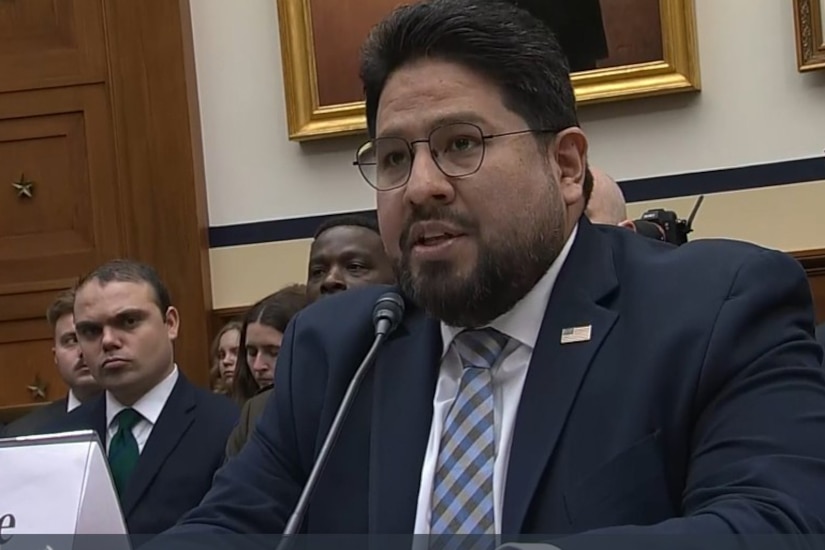
The War Department is prioritizing security in the Western Hemisphere, which is integral to U.S. homeland defense, said Joseph M. Humire, performing the duties of assistant secretary of war for homeland defense and Americas security affairs, who spoke today during a House Armed Services Committee hearing in Washington.

A man speaks into a microphone while sitting at a table in front of spectators.

Joint Task Force Southern Border helped seal the Southwest border in record time through deterrence and close partnership with federal law enforcement, he said, adding that "border security is national security." 

The department has deployed more than 12,000 service members along the border and has established six national defense areas covering 845 miles, or 42% of the border across Arizona, California, New Mexico and Texas.  

Border security is augmented by cutting-edge technology and infrastructure, including counter-unmanned aerial systems and additional miles of border barrier.

Over the last 14 months the department has helped reverse record illegal mass migration into the lowest recorded border encounters in history, Humire said. 

"This past January marked the fourth consecutive month decline in border apprehensions, with figures 93% below the historic average," he added.  

The department is also focused on issues beyond the border.  

"For the first time in history, the department is going on the offense against designated terrorist organizations and other major cartels in our hemisphere," he said. 

Operation Southern Spear is providing deterrence against narco-terrorism threats in the Americas. Since the operation began, there has been a 30% reduction of drug vessel movements in the Caribbean and a 25% reduction in the Eastern Pacific. 

Flows of fentanyl, which Humire called a "weapon of mass destruction," have dropped by 56% and cocaine flows by 20%. 

"That means there are less Americans dying from deadly drugs that have been poisoning our communities and our children for years. In fact, overall, inside the United States, we've seen a 20% decline in U.S. drug overdoses in the last year," he said.  

The Americas Counter Cartel Coalition, a partnership of South American and Caribbean nations formed earlier this month, is aimed at rooting out narco-terrorism threats through deterrence-focused operations, Humire said. 

As of last week, Chile became the 18th member of that coalition.

This month, Ecuador became the first country to conduct joint land strikes in Latin America against cartel infrastructure, bringing collective hard power against cartels and increasing burden sharing.  

The department is also securing "key terrain, from Alaska to Greenland in the Arctic to the Gulf of America and the Panama Canal and surrounding countries," Humire said. 

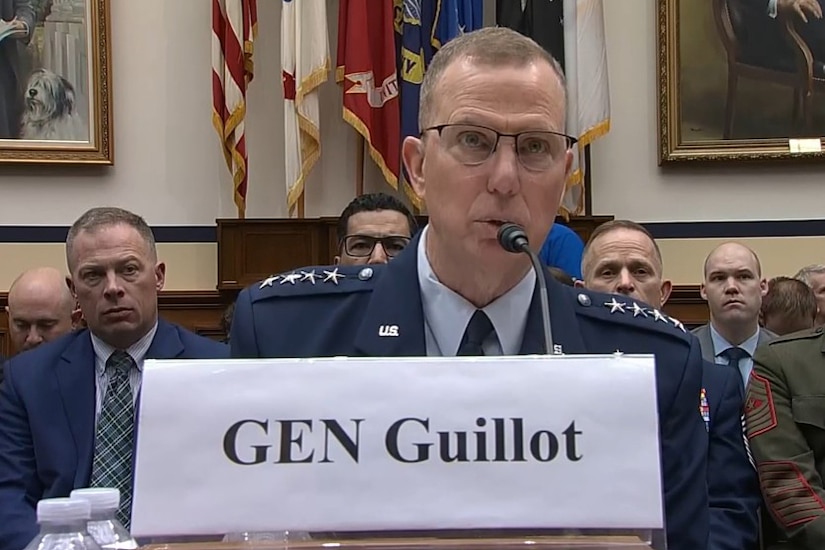
During the hearing, Air Force Gen. Gregory M. Guillot, commander of U.S. Northern Command and the North American Aerospace Defense Command, said NORAD and Northcom are taking on new missions and rapidly implementing innovative approaches to safeguard North America.

A man speaks into a microphone while sitting at a table in front of spectators.

That approach includes deterring adversaries and defending against all threats in all domains, from intercepting long-range bombers off the coasts of Alaska and Canada, tracking advanced maritime platforms in the approaches to North America, and standing ready to defend against long-range missile attacks, the general said, providing some examples of Northcom's focus: 

  • The stand-up of Joint Task Force Gold to address security posed by unmanned aerial systems. 
  • The command is designated as the department synchronizer for counter-small UAS activities in the continental U.S. 
  • Developed a rapidly deployable counter-small UAS fly-away kit to defend critical installations and employ innovative technologies to protect U.S. personnel. 
  • Accelerated the development of new counter-small UAS technologies in partnership with industry, with the aim of providing security in the Arctic. 

The general said that Northcom and NORAD are participating in joint and combined exercises with allies and partners, such as Arctic Edge and Noble Defender. 

"Trusted relationships are a cornerstone of regional security and homeland defense," he added.

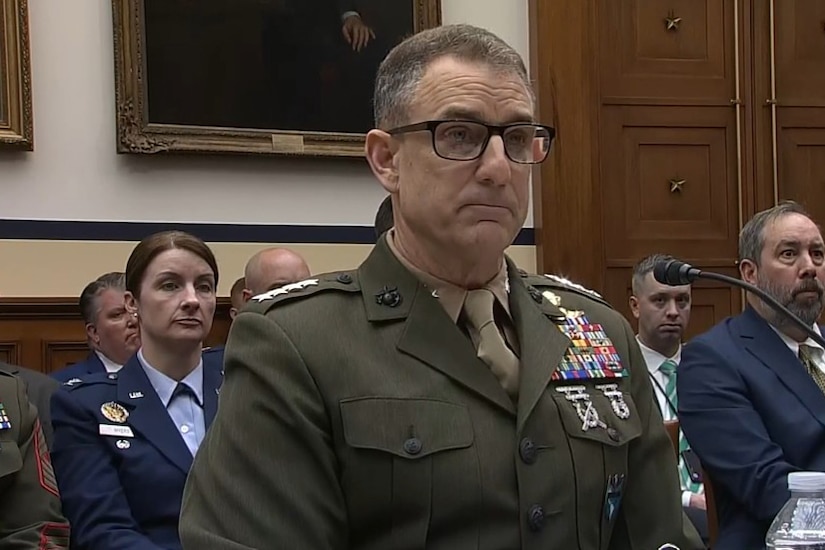
A man speaks into a microphone while sitting at a table in front of spectators.

Marine Corps Gen. Francis L. Donovan, commander of U.S. Southern Command, spoke during the hearing about his command's development of four imperatives: 

  • Strengthening hemispheric command and control by redesigning Southcom headquarters for strategic level operations at range, speed and scale.
  • Imposing total systemic friction on drug cartels and terrorist networks with the help of partner nations.  
  • Developing and fielding cost-effective technology for warfighters, who are aided by autonomous systems, human machine teaming and all-domain awareness and data sharing for U.S. and partner forces.  
  • Denying adversarial footholds and undoing influence in the hemisphere, including preventing their ability to position forces or other capabilities that threaten the homeland or regional partners and challenge access to key terrain like the Panama Canal and its approaches. 

Friday, March 13, 2026

Two ISIS Supporters Charged With Attempting To Detonate Explosive Devices During Protests Outside Gracie Mansion

Avowed ISIS Supporters Emir Balat and Ibrahim Kayumi Attempted to Detonate Two Devices During a Protest and Counter-Protest Outside Gracie Mansion, the Residence of the Mayor of New York

United States Attorney for the Southern District of New York, Jay Clayton, Attorney General for the United States, Pamela Bondi, Deputy Attorney General for the United States, Todd Blanche, Assistant Director in Charge of the New York Field Office of the Federal Bureau of Investigation (“FBI”), James C. Barnacle, Jr., and Commissioner of the New York City Police Department (“NYPD”), Jessica S. Tisch, announced today charges against EMIR BALAT and IBRAHIM KAYUMI alleging that they attempted to detonate two explosive devices in the vicinity of Gracie Mansion, and that they were acting in support of ISIS, a designated foreign terrorist organization.

“As alleged, on Saturday, March 7, during protests taking place outside Gracie Mansion on the Upper East Side, Emir Balat and Ibrahim Kayumi attempted to detonate two improvised explosive devices amongst the protesters,” said U.S. Attorney Jay Clayton.  “Moreover, after being apprehended by NYPD officers, both Balat and Kayumi stated they were aligned with ISIS.  Free speech and peaceable assembly are the bedrock of American democracy.  Violence is not protected speech, and it’s not protected protest.  In New York, violence—particularly acts of terror—will be met with swift justice.  This investigation remains ongoing, and we encourage anyone with further information to please contact tips.fbi.gov online or 1-800-CALL-FBI.”

“This was an alleged ISIS-inspired act of terrorism that could have killed American citizens,” said Attorney General Pamela Bondi.  “We will not allow ISIS’s poisonous, anti-American ideology to threaten this nation—our law enforcement officers will remain vigilant, as they were when these devices were brought to a protest.”

“These men allegedly sought to inflict mass casualties in service to ISIS with the hope of exceeding the carnage of the Boston Marathon bombing,” said Deputy Attorney General Todd Blanche.  “We are tremendously grateful to the brave law enforcement officers who ran into harm’s way to apprehend these individuals and disarm the explosives before anyone was harmed.  Thanks to the quick investigative work by federal law enforcement, this Department of Justice will prosecute these men, who pledged allegiance to a foreign terrorist organization, to the fullest extent.”

“Inspired by ISIS, a designated terrorist organization, Emir Balat and Ibrahim Kayumi allegedly threw one improved explosive device, and attempted to toss another, into a crowd gathered on East End Avenue,” said FBI Assistant Director in Charge James C. Barnacle, Jr.  “Balat and Kayumi sought to incite fear and mass suffering through this alleged attempted terror attack.  Alongside the NYPD, the FBI’s New York Joint Terrorism Task Force will not tolerate those who use violence against targets in New York City to broadcast their terrorist ideologies.”

“As alleged in the complaint, the crimes committed by Emir Balat and Ibrahim Kayumi were not random,” said NYPD Commissioner Jessica S. Tisch.  “This was an act of ISIS-inspired terrorism.  From the first moments since the attack, the NYPD has been working seamlessly with the FBI and the U.S. Attorney’s Office for the Southern District of New York, and I am deeply grateful for their partnership in this investigation.  The men and women of the NYPD will continue to stand watch over this city and selflessly run towards the danger to keep the public safe.”

As alleged in the Complaint:[1]

On or about March 7, 2026, a protest called “Stop the Islamic Takeover of New York City, Stop New York City Public Muslim Prayer” and a counter-protest called “Run Nazis Out of New York City” were held outside of Gracie Mansion in Manhattan, New York.  Gracie Mansion is the official residence of the Mayor of New York City.

At approximately 12:15 p.m., BALAT ignited and threw an explosive device (“Device-1”) toward the area where the protesters were gathered, as pictured below:

description in pr

Immediately after throwing Device-1, BALAT ran to another location down the block and received a second explosive device (“Device-2”) from KAYUMI, as pictured below:

description in pr

After apparently igniting Device-2, BALAT dropped Device-2 near where several NYPD officers were standing, ran away from the NYPD officers, and jumped over a barricade.  He was tackled and arrested by NYPD officers shortly thereafter, as was KAYUMI.  Pictured below are BALAT mid-flight and Device-2 hitting the ground:

description in pr

Following his arrest, while en route to the NYPD precinct, BALAT stated to NYPD officers: “this isn’t a religion that just stands when people talk about the blessed name of the prophet . . . We take action!  We take action!”; and “if I didn’t do it someone else will come and do it.”  Then, after arriving at the NYPD precinct, BALAT requested a piece of paper and, after being given a paper and pen, wrote the following: “All praise is due to Allah lord of all worlds!  I pledge my allegiance to the Islamic State.  Die in your rage yu [sic] kuffar!  Emir B.” “Kuffar” is an Arabic term that refers to “non-believers” or “infidels,” and “Die in your rage” is a slogan used by ISIS.

Law enforcement officers later asked BALAT if he was familiar with the Boston Marathon bombing, and if that was what BALAT had hoped to accomplish.  BALAT responded: “No, even bigger.  It was only three deaths.”

After KAYUMI was arrested, and as he was being placed inside an NYPD vehicle to be transported from the scene to an NYPD precinct, an individual from the surrounding crowd yelled to KAYUMI and asked why KAYUMI had done this.  KAYUMI responded, “ISIS.”  Then, at the NYPD precinct, in response to a question from law enforcement about whether he was affiliated with ISIS, KAYUMI indicated that he was.  He further stated, in substance and part, that: (i) he has watched ISIS propaganda on his phone; (ii) his actions that day were partly inspired by ISIS; (iii) he did not feel comfortable holding the Devices earlier that day; and (iv) he would not feel comfortable if the Devices were in the interrogation room with him.

After BALAT and KAYUMI were arrested and the Devices were secured, an FBI Special Agent Bomb Technician (“SABT”) conducted a preliminary examination of the Devices and determined that they were each approximately the size of a mason jar; that they each had an attached fuse; and that they each had nuts and bolts attached to the exterior, surrounded by duct tape.  A preliminary analysis of Device-1, the device that BALAT threw into the crowd of protesters, showed that it contained TATP, a highly volatile explosive that is colloquially known as the “Mother of Satan” and extremely sensitive to impact, friction, and heat.  TATP has been used in multiple terrorist attacks over the last decade.

Pictured below are the contents inside Device-1 after it was opened by law enforcement:

description in pr

On or about March 8, 2026, law enforcement officers located a parked vehicle registered to a family member of BALAT a few blocks from Gracie Mansion.  From inside the vehicle, law enforcement officers recovered a coiled green material consistent in appearance with hobby fuse, an empty metal can of the same approximate dimensions and appearance as the can recovered from inside Device-1, and a notebook containing handwritten notes.  One page of the notebook contains the note “TATP explosive”; another page contains a list of chemical ingredients, including “hydrogen peroxide,” “sulfuric acid,” and “acetone”; and a third page contains a list of components and quantities, such as “aluminum can x6,” and “a box of bolts ect [sic] 2x.”

*                *                *

BALAT, 18, of Langhorne, Pennsylvania, and KAYUMI, 19, of Newtown, Pennsylvania, are charged with attempted provision of material support and resources to a designated foreign terrorist organization, which carries a maximum sentence of 20 years in prison; use of a weapon of mass destruction, which carries a maximum sentence of life in prison; transportation of explosive materials, which carries a maximum sentence of 10 years in prison; interstate transportation and receipt of explosives, which carries a maximum sentence of 10 years in prison; and unlawful possession of destructive devices, which carries a maximum sentence of 10 years in prison.

The minimum and maximum potential sentences are prescribed by Congress and provided here for informational purposes only, as any sentencing of the defendants will be determined by a judge.

Mr. Clayton praised the outstanding efforts of the New York Joint Terrorism Task Force of the FBI, which consists of investigators and analysts from the FBI, the NYPD, and over 50 other federal, state, and local agencies. Mr. Clayton also thanked the Counterterrorism Section of the Department of Justice’s National Security Division, the New York City Police Department, U.S. Customs and Border Protection, the New York State Police, Homeland Security Investigations, the FBI Newark Field Office, the FBI Philadelphia Field Office, the Port Authority of New York and New Jersey, and the Bureau of Alcohol, Tobacco, Firearms and Explosives for their assistance.

This case is being handled by the Office’s National Security and International Narcotics Unit.  Assistant U.S. Attorneys Jonathan L. Bodansky and Jane Y. Chong are in charge of the prosecution, with assistance from Trial Attorney James Donnelly of the Counterterrorism Section and paralegal specialist Juan Muñoz.

 [1] As the introductory phrase signifies, the entirety of the charging instrument to date constitutes only allegations, and every fact described herein should be treated as an allegation.

Wednesday, March 11, 2026

War Department Continues to Encourage Civilians to Augment Homeland Security Border Mission

Last year, the War Department announced a unique opportunity for department civilians to serve at the Department of Homeland Security and support DHS as it works to keep America safe.

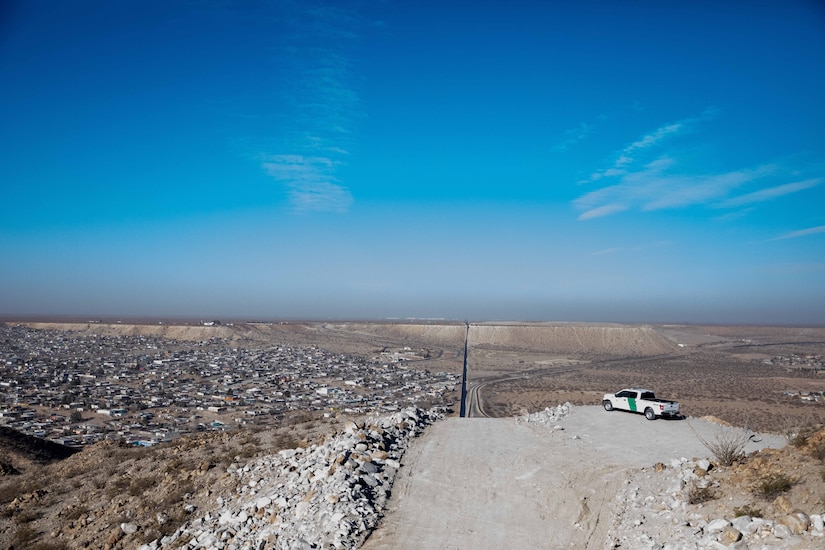
A truck sits on a hill overlooking a wide arid desert valley with a town of small buildings in the distance and a big blue sky overhead.

Six months in, Secretary of War Pete Hegseth wants department civilians and their supervisors to know this opportunity still exists; DHS still needs help. Supervisors across the department should ensure interested employees can participate whenever possible.

"I encourage all who are interested to volunteer for this detail opportunity. Supporting interior immigration enforcement actions, apprehending illegal aliens and securing our borders are vital to the national security of the United States," Hegseth said in a Feb. 19 memorandum. "I expect every supervisor to encourage their civilian employees to volunteer. Leadership must continue to promote this detail program and educate their civilian employees on its importance."

The secretary noted that supervisors must approve any volunteer requests that do not conflict with mission-essential functions. Any DOW civilian can volunteer, regardless of their job or skills; no resume is needed.

Department employees can sign up on the USAJobs website, where they will complete a short questionnaire and upload required documents. Details to Homeland Security last about 60 days, though volunteers have the opportunity to do a total of three 60-day details with the agency.

"Securing our border and defending the homeland are a whole-of-government effort that benefits from the diverse skill set of the department's civilian workforce," said Tim Dill, assistant secretary of war for manpower and reserve affairs. "We thank all employees who have answered the call to support our partners at DHS and encourage others to explore this opportunity."

Since the opportunity was announced in August 2025, nearly 1,000 DOW civilians have been added to the roster to assist DHS, and more than 200 have already been deployed.

Michael A. Cogar, the deputy assistant secretary of war for civilian personnel policy, noted those War Department civilians who have stepped up to help DHS have returned and said the experience was rewarding.

"I've gotten feedback from the department civilians who've returned from their deployments on how meaningful it has been for them to be a part of this mission," Cogar said.

War Department civilians who volunteer to work with DHS will be assigned to support roles within U.S. Immigration and Customs Enforcement and U.S. Customs and Border Protection, focusing on data entry, operational planning support, processing and throughput logistics, and logistical support.

Detailed employees may be deployed to a variety of locations in the U.S., including San Diego; Williston, Vermont; Chicago; and El Paso, Texas. Right now, Cogar said, the biggest need voiced by DHS is for volunteers to work at the call center tipline in Vermont.

The War Department and DHS both defend the homeland, he said. This makes War Department civilians well-suited for details at ICE and CBP.

"This detail program is unique to the Department of War and DHS," Cogar said. "It really goes back to what our Department of War civilians are capable of. They are out there every day supporting the warfighter in critical national security missions. They know exactly how to execute when it comes to supporting this requirement from DHS, to make sure that their agents have everything they need when it comes to logistics and administrative support, so they can go out there and execute in the field and help secure our nation's borders to protect our American citizens."

Monday, March 09, 2026

JIATF 401 Publishes Guide to Counter-Drone Technology and Privacy Protections

The Joint Interagency Task Force 401 today announced the publication of "Counter-UAS Operations: Safeguarding Freedoms and Preserving Privacy," a comprehensive guide to the sensor technologies used to detect and identify drone threats and the legal framework that governs their use.

As the threat from unauthorized and nefarious small unmanned aerial systems continues to evolve, JIATF-401 is leading the effort to deploy effective countermeasures while upholding critical privacy protections.

This new guide provides insight into the passive, non-intrusive sensor technologies — such as Radar, Electro-Optical/Infrared, and Radio Frequency Detection — that allow security personnel to maintain airspace awareness without interfering with civilian drone operations.

"Countering drones is not just a battlefield problem — it's a homeland defense imperative," said Brig. Gen. Matt Ross, director of JIATF-401. "Our goal is to integrate sensors, effectors and mission command systems in a distributed network that protects service members and American citizens alike."

Brig. Gen. Ross noted, "This guide is part of our commitment to transparency, ensuring that as we deploy these critical technologies, we do so in a way that is responsible, respects privacy, and maintains public trust."

A key focus of the document is explaining how these systems operate in compliance with Federal Surveillance Law. By analyzing only the physical properties of a signal — its "signal fingerprint" — and not the content of a transmission, these C-UAS systems can effectively identify the type of drone and its location without infringing on individual privacy.

"Our approach is to safeguard privacy by design," said Col. Scott Humr, deputy director of science and technology for JIATF-401. "The technologies we are fielding are engineered to be effective while adhering to strict privacy principles. By focusing on data minimization and secure handling processes, we collect only what is necessary to identify a potential threat. This allows us to protect critical infrastructure and public safety without compromising the civil liberties that we are sworn to defend."

The publication of this guide is part of JIATF-401's broader mission to synchronize C-UAS efforts across the Department of War and with interagency partners, rapidly delivering capabilities to the warfighter and protecting the homeland.

Thursday, March 05, 2026

Statement by Chief Pentagon Spokesman Sean Parnell on the Americas Counter-Cartel Conference

Today, the Secretary of War Pete Hegseth hosted defense and security leaders from 17 countries across the Western Hemisphere in Doral, Florida, for the Americas Counter-Cartel Conference. By bringing together defense ministers, senior officials, and security leaders from across the region, this conference advances President Trump's commitment to peace through strength and to working with partners to confront cartel networks and malign actors that threaten the safety and security of our nations. 

Participating countries reaffirmed their shared commitment to peace, sovereignty, and stability in our shared neighborhood. Recognizing the growing threat posed by transnational criminal organizations, partner nations committed to expanding bilateral and multilateral cooperation and deepening collaboration on key security priorities, including border security, countering narco-terrorism and trafficking, and protecting critical infrastructure. 

The Department of War values the strong partnerships that make collective action possible to prevent external powers from interfering in our neighborhood and confronting shared threats. We look forward to working with these committed nations to support efforts that strengthen regional cooperation and advance a safe, secure, and prosperous Western Hemisphere.