
Paratroopers help evacuees at Hamid Karzai International Airport, Kabul, Afghanistan, Aug 22, 2021.
Paratroopers help evacuees at Hamid Karzai International Airport, Kabul, Afghanistan, Aug 22, 2021.
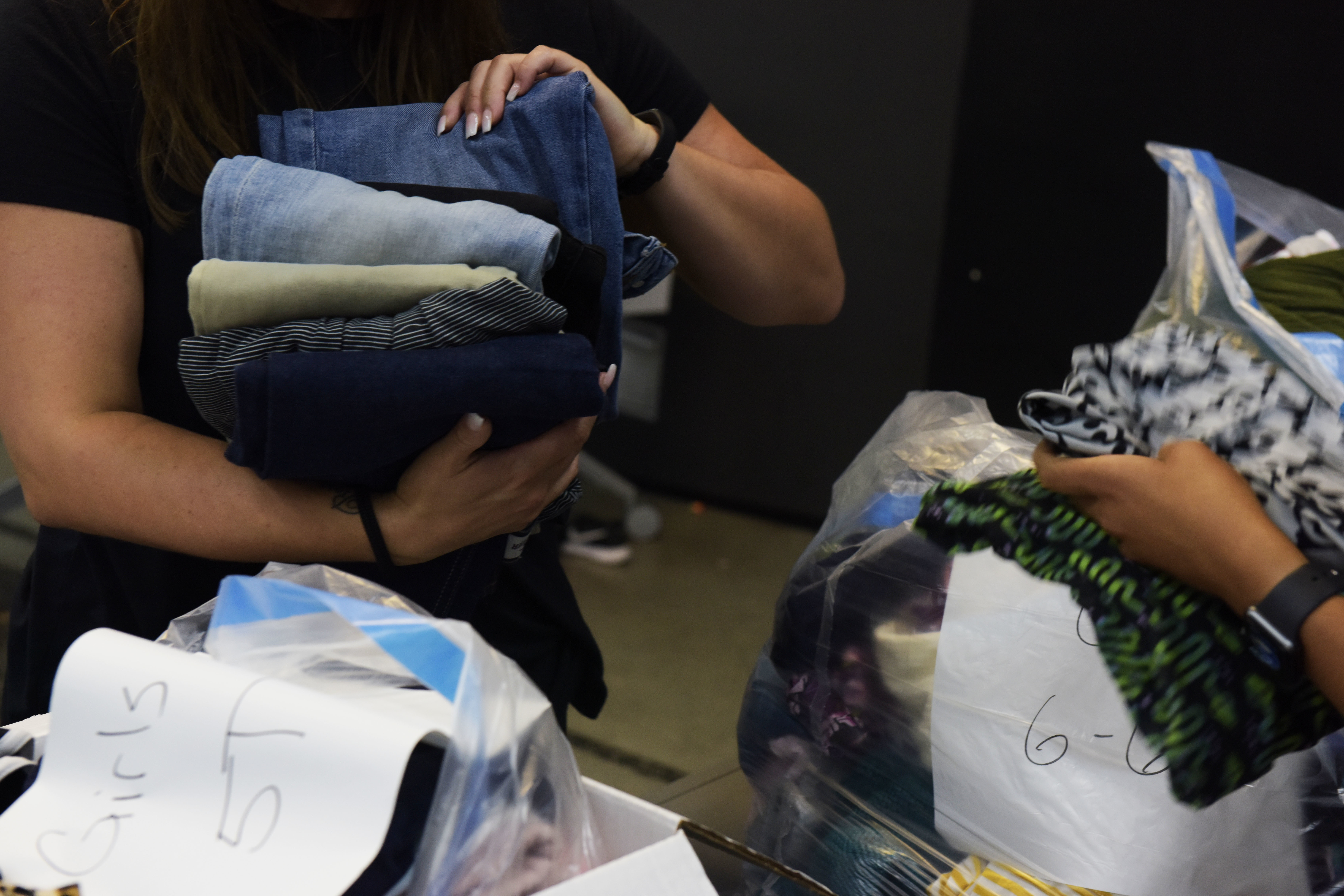
Volunteers sort and fold donated clothing at Ramstein Air Base, Germany, Aug. 22, 2021. First sergeants organized donations of clothing, toys, hygiene supplies and diapers in support of Operation Allies Refuge.
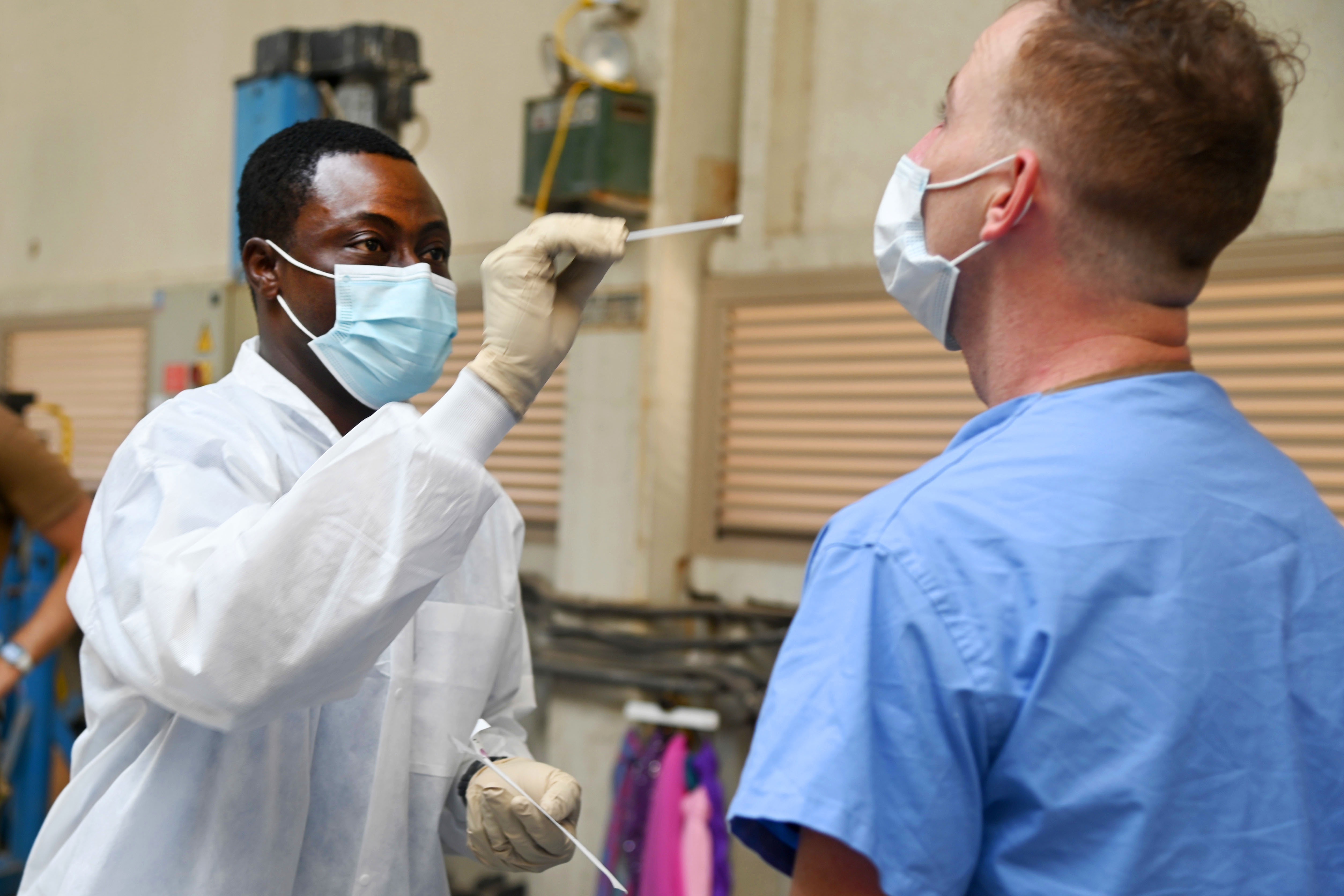
Medical staff from Navy Medical Readiness and Training Command Sigonella in Italy rehearse COVID-19 screening procedures in support of the Defense Department's mission to facilitate the safe departure and relocation of U.S. citizens, special immigration visa recipients, and vulnerable Afghan populations from Afghanistan at Naval Air Station Sigonella, Italy, Aug. 20, 2021.

A sailor assists an Afghan evacuee at Naval Air Station Sigonella, Italy, Aug. 22, 2021. The installation is currently supporting the Department of Defense mission to facilitate the safe departure and relocation of U.S. citizens, special immigration visa recipient and vulnerable Afghan populations from Afghanistan.
An increase in flight operations has resulted in one aircraft now leaving Hamid Karzai International Airport about every 45 minutes.


About 58,000 American citizens, civilian allies, Afghan special immigrant visa applicants and other vulnerable Afghans have been taken out of harm's way since August 14, Army Maj. Gen. William D. "Hank" Taylor said during a briefing today at the Pentagon.
"I want to reiterate that we're able to achieve this level of increased departures because of U.S. military personnel and our partner's work around-the-clock to conduct this highly important mission, including airport security and flight operations," Taylor said.
Those aircraft are now taking evacuees to one of the 14 intermediary locations in Europe and the Persian Gulf region. Additional intermediary locations in Germany, Spain and Italy are being considered as well.
"This allows us to expedite movement out of Kabul and gives us flexibility from these intermediate staging bases," Taylor said. "We are appreciative of the support in this global effort from our allies and partners. We remain focused on the mission of bringing as many people home as we can, as quickly as we can."
In the United States, four U.S. military installations, including Fort Lee, Virginia; Fort Bliss, Texas; Fort McCoy, Wisconsin; and Joint Base McGuire-Dix-Lakehurst, New Jersey, are now playing host to evacuees from Afghanistan.
In the past 24 hours, Taylor said, four flights landed at Dulles International Airport in Virginia, with more than 1,000 passengers.

"These passengers and their families will go to one of the four military installations, designated as processing locations," Taylor said. "All this progress stems from the teamwork and professionalism — especially of our interagency partners here in the States. We know more hard work remains and that our personnel in Afghanistan remain vigilant, and we share the sense of urgency in this effort."
While many Afghan citizens hope to leave Afghanistan and start a new life elsewhere, there are also many Americans still in Afghanistan who want to leave. Already, several thousand have been evacuated, Kirby said, and continuing that mission remains a priority for the department, said Pentagon Press Secretary John F. Kirby.
"We continue to make progress every day in getting Americans, as well as SIV applicants and vulnerable Afghans out," Kirby said. "We ... remain committed to getting any and all Americans that want to leave — to get them out."
Kirby said with recent increases in capacity and the flow, the department has the ability to get that mission done by the end of the month.
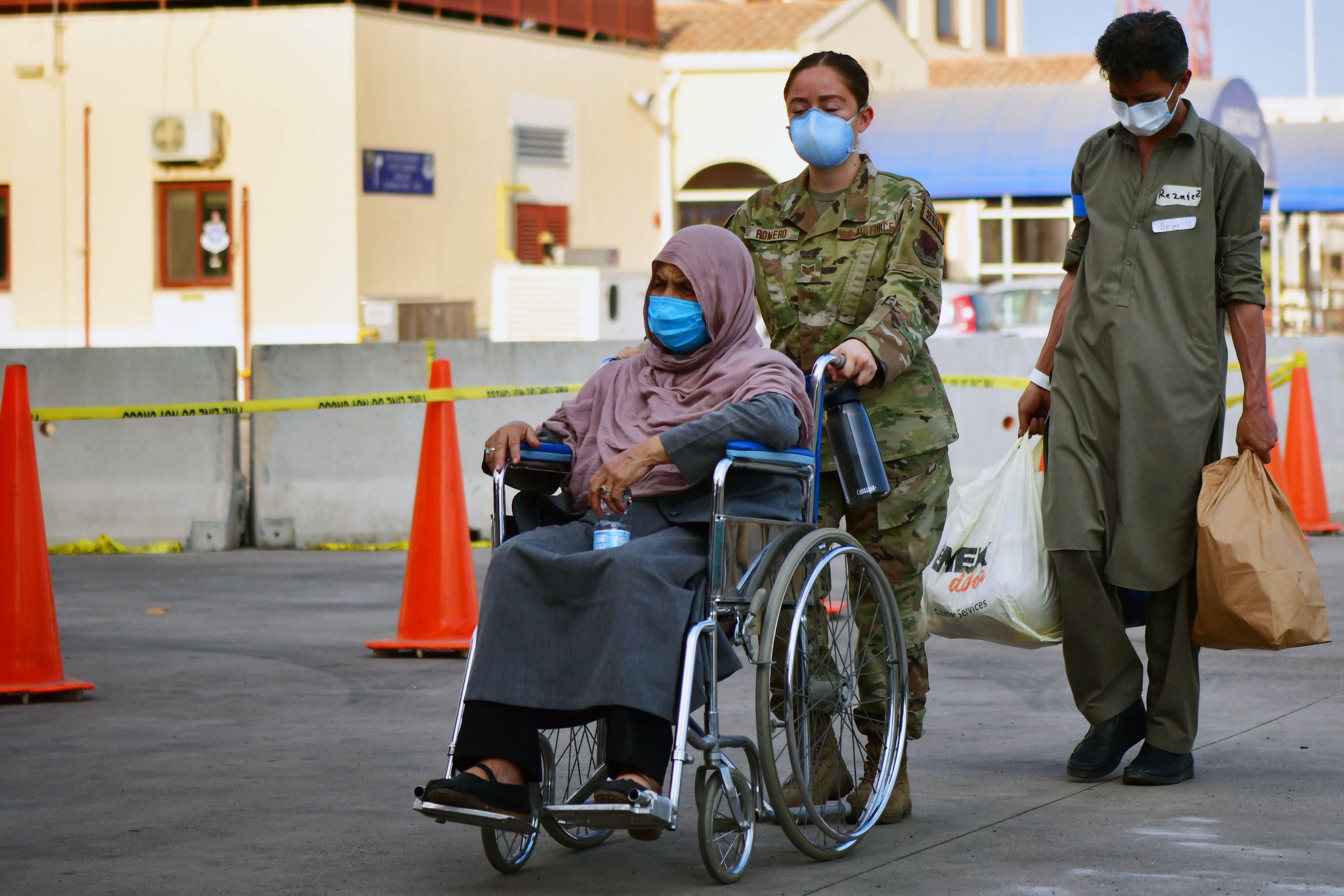
Air Force Senior Airman Romero assists an Afghan evacuee upon arrival at Naval Air Station Sigonella, Italy, Aug. 22, 2021. The installation is currently supporting the Department of Defense mission to facilitate the safe departure and relocation of U.S. citizens, special immigration visa recipients and vulnerable Afghan populations from Afghanistan.
Defendant Traveled from the United States to Tunisia in 2016 With the Goal of Crossing into Libya to Join the Islamic State
Earlier today, a federal jury in Brooklyn convicted Bernard Raymond Augustine, a U.S. citizen and California resident, of attempting to provide material support to a designated foreign terrorist organization, the Islamic State of Iraq and al-Sham (“ISIS” or “the Islamic State”). The verdict followed a one-week trial before U.S. District Judge Sterling Johnson Jr. When sentenced, Augustine faces up to 20 years in prison.
The evidence at trial established that in February 2016, the defendant traveled from San Francisco, California, to Northern Africa, with the goal of joining ISIS, a designated foreign terrorist organization. In the months leading up to his travel, the defendant watched ISIS propaganda, including videos glorifying ISIS’s violence, such as “The Flames of War.” The defendant conducted internet searches for, among other things, “how to safely join ISIS,” and reviewed websites related to ISIS recruitment practices, including one titled “How does a Westerner join ISIS? Is there a recruitment or application process?”
Augustine also posted numerous statements in support of ISIS and violent extremism on the internet. He posted statements such as “the Islamic State is the true Islam,” “Muslims who leave the west . . . answer the call for the struggle, and march until they are victorious or martyred are the true believers,” and the ISIS caliphate “can’t be established and maintained except through the blood of the mujahideen who practice the true belief.”
Augustine then purchased a one-way airplane ticket and traveled to Tunisia so that he could present himself as a willing participant in ISIS’s terrorist activity. After arriving in Tunisia, Augustine was detained by local authorities before he could make it to ISIS-controlled territory across the border in Libya. He was subsequently returned to the United States in 2018, where he was brought to the Eastern District of New York for prosecution.
Acting Assistant Attorney General Mark J. Lesko of the Justice Department’s National Security Division, Acting U.S. Attorney Jacquelyn M. Kasulis for the Eastern District of New York, Assistant Director-in-Charge Michael J. Driscoll of the FBI’s New York Field Office, and Commissioner Dermot F. Shea of the New York City Police Department (NYPD) announced the verdict.
The government’s case is being handled by the U.S. Attorney’s Office’s National Security and Cybercrime Section. Assistant U.S. Attorneys Craig R. Heeren, Josh Hafetz and Jonathan E. Algor are in charge of the prosecution, with assistance provided by Trial Attorneys Phil Viti and George Kraehe of the National Security Division’s Counterterrorism Section. The Justice Department’s Office of International Affairs provided assistance.

Evacuees load onto a U.S. Air Force Boeing C-17 Globemaster III during an evacuation at Hamid Karzai International Airport, Kabul, Afghanistan, Aug. 21, 2021.
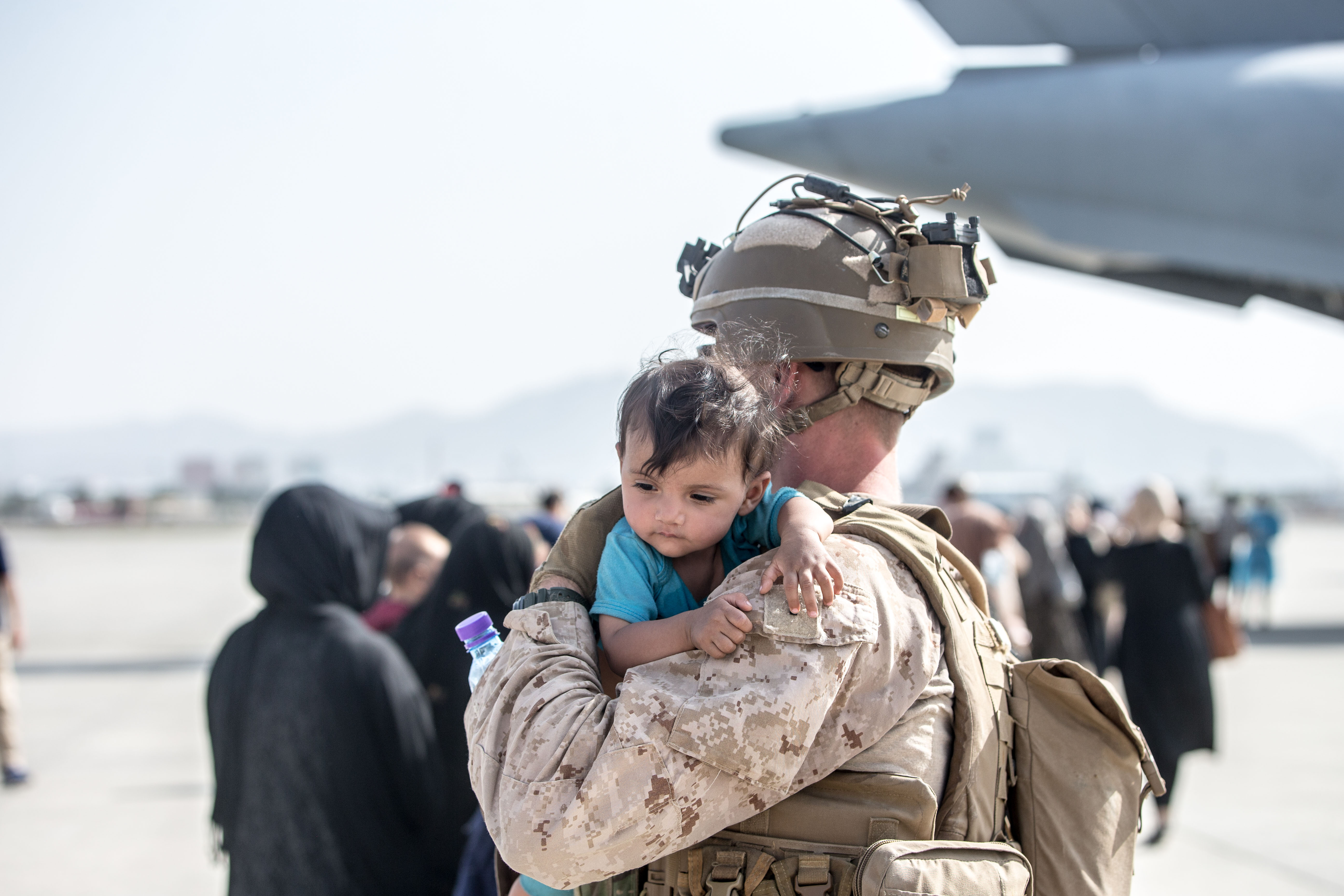
A Marine calms an infant during an evacuation at Hamid Karzai International Airport, Kabul, Afghanistan, Aug. 21, 2021.

A Marine hands water to evacuees at Hamid Karzai International Airport, Kabul, Afghanistan, Aug. 22, 2021. U.S. service members are assisting the Department of State with a non-combatant evacuation operation in Afghanistan.

Naval Air Station Sigonella Command Master Chief Anna Wood assists an evacuee disembarking a U.S. Air Force KC-10 Extender, Aug. 22, 2021. NAS Sigonella is currently supporting the Department of Defense mission to facilitate the safe departure and relocation of U.S. citizens, special immigration visa recipients and vulnerable Afghan populations from Afghanistan.

Air Force personnel conduct airlift operations at Joint Base Charleston, S.C., in support of the Afghanistan withdrawal, Aug. 17, 2021.

Airmen prepare to load qualified evacuees aboard a U.S. Air Force C-17 Globemaster III aircraft at Hamid Karzai International Airport, Kabul, Afghanistan, Aug. 21, 2021. The Defense Department is committed to supporting the State Department in the departure of U.S. and allied civilian personnel from Afghanistan, and to safely evacuate Afghan allies.
Aug. 23, 2021
The Department of Defense and the Office of Military Commissions will allocate seats for news media aboard a military-chartered aircraft for travel from Joint Base Andrews (JBA) in Maryland to Naval Station Guantanamo Bay (NSGB) Cuba to cover military commission proceedings scheduled for United States v. Majid Shoukat Khan, Oct. 28 – 29, 2021.
Currently, the tentative flights will be available as follows:
Please note that the flight schedule, to include departure and arrival locations, is subject to change. Media desiring to view this hearing from NSGB must complete the online travel request form. All requests must be received no later than noon EDT, Friday, Aug. 27. Multiple requesters from the same organization must register separately via the online travel request form.
Due to a limited number of seats aboard the flight and limited accommodations at NSGB, selection is not guaranteed. Additionally, all traveling media shall have printed proof of a negative polymerase chain reaction (PCR) COVID-19 viral test within 72 hours prior to the charter flight departing the national capital region. A test is not required for media who have a confirmed COVID positive test result within 90 days of travel if written proof from a medical provider can be provided no later than Oct 8.
Media who can provide proof of being fully vaccinated will be allowed on the OMC charter flight. Media who are fully vaccinated (post 14-days from receiving complete COVID 19 vaccination) are not required to quarantine upon arrival at NSGB. Media who are not fully vaccinated may not view the hearing from NSGB. All media are subject to surveillance testing while on NSGB and will adhere to personal protective equipment (PPE) requirements directed by the NSGB Commanding Officer.
Additional viewing is available for media via Closed Circuit Television (CCTV) from a media work center at Fort George G. Meade, in Maryland. Regular COVID-19 mitigation protocols, such as mask wearing and social distancing apply at all locations, although media viewing from Fort Meade are not subject to COVID-19 testing or ROM requirements.
Media desiring to view this hearing from Fort Meade must send their requests via email to osd.mc-alex.OMC.mbx.omc-pa@mail.mil with the following information (multiple requesters from the same organization must send separate emails):
Subject Line: Khan 28-29 OCT 2021
NOTE 1: The primary purpose of travel to Guantanamo Bay, Cuba is courtroom reporting. Tours of the detention facilities are not available. Requests for reporting on Guantanamo topics unrelated to the military commissions must be coordinated in advance through the respective Public Affairs Officers of the Office of the Secretary of Defense, U.S. Southern Command, and/or NSGB.
NOTE 2: All media must ensure their passports and visas (foreign press) are up-to-date and eligible to enter and exit the United States.
View Expeditionary Legal Complex – B-roll 2017
View Expeditionary Legal Complex – Photos 2014
Further information including the media ground rules can be viewed at the Office of Military Commissions website at https://www.mc.mil.
Aug. 22, 2021
Secretary of Defense Lloyd J. Austin III has ordered the Commander of U.S. Transportation Command to activate Stage I of the Civil Reserve Air Fleet (CRAF). CRAF activation provides the Department of Defense access to commercial air mobility resources to augment our support to the Department of State in the evacuation of U.S. citizens and personnel, Special Immigrant Visa applicants, and other at-risk individuals from Afghanistan.
The current activation is for 18 aircraft: three each from American Airlines, Atlas Air, Delta Air Lines and Omni Air; two from Hawaiian Airlines; and four from United Airlines. The Department does not anticipate a major impact to commercial flights from this activation.
CRAF activated aircraft will not fly into Hamid Karzai International
Airport in Kabul. They will be used for the onward movement of
passengers from temporary safe havens and interim staging bases.
Activating CRAF increases passenger movement beyond organic capability
and allows military aircraft to focus on operations in and out of in
Kabul.
CRAF is a National Emergency Preparedness Program designed to augment
the Department’s airlift capability and is a core component of
USTRANSCOM’s ability to meet national security interests and contingency
requirements. Under CRAF, the commercial carriers retain their Civil
Status under FAA regulations while USTRANSCOM exercises mission control
via its air component, Air Mobility Command.
This is the third CRAF activation in the history of the program. The
first occurred in support of Operations Desert Shield/Storm (Aug. 1990
to May 1991), and the second was for Operation Iraqi Freedom (Feb. 2002
to June 2003).
The DOD’s ability to project military forces is inextricably linked to
commercial industry, which provides critical transportation capacity as
well as global networks to meet day-to-day and contingency requirements.
Utilizing commercial partners expands USTRANSCOM’s global reach as
well as access to valuable commercial intermodal transportation systems.
The Secretary greatly appreciates the support of our industry partners in this critical mission.

A Marine calms an infant at Hamid Karzai International Airport, Kabul, Afghanistan, Aug. 20. Service members and coalition partners are assisting the Department of State with a non-combatant evacuation operation in Afghanistan.

A Marine interacts with children during an evacuation at Hamid Karzai International Airport, Afghanistan, Aug. 18, 2021. U.S. service members are assisting the Department of State with an orderly drawdown of designated personnel in Afghanistan.

A Marine fists bumps a child evacuee during a military drawdown at Hamid Karzai International Airport, Afghanistan, Aug. 18, 2021. U.S. service members are assisting the Department of State with an orderly drawdown of designated personnel in Afghanistan.
Aug. 20, 2021 | , DOD News
Since he addressed the nation Monday, the U.S. military has made significant progress, the president said. "We've secured the airport, enabling flights to resume — not just military flights, but civilian charters and others from other countries, and the [non-governmental organizations] taking out civilians and vulnerable Afghans."

There are nearly 6,000 U.S. troops on the ground, including the 82nd Airborne, providing airport runway security. The Army's 10th Mountain Division is standing guard around the airport and the 24th Marine Expeditionary Unit is assisting the civilian departures, he said.
The U.S. military moved out 5,700 evacuees yesterday and Biden said the government is working to verify the number of Americans who are still in Afghanistan and how many U.S. citizens have been able to return to the United States.
Briefly closed this morning to process evacuees at the transit points, the Hamid Karzai International Airport in Kabul has resumed flights this afternoon, Eastern Daylight Time, he noted.
"We've already evacuated more than 18,000 people since July and approximately 13,000 since our military airlift began Aug. 14," Biden said. "More have been evacuated on private charter flights facilitated by the U.S. government … [including] American citizens and permanent residents, as well as their families. It includes [special immigration visa applicants] and their families, the Afghans who have worked alongside the United States and its coalition forces, served alongside us, went into combat with us and provided invaluable assistance to us, such as translators and interpreters," he added.

The U.S. military is also arranging flights for U.S. allies and its partners and is working closely on operational coordination with NATO, Biden said. Troops also provided overwatch for the French convoy, bringing hundreds of their people from the French Embassy to the airport.
"These operations are going to continue over the coming days before we complete our drawdown," the president said. "We're going to do everything we can to provide safe evacuation for our Afghan allies, partners and Afghans who might be targeted because of their association with the United States."
Biden said any American who wants to come back to the United States can return home.
"Make no mistake: This evacuation mission is dangerous and involves risks to our armed forces, and it has been conducted under difficult circumstances," the president said. "I cannot promise what the final outcome will be … without risk or loss. But as commander-in-chief, I can assure you that I will mobilize every resource necessary. And as an American, I offer my gratitude to the brave men and women of the U.S. armed forces who are carrying out this mission."

As the United States continues to work on the logistics of evacuation, it's in constant contact with The Taliban, to ensure civilians have safe passage to the airport, he said. "We made clear to the Taliban that any attack on our forces or disruption of our operations at the airport will be met with swift and forceful response," he emphasized.
U.S. troops are also keeping a close watch on potential terrorist threats at or around the airport, including from ISIS affiliates in Afghanistan, Biden said, adding, "We're going to retain a laser focus on our counterterrorism mission, working in close coordination with our allies and our partners, and all those who have an interest in ensuring stability in the region."
The president said the G-7 Summit will convene next week, so the nations' heads of state can coordinate a mutual approach on Afghanistan. The United States has also discussed the need to work with the international community to provide humanitarian assistance, such as food, aid, medical care for refugees who have crossed into neighboring countries to escape the Taliban, and to bring international pressure on the Taliban with respect to the treatment of Afghan people overall, but particularly women and girls.

"This past week has been heartbreaking," Biden said. "We've seen gut-wrenching images of panic — people acting out of sheer desperation. They're frightened or sad, and uncertain of what happens next. I don't think any one of us can see these pictures and not feel that pain on a human level."
Biden said he talks to U.S. commanders on the ground every single day. "I make it clear to them we'll get them whatever they need to do the job. They're performing to the highest standard under extraordinarily difficult and dynamic circumstances. Our NATO allies are strongly standing with us and their troops are keeping sentry alongside ours in Kabul. Whenever I deploy our troops into harm's way, I take that responsibility seriously. I carry that burden every day," he said.
The evacuations comprise the United States' focus now, Biden said, adding, "and when this is finished, we will complete our military withdrawal and finally bring to an end the 20 years of American military action in Afghanistan."
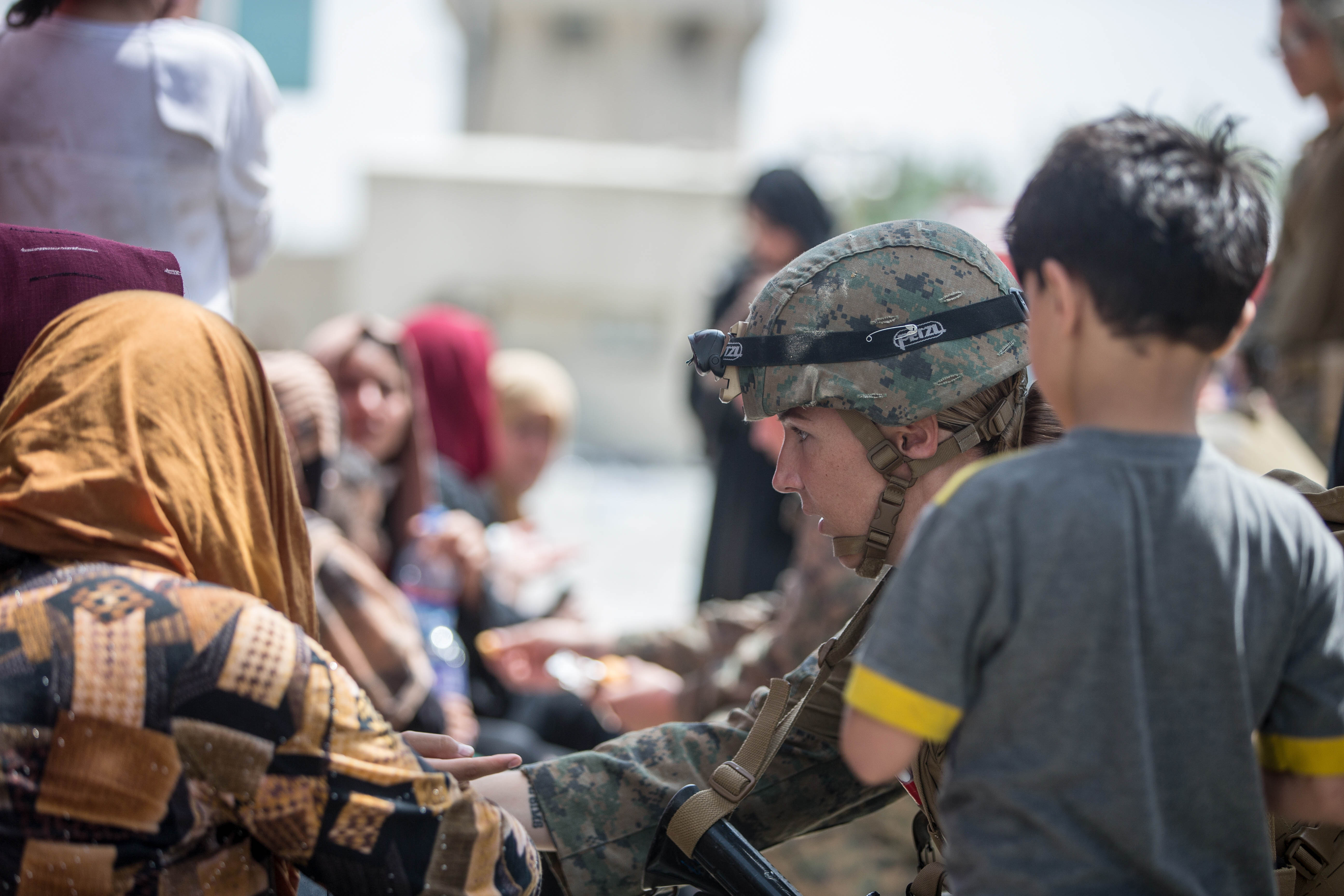
A Marine checks the well-being of evacuees at Hamid Karzai International Airport, Kabul, Afghanistan, Aug. 20, 2021. U.S. service members are assisting the Department of State with an orderly drawdown of designated personnel in Afghanistan.

U.S. Marines, along with British and Turkish forces assist a child during an evacuation at Hamid Karzai International Airport, Kabul, Afghanistan, Aug. 20, 2021. U.S. service members are assisting the Department of State with a non-combatant evacuation operation (NEO) in Afghanistan.

An airman carries supplies intended for Afghan evacuees at Ramstein Air Base, Germany, Aug. 20, 2021. Ramstein Air Base is providing safe, temporary lodging for qualified evacuees from Afghanistan as part of Operation Allies Refuge during the next several weeks

A Marine provides fresh water to a child at Hamid Karzai International Airport, Kabul, Afghanistan, Aug. 20, 2021. U.S. service members are assisting the Department of State with an orderly drawdown of designated personnel in Afghanistan.
WASHINGTON—The Department of Homeland Security’s Countering Weapons of Mass Destruction Office (CWMD) awarded a $6.7M task order to procure 2,364 Polimaster next-generation personal radiation detectors (PRDs) for the U.S. Coast Guard. These PRDs are specialized for use in a maritime environment to detect radiological and nuclear threats. The task order award was made under an existing blanket purchase agreement with William F. Hawk Consulting.
“As detection capabilities continue to advance, DHS must stay ahead of the curve,” said CWMD acting Assistant Secretary Gary Rasicot. “I am proud of the CWMD team for working hard to ensure that USCG personnel has the best technology available to carry out their critical mission.”
Standard PRDs are pager-size devices worn by operators to detect radiological and nuclear threats. Since the maritime environment poses a challenge for standard PRDs, CWMD worked to adjust the device’s capabilities to detect emerging threats on the seas. U.S. Coast Guard utilizes the maritime variant PRDs to monitor their unique environment, in addition to land environments, for changes in the natural radiation level. Maritime variant PRDs signal a threat is present by alarming the user if the sea environment’s radiation level exceeds the natural amount and localizes the threat.
CWMD announced the first contract award to procure maritime variant PRDs in July 2020 for 3,001 devices and associated training. This latest task order of 2,364 PRDs is anticipated to be completed in July 2022.
CWMD serves as the U.S. Department of Homeland Security’s focal point for counter-WMD efforts. By supporting operational partners across federal, state, and local levels, CWMD coordinates and manages the detection effort for chemical, biological, radiological, nuclear (CBRN), and health security threats. CWMD is committed to enhancing domestic law enforcement and first responder detection, interdiction, response, and reporting of CBRN threats.Aug. 19, 2021 | , DOD News
While the situation on the ground could change, currently, people are being let through checkpoints at the Hamid Karzai International Airport, he said.

DOD personnel are in direct and frequent contact with the Taliban outside the airport to facilitate the flow of evacuees, he continued.
"We don't want to see anyone harassed or hurt" as evacuees arrive at the airport, he said. Thus far, the movement is progressing with U.S. forces providing airport security and facilitating flight operations.
U.S. troops, in concert with State Department consular officials, are manning the airport checkpoints to aid the flow of evacuees. "It's a team effort," he said.
The State Department is the lead federal agency for processing special immigrant visas for qualified Afghans.
Going forward, Kirby said that almost all of the equipment and personnel needed for the evacuation has arrived and space on the outgoing aircraft is being devoted to those who are departing.

A C-17 aircraft, he noted, seats about 300 people. Dozens of sorties a day can fly out of Kabul, but the limiting factors could include security situations on the ground and weather, so pinning an exact number of evacuations per day going forward would be problematic.
Kirby noted that the U.S. is also working with other nations to
evacuate their personnel. He also said that the U.S. is in discussions
with regional and European partners to facilitate the movement and
relocation of people out of Afghanistan.
Aug. 19, 2021 | , DOD News
The U.S. military footprint at Hamid Karzai International Airport has expanded to 5,200 troops, and there are now more gates for entry onto the field, said Army Maj. Gen. William D. "Hank" Taylor, the Joint Staff's deputy director for regional operations. This will help ensure safe and efficient operations for evacuees.
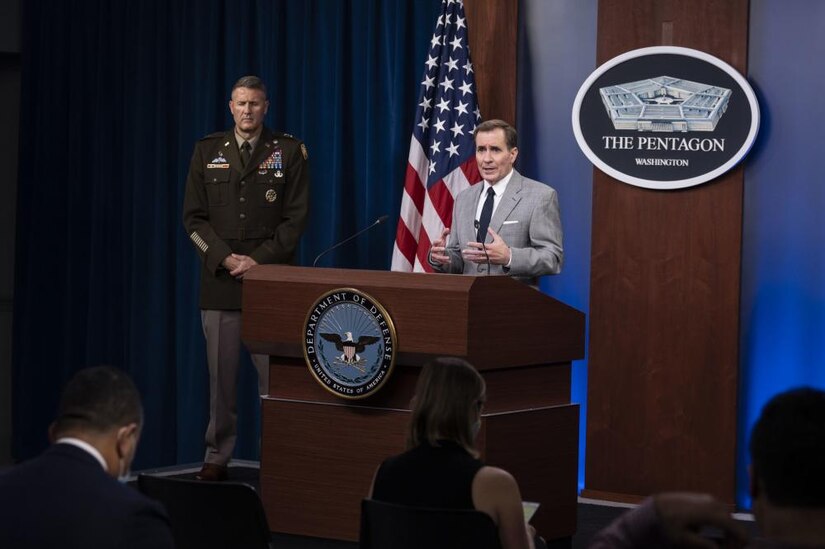
Taylor and Pentagon Press Secretary John F. Kirby held a briefing this morning shortly after an interview with President Joe Biden on the situation in Kabul was broadcast. In that interview, Biden vowed to get Americans, Afghans enrolled in the special immigrant visa program, third country allies and Afghans designated "special risk" out of the country. He left the door open to extending the mission past the August 31 deadline.
"If he believes that there's a need to alter the timeline … he would revisit that at the appropriate time," Kirby said.
In the past 24 hours, 13 C-17s arrived with additional troops and equipment, and 12 C-17s departed carrying more than 2,000 people, Taylor said. These flights left Kabul and arrived at designated safe havens and staging areas in the U.S. Central Command area of operations.
Since the start of non-combatant evacuation operations on August 14, the military has airlifted about 7,000 evacuees.

"This increase is reflective of both a ramp up of aircraft and airlift capability, faster processing of evacuees, and greater information in fidelity in reporting," Taylor said.
The cumulative number of people who have been evacuated going back to July is 12,000. That number includes American citizens, U.S. embassy personnel, individuals designated by the State Department as SIV applicants and other evacuees in coordination with the State Department, Taylor said.
"We're ready to increase throughput and have scheduled aircraft departures accordingly," the general said. "We intend to maximize each plane's capacity; we're prioritizing people above all else, and we're focused on doing this as safely as possible with absolute urgency."
Kirby and Taylor said there have been no security incidents between the U.S. troops inside the airport and the Taliban around it. Still, it is an inherently dangerous situation and U.S. troops are authorized to respond to provocations as needed.
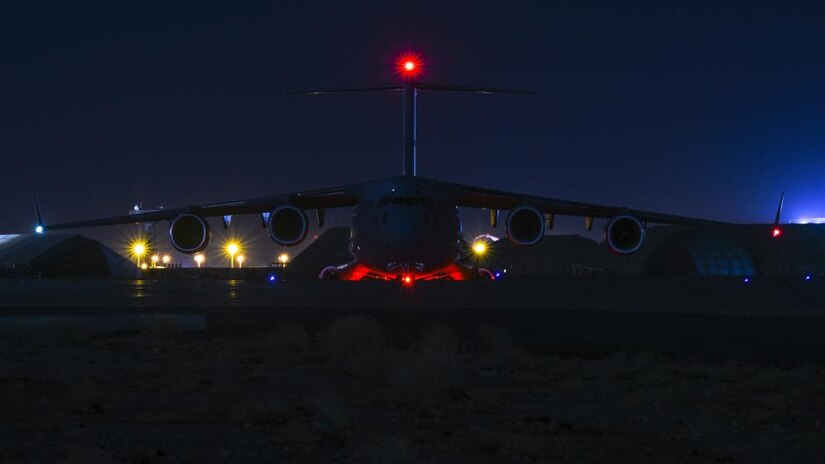
Taylor noted that F-18s from the Reagan Carrier Strike Group are flying overwatch today. "We maintain a watchful eye, and are continuously conducting in depth assessments to protect the safety of Americans," the general said. "We will use all of the tools in our arsenal to achieve this goal."
Kirby said that the military wants to ensure that airlift capacity is not a limiting factor in getting evacuees out of Kabul. The military continues to build capacity, and he noted there are many factors that can contribute to the process. These include the security situation inside Kabul. It includes evacuees being able to get through Taliban checkpoints. It includes processing evacuees once they reach the airport. And it includes the [local] weather and the weather at the receiving airport. "There's lots of tick points on the way to getting to throughput," he said. "What we want to make sure is that the one limiting factor is not airlift capacity."

Marines process State Department personnel for evacuation at Hamid Karzai International Airport, Kabul, Afghanistan, Aug. 15, 2021. U.S. soldiers and Marines are assisting the Department of State with an orderly drawdown of designated personnel in Afghanistan.
Aug. 19, 2021
Pentagon Press Secretary John F. Kirby provided the following readout:
Secretary of Defense Lloyd J. Austin III spoke today with Bahrain Crown Prince Salman bin Hamad bin Isa Al Khalifa to reaffirm the strength of the U.S.-Bahrain defense relationship and discuss the situation in Afghanistan. The two leaders underscored the urgency of the safe and secure evacuation of personnel from Kabul.
Aug. 18, 2021
STAFF: OK, good afternoon, everybody. I know we're starting just a few minutes late. We're -- we are time-constrained today, so I'll pass it right over to the secretary for opening comments. I will be moderating, please limit follow-ups if you can. Mr. Secretary.
SECRETARY OF DEFENSE LLOYD J. AUSTIN III: Thanks, John. I'm going to speak briefly and then turn it over to the chairman for an operational update. Let me start by saying that we remain laser-focused right now on Hamid Karzai International Airport in Kabul.
And on doing everything that we can to continue evacuating Americans, allies, Afghans who have worked alongside us and -- and also other courageous Afghans at special risk. And to that end, I'm prioritizing three key concerns.
First, the safety and security of our people and the people that we're trying to evacuate. As the chairman will brief you, the final elements of additional military forces continue to flow in to Kabul with about 4,500 in place as we speak. They are trained and equipped to defend themselves and their operations.
There have been no hostile interactions with the Taliban. And our lines of communication with Taliban commanders remain open, as they should be. My second focus is maintaining security at the airport itself. In concert with forces from our allies, our troops have set up defensive's positions around the airport.
And the airport is able to function safely. Now, we don't take this for granted, and I continue to be in daily contact with General McKenzie and commanders on the ground to make sure that they have what they need to keep it safe. My third area of focus, of course, is the pace. Increasing the flow of aircraft and people out of Kabul.
Now, we've flown out several thousand since the 15th of August and our goal is to be able to increase our capacity every day going forward. And as we build out this capacity, we are working hand-in-glove with the State Department, which is leading the whole of government effort to notify and process American citizens who are leaving.
And to urgently identify and process Afghan applicants as well. We've dispatched small military teams to two of the airport's gates to assist State Department -- the State Department counselor efforts as they evaluate and process individuals seeking entry. And we expect to be able to augment that capability in the coming days.
This is truly a team effort across the interagency and throughout all of this our U.S. service members are making exceptional efforts under challenging circumstances. And showing their humanity and their compassion. So, I want to thank them for their skill and their professionalism.
It's not lost on me that even as we conduct this very important mission. We also continue to help our fellow Americans deal with a new surge in the pandemic and the citizens of Haiti deal with an aftermath -- the aftermath of an earthquake.
Let me also thank General McKenzie and Rear Admiral Vasely, who is the commander of U.S. Forces Forward. And Major General Donahue of the 82nd Airborne Division, and Brigadier General Sullivan for their leadership at this critical time. It is making an enormous difference, they know, as I do that there's a lot of work to be done yet.
Now, all of this is very personal for me. This is a war that I fought in and led. I know the country, I know the people, and I know those who fought alongside me. And as I said, we have -- we have a moral obligation to help those who helped us. And I feel the urgency deeply. So, I want to end with a word for the force and our military.
I know that these are difficult days for those who lost loved ones in Afghanistan and for those who carry the wounds of war. Especially now we mourn those who made the ultimate sacrifice in Afghanistan. And let me say to their families and loved ones our hearts are with you. And the U.S. military stands as one to honor those we've lost.
Now, Afghan war veterans aren't some monolith. I'm hearing strong views from all sides on the -- on this issue. And that's probably the way that it should be. What's important is that each of us will work our way through this in our own way. And we need to respect that and we need to give one another the time and space to help do it.
Our greatest asset as a nation is the extraordinary men and women who have volunteered to keep us all safe and their families. We honor your service, we understand your sacrifice, and we will never forget it.
And so, with that, I'm going to turn it over to General Milley, who can talk about where we stand operationally.
GENERAL MARK MILLEY: Good afternoon, everyone, and thank you, Mr. Secretary. What I'd like to do is give you an overall situation update as of today, and what our next steps are. So, currently, the United States military is focused on the specific mission of conducting a non-combatant evacuation operation from Afghanistan.
This is likely to be probably the second-largest NEO conducted by the United States. Our key tasks are to establish and maintain security at the Kabul International Airport. Defend the airport from attack. Evacuate all American citizens from Afghanistan who desire to leave this country. Evacuate any third country national, or allies and partners as designated by the secretary of state. Evacuate personnel with State Department-designated Special Immigrant Visas. And evacuate any other evacuees that the State Department designates.
The president of the United States made a decision to withdraw U.S. forces from Afghanistan on April 14th. Since that date we conducted a deliberate and responsible drawdown of U.S. forces to less than a thousand with the specific task of securing the U.S. embassy and our diplomatic presence in Afghanistan. Since then, the security situation rapidly degraded. Today, the situation is still very dangerous, very dynamic, and very fluid. And all of us can be proud for the soldiers, sailors, airmen, and marines who are executing this mission. They are currently in harm's way. That needs to be our focus. There will be plenty of time to do AARs, but right now our mission is to secure that airfield, defend that airfield, and evacuate all those who have been faithful to us.
There will be many postmortems on this topic, but right now is not that time. Right now there are troops at risk and we are the United States military and we fully intend to successfully evacuate all American citizens who want to get out of Afghanistan, all American citizens who want to get out of Afghanistan. They are priority number one. In addition, we intend to evacuate those who have been supporting us for years and we're not going to leave them behind. And we will get out as many as possible. Our troops in Kabul are taking high risks to accomplish that mission. Every minute these troops are on the ground making difficult decisions with incredible skill, incredible bravery, and incredible valor.
Currently, the security situation at the airport is stable. However, there are threats and we're closely monitoring those at any moment they could happen. We can identify them. If we identify them we will take immediate military action without hesitation, and according to our rules of engagement. And the Taliban and every other organization in that country knows it. The Taliban are in and around Kabul right now, but they are not interfering with our operations. Through the State Department, the Taliban are facilitating safe passage to the airport for American citizens, that is, U.S. passport holders.
We also have a risk, as you saw the other day, of unarmed innocent civilians massing on the airfield where they became a safety hazard to our airplanes our aircrews, and also to themselves. And we currently have that situation under control inside the airfield. There's many other risks out there. And the troops are dealing with those every single day in this volatile environment, which can and likely will change rapidly.
Let me make one comment on the intelligence, because I am seeing all over the news it that there were warnings of a rapid collapse. I have previously said from this podium and in sworn testimony before Congress that the intelligence clearly indicated multiple scenarios were possible. One of those was an outright Taliban takeover following a rapid collapse of the Afghan security forces and the government. Another was a civil war. And a third was a negotiated settlement.
GEN. MILLEY: However, the timeframe of a rapid collapse, that was widely estimated and ranged from weeks to months and even years following our departure. There was nothing that I or anyone else saw that indicated a collapse of this army and this government in 11 days. Central Command submitted a variety of plans that were briefed and approved by the Joint Chiefs of Staff, the Secretary of Defense, and the President. These plans are coordinated, synchronized, and rehearsed to deal with these various scenarios. One of those contingencies is what we are executing right now. As I said before, there's plenty of time to do AARs, and key lessons learned and to delve into these questions with great detail. But right now is not that time. Right now, we have to focus on this mission because we have soldiers at risk. And we also have American citizens and Afghans who supported us for 20 years also at risk. This is personal, and we're going to get them out. And we, in uniform, have a deep commitment to this mission.
Now, let me give you an operational update. The security situation, as I said, is currently secure at this time. And since 12 August, we've deployed 12 -- or correction, two United States Marine battalions, one battalion from the Minnesota National Guard, all three of those were pre-positioned in theater, CENTCOM AOR, as part of the contingency planning. In addition to that, we alerted, marshaled, and deployed the 82nd Airborne Division headquarters and a brigade of the 82nd Airborne Division, consisting of three airborne infantry battalions and associated enablers.
And finally, there was an infantry battalion from the 10th Mountain Division, securing the U.S. Embassy in Kabul. In addition, we are operating on the ground with a variety of Special Operations Forces. That in combination with the ground forces, we have some of the best soldiers and Marines the world has ever seen. In total, there are 20 U.S. maneuver companies currently on the ground with about 4500 troops, and the flow continues. The President has authorized, as you all know, up to 6000. On top of them as the United States Navy and Air Force. We have multiple squadrons of F-18s, AV-8s, F-16s, AC-130s, B-52s, and MQ-9s. We have a significant amount of rotary-wing aviation on the ground, including attack and lift helicopters. In addition, we are working with our allies and partners through our British infantry rifle companies, along with British special forces on the ground working with us. There's also a Turkish security force; there are other international Special Operations Forces. This force is capable of extracting a significant amount of people on U.S. Air Force aircraft. Right now, we're averaging about 20 sorties of C-17s every 24 hours. We have the capability to significantly increase that throughput as the Department of State makes evacuees available.
As the Secretary said, we've already evacuated approximately 5000 people, and we intend to increase it. In addition to the military airflow, has a variety of commercial and charter flights, taking out evacuees, and we have various other countries and NGOs. The military side of the airfield is open, and the civilian side of the airfield is also open. And we intend to keep them both open for military, commercial, and charter flights. One caveat on the civilian side, however, is that the airframes have to come in by visual flight rules only. And a NOTAM has gone out to all the aircrews. The State Department is working to rapidly increase the flow of passengers available to get out on the aircraft, and we are fully supporting them with our military personnel at the entrance gates. In this highly dynamic environment, there's a number of unexpected challenges that can and likely will continue to occur, and we rely heavily on the talent, skill, and training of our troops. We've got great people across all the ranks and services out there right now on this mission. In addition to Afghanistan, which is clearly our main effort, we're also conducting humanitarian assistance operations in Haiti in the aftermath of a 7.2 magnitude earthquake with a significant loss of life. On the West Coast, we're fighting wildfires, and we continue to conduct COVID support and other Operations around the world.
As we reflect on these difficult and challenging times, every soldier, sailor, airman, marine, Coast Guardsman was fought or conducted operations in Afghanistan. Almost 800,000 should hold their head high. For more than 20 years, we have prevented an attack on the U.S. homeland. 2448 lost our lives, 20,722 were wounded in action, and many others suffered the unseen wounds of war. To each of them, I want you to know, personally, that your service matter, as the Secretary said, for both he and I, this is personal. And I know it's personal for each and every one of you. Thank you.
STAFF: OK, we'll go to questions.
Q: Thank you, John. I have a question for each of you gentlemen, if I may. Mr. Secretary, you mentioned the urgency of ramping up the pace of the evacuation. So you have a safe passage agreement with the Taliban. But in fact, in some cases, American citizens, Afghans who are at risk or who are being advised to go to the airport, are unable to get into the airport because of Taliban checkpoints and so forth. So are you considering other ways that you can get around that problem by, for example, sending forces out beyond the airport to collect people and bring them, escort them into the airport?
If I may ask General Milley. With the rapid collapse of the Afghan forces, there are large amounts of weaponry that are kind of out there now that were either surrendered or abandoned by the Afghan forces or otherwise captured by the Taliban. Are there ways you can -- are you considering ways that you might destroy some of that equipment to avoid a falling into the Taliban's hands?
SEC. AUSTIN: Thanks, Bob. In terms of whether or not we intend to send forces outside of the airfield to -- to collect up American citizens or Afghans who were special immigrant visa applicants. The forces that we have are focused on the security of the airfield. And you know how important that is, and you know what happens if we -- if we lose the ability to provide that security. And so I don't want to detract from that, and -- and we have to make sure that we can not only secure the airfield but, as the chairman said, defended as well because there are a number of threats still in the -- in the environment.
I certainly don't want to do anything to make the airfield less safe, and we won't do that. But we will continue to coordinate and deconflict with -- with the Taliban and make sure that those -- those -- those people that need to get to the airfield, have the right credentials to -- to ensure passage and the Taliban has been checking those credentials. And if they have them, they have allowed them to pass, so.
GEN. MILLEY: And on the equipment, we obviously have capabilities, but I'd prefer not to discuss any Operations other than what we're doing right now in order to get our evacuation out and get that complete. And then there'll be another time when we can discuss future Operations.
STAFF: Barbara.
Q: I would like to press both of you on the same points. General Milley, you say in your statement that one of your tests is to evacuate all American citizens from Afghanistan who desires to leave. There are Americans clearly all over Kabul; there may be Americans in other parts of the country. How can the U.S., the Pentagon, live up to that task of evacuating all Americans? Because we continue to see the violence just outside the airport. And how would you get them and what -- around the country unless you go get them?
GEN. MILLEY: Well, two things. One is State Department, as you know, as I've said, is working with the Taliban to facilitate safe passage of American citizens, U.S. passport holders, to the airport. And that's the primary means, and under the current conditions, that's the primary effort. We have the capability to do other things if necessary.
Q: Well, can I ask you what that means? Because you also said there were international Special Forces there that have the capability to extract. And those words suggest very clearly, in the military realm, you would go get people.
GEN. MILLEY: Well, that would be a policy decision. And if directed, we have capabilities that can execute whatever we're directed.
Q: Thank you.
SEC. AUSTIN: And I would draw a distinction between extracting someone in extremis condition or circumstance versus going out and collecting up large numbers of American citizens.
Q: Do you have the capability to go out and collect Americans?
SEC. AUSTIN: We don't have the capability to go out and collect up large numbers of people.
STAFF: Luis, go ahead.
Q: For both of you, if I could. You have 5000 U.S. military personnel on the ground securing the area. You have small groups, potentially of Taliban fighters outside there, who are holding up, potentially the second-largest NEO that could be undertaken. You have the capability to get there, but how do you get those people inside so that they can actually get on those planes? And both of you have served in major command roles inside Afghanistan. Did you not see the possibility that the Afghan security forces were not up to this fight?
SEC. AUSTIN: We continue to work with -- with the State Department officials on the ground to improve the procedures, you know, at the entry points to make sure that we can speed up the process of getting people in and move them onward. And so status deploying more consular officers to be able to help with that, as we've stated -- or as I stated earlier, we're going to push more military assistance down to the entry points to facilitate these efforts. But we're really working hard to get as many people through as possible. And quite frankly, we're not -- it's obvious we're not close to where we want to be in terms of getting the numbers through. So we're going to work than 24 hours a day, seven days a week. And we're going to get everyone that we can possibly evacuate evacuated. And I'll do that as long as we possibly can until the clock runs out or we run out of capability.
(CROSSTALK)
Q: Or no, so about the Afghan security forces. Did you feel that they were ever up to this fight? Or did you not see this coming, that they were not up to the fight?
GEN. MILLEY: Well, I stood behind this podium, and it said that the Afghan security forces had the capacity, and by that, I mean, they had the training, the size, the capability to defend their country. This comes down to an issue of will and leadership. And no, I did not, nor did anyone else see a collapse of an army that size in 11 days.
STAFF: Idrees.
Q: Thank you. So August 31 is the end date. At what point does the military need to start thinking about and carrying out its own retrograde to meet that deadline? And secondly, do you believe, or do you regret, not starting the evacuation of a bit earlier even by a day or two? Sort of getting ahead of the curve.
SEC. AUSTIN: So that's a great question. At what point do we start thinking about having to retrograde our own capabilities. That's -- that's actually the point before we put them in there. We know that we got to have the right mix of capabilities on the -- on the ground. We don't want to put excessive materials on the ground that are not relevant to what we're doing. And, you know, we have to develop a detailed plan and to -- to retrograde our equipment and our people and synchronize that plan with our efforts to get as many people out as fast as we can, you know, with the time that we have available. So, that -- that -- that work is -- is something that we started thinking about very early on, and that's something that we'll continue to think about and develop detailed plans for.
Q: And regretting not starting the evacuation even a few days earlier?
STAFF: Who's that for, Idrees?
Q: Either one.
SEC. AUSTIN: You know, we make plans for a number of things, and clearly, as the chairman pointed out, we -- as we did detailed planning throughout, we recognize that there might be a -- a -- a point in time when we have to conduct a NEO. So we've positioned all the -- all the right forces in theater to be able to do that. We put forces on standby in the United States to support that. And of course, you know, we -- we also did -- were in support of the -- of the State-led SIV -- SIV applicant process throughout. So in terms of, you know, doing everything that we could as -- at the -- at the right time, I think -- I think we have been -- been pretty prudent in terms of thinking ahead and planning for contingencies. And we're executing a -- a -- one of those plans right now, so.
STAFF: Helene.
Q: This question is for both of you, and I'd like for both of you to answer. It seems like -- I know, we keep harping on the same thing, but it feels like the video is not matching the audio right now. It's barring -- it -- it seems to me like barring a lobotomy by the Taliban; you have three pathways ahead of you. One, you can expand the perimeter and establish a corridor into Kabul to get our Afghan allies out. Two, you could extend the August 31 deadline of withdrawing. Or three, you can just leave the tens of thousands of Afghans who've helped us over the past 20 years behind. Which one is it going to be?
SEC. AUSTIN: First of all, as I said, we're going to evacuate everybody that we can physically possibly evacuate. And we'll -- we'll conduct these -- this process for as long as we possibly can. We will continue to deconflict issues with -- with the Taliban. And we will stay focused on securing the -- the airfield. We cannot afford to either not defend that airfield or -- or -- or not have an airfield that secures where we have hundreds or thousands of civilians that can access the airfield at will and put our forces at risk.
Q: But that doesn't answer the question. I mean, you're still saying you're focused on the airfield. These -- these people can't get into the airfield.
SEC. AUSTIN: Well we're going to do everything we can to continue to try to deconflict and create passageways for them to get to the airfield. I don't have the capability to go out and extend operations currently into Kabul. And where do you take that? I mean, how far can you extend into Kabul, you know, and how long does it take to flow those forces in to be able to do that?
Q: So it sounds like you're saying this depends on diplomacy with the Taliban, that's it. That's our only option is getting them to agree to do this.
GEN. MILLEY: Well let me add something here, Helene. We've got a couple entry control points set up. A north one, east one, and a third one at abbey gate. They're currently manned with consular officers, marines as all part of the perimeter. Messages have gone out by various means of communication from the State Department to American citizens and others, and they're being told to go to those gates.
Right now we're processing at about -- I think the last report was about 120, 130 an hour, something like that at the north, about 340, 350 an hour, something like that at the south gate. So right now there's a steady flow of people.
Now, as that goes on I think those numbers will continue to grow and as those messages go out, and I would tell you that for the American citizens, passport holders and the Taliban and the State Department working on -- I got it, but they're working out a facilitation measure, so those numbers are likely to grow.
For the others, State Department is still working through exactly getting the procedures for the evacuees to get to the airfield.
STAFF: We'll go to Jen.
Q: Defense Secretary Austin, how many U.S. taxpayer-funded military aircraft have been flown out of the country, and what are you doing to get those back? We've heard of Afghan pilots taking those planes to third countries. And General Milley, you talk about the intelligence reports and you said there wasn't anything suggesting 11 days that Kabul would fall, but you do mention there were some reports suggesting it could fall apart in weeks. If so, why did you abandon the Bagram Airfield? Why did U.S. military pull out given the uncertainty?
GEN. MILLEY: Yes. Oh, go ahead, Secretary.
SEC. AUSTIN: Jen, in terms of the aircraft that have been flown out that you -- that you mentioned earlier, I have received reports of a number of aircraft that were flown into Uzbekistan and Tajikistan. Exactly how many, you know, I don't have firm numbers on.
In terms of what we're doing about them currently, right now, Jen, we're focused on the airfield and getting people out safely. And so, we're going to take that issue up at a later date, and we're going to continue to try to gain greater fidelity on the issue as well.
GEN. MILLEY: On your question of Bagram, securing Bagram, you know how big Bagram is. You've been there many times. Securing Bagram is a significant level of military effort of forces, and it would also require external support from the Afghan Security Forces.
Our task given to us at that time, our task was protect the embassy in order for the embassy personnel to continue to function with their consular service and all that. If we were to keep both Bagram and the embassy going, that would be a significant number of military forces that would have exceeded what we had or stayed the same or exceeded what we had.
So we had to collapse one or the other, and a decision was made. The proposal was made form CENTCOM commander and the commander on the grounds, Scott Miller, to go ahead and collapse Bagram. That was all briefed and approved, and we estimated that the risk of going out of HKIA or the risk of going out of Bagram about the same, so going out of HKIA -- was estimated to be the better tactical solution in accordance with the mission set we were given and in accordance with getting the troops down to about 600, 700 number.
STAFF: Okay, we've got two more and I haven't got to the phones at all, so we'll go to Dan Lamothe from The Washington Post.
Q: Yes. Thank you. Thank you. General, just to follow up on the Bagram versus HKIA question, HKIA has a stable runway with the commercial airport making it much more difficult to defend that runway. We've already seen that this week. Bagram has two runways. It would have been a lot easier to protect people once inside. Is there any thought of retaking Bagram in order to expedite this evacuation? And if not, why not?
GEN. MILLEY: I won't -- good question. Great question, but I'm not going to discuss branches and sequels off of our current operation. I'll just leave it at that.
STAFF: OK, and I think the last one for the day will go to you, Courtney.
Q: You know, General Milley, you keep saying that the known expected collapse of the Afghan government and military in 11 days, but in reality is the Taliban offensive began weeks ago. They were threatening Kandahar a month ago already. So the question is if you both think you had such a moral obligation to these Afghans – Afghans who supported the military and State Department for 20 years, should you have pushed harder when the Taliban offensive began to get these people out and the U.S. -- they wouldn't be in this situation that they're in right now.
And then also if there is this U.S. military-Taliban deconfliction process that's going on right now, how does -- have you been asking them to allow the Afghans through and have they -- has the Taliban denied that request? Is that why there's not some effort? The State Department put out a -- the Embassy put out a statement today saying that there was -- that the U.S. couldn't provide any safe passage for these Afghans. Is that because the Taliban won't allow that in the deconfliction?
SEC. AUSTIN: There's a -- it's a pretty -- it's a very dynamic environment as you would imagine, and of course there have been things that have occurred that, you know, we do hear reports of people getting turned away from -- by checkpoints. We've gone back and tried to -- and reinforce to the Taliban that if they have credentials they need to be allowed through.
And so, that's working better than it was. And quite frankly, we have, you know, the major issue right now is processing the people who are there as fast as we possibly can. It's not a dearth of people getting there. It's just being able to move the folks that are there through so that -- so they can get them on aircraft.
But there have been some unfortunate incidents that I've learned about, and we continue to work to try to deconflict and make sure that there is safe passage for the people that are trying to get to the airport.
Q: Have you asked the Taliban or has the military asked the Taliban to allow these Afghans through and they've declined?
SEC. AUSTIN: We continue to work that. Yes, we have. We have gone back and emphasized that people who are trying to get to the airport and have the right credentials need to be allowed to.
Q: Because right now the airport represent safety to a lot of these people, and if the Taliban are in Kabul they're worried that the longer they wait to get there, to the secure airport, you know, even if it means they wait there several days to get on a flight, so that's why there's this -- you know, this fanaticism to get them through. And then also if you could also address the question of should you have pushed harder when it was clear that the Taliban offensive was gaining a momentum, you know, a month ago down towards Kandahar and other places?
GEN. MILLEY: Well like I said up front there's going to be plenty time for AARs. Right now, focus on the mission, focus on people getting out, American citizens, the SIVs, others, Afghans at risk. There's going to be plenty of time to talk about regrets and pushed harder and all these other kinds of things, intel assessments, etc. Plenty of time to do AARs. Right now's not that time.
STAFF: Thanks, guys. We're going to have to go. Appreciate your time, thank you so much.
The U.S. military footprint in Afghanistan is at about 4,500 troops on the ground in Kabul at Hamid Karzai International Airport, which they secured days ago. The operation to hold down the airport and evacuate civilians from Afghanistan is ongoing and a few hundred more troops might arrive today, the spokesman said.
The Kabul airport remains secure and open for flight operations; military flights are arriving and departing consistently, and there are limited commercial flight operations, in addition to some foreign contracted flights that are coming and going, he said.

"In the past 24 hours, 18 C-17 [Globemaster III] aircraft and one C-130 [Hercules] arrived with around 700 additional troops and some equipment. And that brought our total to about 4,500 [troops]," Kirby said.
That number includes about 1,300 Marines, who will continue to flow in from the 24th Marine Expeditionary Unit and the Special Marine Air-Ground Task Force Crisis Response, he noted, emphasizing that both pre-positioned units were forward deployed in the U.S. Central Command area of operations as part of their normal deployment. Secretary of Defense Lloyd J. Austin III wanted to ensure those Marines would be ready to go on short notice, Kirby said, adding that noncombatant evacuation operations support is something that "Marines are well-trained in and do well, so we're glad to have them on the ground."
Additionally, 18 C-17s have departed Kabul in the last 24 hours. "These flights have carried around 2,000 passengers, and I can confirm that 325 of those passengers are American citizens," the spokesman said. "The remainder of the number includes Afghans and some NATO personnel."
In the next 24 hours, the scheduled airlift numbers will be similar to the last 24 hours, he said, emphasizing that there are a number of factors that can influence flight operations and the circumstances can change.
Kirby said he couldn't guarantee that the numbers of people on those planes will be the same, because some of the planes are still coming in loaded for equipment, and not all are empty C-17s with 300 seats on them. "There are different configurations on the planes," he said.


 Posts
All Comments


