Friday, September 10, 2021

Guard Pilot Who Flew Over D.C. Following 9/11 Likened Attacks to Modern-Day Pearl Harbor

Sept. 10, 2021 | BY C. Todd Lopez , DOD News

Two decades ago, Air Force Lt. Gen. Marc H. Sasseville, now the vice chief of the National Guard Bureau, was a lieutenant colonel with the D.C. Air National Guard. When aircraft hit the World Trade Center towers in New York City and the Pentagon in Washington, the nation went on alert — and so did he.

A man in a military uniform stands among trees and benches in a memorial area.

"As a military pilot, I had a couple thoughts," he said. "Short term, [we] need to get in the air — we're under attack. All I could think about was Pearl Harbor, to December 7, 1941, and showing some kind of ability to respond. We didn't know what was behind these initial hits on America. There could have been multiple waves."

He also realized that something big had happened — a game-changing event for the United States that would alter its course for a long time.

"This was the start of something that was going to be much bigger and which was going to last much longer," he said. "We had clues about our enemy before then, but we really hadn't put the picture — the gravity of the situation — together until 9/11. And then we realized that we're on to something that was going to take us decades, if ever, to resolve."

By the time Sasseville and fellow F-16 pilot Heather R. Penney — then a first lieutenant — got into the cockpits of their F-16 aircraft at Andrews Air Force Base, they already knew that hijacked aircraft had hit the Pentagon and the towers in New York. Their mission was to prevent further damage — in particular from that posed by United Airlines Flight 93.

When Sasseville and Penney left Andrews, their aircraft launched without any missiles on board. They had embarked on what amounted to a suicide mission. Without missiles, the two pilots were prepared to ram their own aircraft into Flight 93 in order to keep it from causing any damage to the nation’s capital.

A collapsed building is shown. Smoke rises. Fire trucks are nearby.

Flight 93 was originally supposed to go from Newark International Airport in New Jersey to San Francisco International in California. Just 45 minutes into that domestic flight, hijackers took control of the plane and redirected it toward Washington. The goal of the hijackers still remains unknown, perhaps it was to crash the plane into either the U.S. Capitol Building or the White House. Sasseville and Penney were supposed to prevent something like that from happening.

"We had gotten a call from the White House Joint Operations Center, and they could see the picture," Sasseville said. "They knew that Flight 93 had turned back. And they had basically asked if we had any airplanes that could go up the river."

It made perfect sense what they were being asked to do, Sasseville said. The hijackers might not be able to fly by instruments and get the aircraft where they wanted it. But if they looked at the ground — at the Potomac River — they could use that as a guide to get them where they wanted to be.

"You call them geographic references," Sasseville said. "Flying down a river, flying down a highway or a power line is a great way to help guide you to a certain point. That's what it looked like on the radar scope, that there was an airplane flying down the river."

Resistance from passengers aboard Flight 93 eventually thwarted the hijackers' plans; and ultimately, the plane crashed into a field near Shanksville, Pennsylvania, about 130 miles northwest of Washington. All of that happened before Sasseville and Penney even got into the air — though they didn't know it at the time.

While neither pilot saw Flight 93 on that mission, they did see the results of American Airlines Flight 77 — which had crashed into the Pentagon.

"The piece that I remember most was being at 6,000 feet, right there, smelling the fumes from the fire and looking down and seeing chaos, and just feeling sick to my stomach," Sasseville said. "I wasn't sick because of the fumes. I was sick because I knew that we had been attacked."

Sasseville said the United States had been attacked that day because it failed to see such a thing coming. He called it a "failure of imagination." The United States must ready itself for another attack, he said, because America's enemies will try again.

Smoke emanates from a burning building. Firetrucks are in a parking lot.

"The next one won't be like this one was, but there will be another attack. There are still people out there that do not want us to have the liberties and freedoms that we enjoy today," he said. "We need to thoroughly examine our vulnerabilities and our weaknesses ... and we need to shore up those vulnerabilities and expect the unexpected and not be surprised by it."

On the morning of Sept. 11, 2001, Sasseville had been attending meetings at the 113th Wing, part of the D.C. National Guard. His unit had just come back from a training deployment, and manning was low.

"[It was a] skeleton crew because those same guardsmen ... go back to their normal jobs," he said. "We typically don't see them for a while. And so what we had there that day was a skeleton crew of the full-time operators and maintainers and logistics and support people inside the wing."

After the terrorist attacks, he said, things changed dramatically at the unit.

"It was an entire wing effort that really started to swing into motion," he said. "We started refueling airplanes, loading up airplanes with weapons, assembling the weapons, and we just got into [being like] a machine that went out and collected our part-timers that had gone back to their employers, to bring them back to begin to set alert, because we knew we were going to need a lot more help and this was going to go on for some time."

One big change for the 113th Wing at Andrews was that it became part of Operation Noble Eagle, part of which is to protect the skies over the Nation's Capital.

A collapsed building is shown. Smoke rises.

"We became part of the air defense structure," he said. "And everything started to set into motion that kicked off almost 90 days of 24/7 airplanes continuously in the air defending the nation's capital. So that was our reaction. We became part of Noble Eagle -- we became part of the air defense structure overnight."

Following the Sept. 11 terrorist attacks, the 113th Wing changed in another big way as well — along with the rest of the National Guard. It grew and developed in importance and how it can be used to carry out the defense of the nation.

"We have this duality of mission where we go to fight the nation's wars, and we support our communities back home," Sasseville said. "These two decades-plus have really reinforced the professionalization and the operationalization of the National Guard to make us the most ready we have probably ever been in our history."

After 20 years of growth and development through participation in and planning of combat operations in Iraq and Afghanistan, that growth is something Sasseville said he hopes the National Guard will never lose.

"We need to be incorporated in all the training, and we need to be used as part of the joint force, so that we don't lose that investment, that muscle memory," he said. "I know that there's plenty of desire for, on the part of our guardsmen, to continue to serve in that capacity."

Thursday, September 09, 2021

Having a Ball


Marine Corps Cpl. Hunter Degnan interacts with Afghan children at Marine Corps Base Quantico, Va., Sept. 7, 2021.

Task Force Construction


Airmen assigned to Task Force Holloman finish the construction of walls for lodging areas for Afghan evacuees at Holloman Air Force Base, N.M., Sept. 6, 2021, in support of Operation Allies Welcome. The Defense Department, through U.S. Northern Command and in support of the State Department and Department of Homeland Security, is providing transportation, temporary housing, medical screening and general support for at least 50,000 Afghan evacuees at suitable facilities, in permanent or temporary structures, as quickly as possible.

Memorial Display


Wreaths of remembrance are displayed at the entrance of the National 9/11 Pentagon Memorial at the Pentagon, Sept. 8, 2021.

DHS to Increase Civil Penalties for Violations of the Federal Face Mask Requirement

 WASHINGTON - Today, the Department of Homeland Security’s Transportation Security Administration (TSA) will increase the range of civil penalties that may be imposed on individuals who violate the federal mask mandate at airports, on commercial aircraft, and in various modes of surface transportation, including passenger railroads, intercity bus services, and other public transportation.  The federal mask mandate for transportation, which was implemented by TSA on February 2, 2021, will remain in effect until January 18, 2022.

The new range of penalties, which take effect Friday, September 10, 2021, will be $500-$1000 for first offenders and $1000-$3000 for second offenders.

“Wearing a mask protects the traveling public and all of the personnel who make the travel experience safe, secure, and comfortable,” said Secretary of Homeland Security Alejandro N. Mayorkas.  “We will continue to enforce the mask mandate as long as necessary to protect public health and safety.”

“We appreciate the majority of travelers each day who voluntarily follow the requirement, but find this action necessary to maximize the protections for those who use and work within the transportation system, and to contain COVID-19,” said TSA Administrator David Pekoske. “By doubling the range of penalties, we seek to reinforce the importance of voluntary adherence.”  

TSA will provide updated signage at airports regarding these increased civil penalties.  For more information about the federal face mask requirement, visit the TSA Coronavirus webpage.

These federal mask mandate-related civil penalties are separate from the civil penalties the Federal Aviation Administration (FAA) issues for individuals who engage in unruly and unsafe behavior.

Wednesday, September 08, 2021

9/11 Remembered


Sailors and Marines pay tribute to the victims of the 9/11 attacks on the flight deck of the USS Arlington, Sept. 6, 2021. Arlington is named after Arlington County, Va., and honors the victims of the terrorist attack on the Pentagon.

Happy Hands


An airman plays with an Afghan child at Holloman Air Force Base, N.M., Aug. 31, 2021.

Sailor Support


A sailor and volunteers unload donations in support of Operation Allies Refuge at Naval Air Station Sigonella, Italy, Sept. 2, 2021.

Water Works


Army Sgt. 1st Class Glenn Malo and Sgt. Jorge Mercado prepare a water buffalo at Fort Bliss. N.M., Sept. 3, 2021. The Defense Department is providing support for Afghan evacuees.

Tuesday, September 07, 2021

Wreath Honors


Deputy Secretary of Defense Dr. Kathleen H. Hicks places a wreath at the National 9/11 Pentagon Memorial, Sept. 7, 2021, during a private ceremony with Pentagon survivors.

Austin, Blinken Thank Qatari People for Support in Afghan Evacuation

 Sept. 7, 2021 | BY Jim Garamone , DOD News

Secretary of Defense Lloyd J. Austin III met with Qatari leaders today to thank them for their help in evacuating Afghans from Kabul, saying ''at a critical and historic moment Qatar went above and beyond, and your generosity helped to save thousands of lives.''

Upon arrival Monday night, Austin – along with Secretary of State Anthony Blinken – met with Emir Tamim bin Hamad Al Thani. Both men continued discussions with foreign affairs and defense officials on Tuesday.

While other issues were discussed during the visit, Austin and Blinken were profuse in their praise for the Qatari effort in aiding the Afghan refugees. Both men spoke alongside their counterparts during a press conference at the Ministry of Foreign Affairs.

Four men stand for a photo in front of country flags.

''Qatar's support for Operation Allies Refuge was indispensable to the safe transit of Americans and U.S. personnel, allies, partners and Afghans at special risk,'' Austin said. ''I'm deeply proud that the U.S. military, together with our partners, completed the largest airlift in history, evacuating more than 124,000 people to safety. But we could not have accomplished that without Qatari support.''

Qatar housed more than 58,000 Afghans during the non-combatant evacuation operation from Kabul, Blinken said. ''Qatar was the first stop on a journey to a more peaceful and hopeful future for so many people,'' the secretary of state said.'' You welcomed them with compassion, and with generosity and when problems arose, Qatar worked hand-in-hand with us to address them. The men, women and children who transited through here will not forget what you did in a pivotal moment of their lives. Neither will we.''

Qatar's support for Operation Allies Refuge was indispensable to the safe transit of Americans and U.S. personnel, allies, partners and Afghans at special risk.''
Lloyd J. Austin III, Secretary of Defense

Qatar is not a one-trick pony. ''In fact, we're here today because our work together as partners and friends continues not only [with] Operation Allies Refuge, but on many shared priorities,'' Austin said. ''The United States is grateful that Qatar continues to host American troops to make sure that our forces are well positioned to support a range of critical missions in the region.''

But the U.S-Qatar relationship extends well beyond security to economic development, humanitarian issues and moves to de-escalate tensions in the region, Austin said. 

Qatar has provided humanitarian aid from Yemen to Gaza, and hosted and facilitated Afghan peace negotiations. ''But Iran's support for terrorism and its willingness to supply increasingly lethal weapons to non-state groups undermines the regional stability that we all seek,'' Austin said. ''So we're committed to working together to enhance regional defenses against destabilizing actions, including Iran's nuclear aspirations.''

U.S. Central Command supplies the power needed, but Austin said all prefer that diplomacy succeed in reducing tensions.

Qatari leaders said they expect the Kabul International Airport could reopen ''soon,'' and Qatar is sending some chartered aircraft to the region. They said they will continue to work with the Taliban to allow freedom of passage from the country.

Four met sit in chairs talking during a meeting.

The United States will continue to monitor Afghanistan for any resurgence of terror groups that could threaten America. Without troops on the ground or a relationship with the government in Kabul this will be more difficult, Austin said, but the United States military can accomplish this mission.

''There's no question that it will be more difficult to identify and engage threats that emanate from the region,'' Austin said. ''But we're committed to making sure that threats are not allowed to develop and create significant challenges for us in the homeland. We already have robust capabilities in the region where we look to improve them on a daily basis, and we're going to continue to do that. And I would just say … that we've come a long way in the last 20 years in terms of the development of our capabilities. And I would further say that there isn't a scrap of Earth that we can't reach out and touch when we need to. We've demonstrated that time and time again. And again, our job is to make sure we stay vigilant and continue to develop capabilities.''

Allies Welcome


Marine Corps Lance Cpl. Rachael Scott interacts with an Afghan child during Operation Allies Welcome at Marine Corps Base Quantico, Va., Sept. 1, 2021. The Defense Department, through Northern Command and in support of the Department of Homeland Security, is providing transportation, temporary housing, medical screening and general support for up to 50,000 Afghan evacuees at suitable facilities, in permanent or temporary structures, as quickly as possible.

U.S. Military Capabilities, Capacity and Alliance Network Made Kabul Evacuation Possible

 Sept. 7, 2021 | BY Jim Garamone , DOD News

No other military in the world could do what the U.S. military accomplished in evacuating 124,000 people — Americans, Afghans and third country personnel — from Kabul, a senior defense official told reporters traveling with Secretary of Defense Lloyd J. Austin III.

The official was not bragging, just making a factual assessment. No other country has a military with the capabilities, capacities and especially the network of allies to accomplish this mission in the time allotted.

People line up to enter the back of a large military aircraft.

Austin and Secretary of State Anthony Blinken are visiting the Arabian Gulf nations that supported the evacuation mission, working hand-in-hand with American interagency teams. Austin called it the largest non-combatant evacuation in history.

This international network was key to the effort. Qatar alone received 58,000 refugees as the first stop after leaving Kabul. The Qataris helped process them and helped move them on to Europe. Many of the evacuees are now in the United States.

Austin and Blinken met with representatives of the effort at Al Udeid Air Base in Qatar today to thank them for their efforts, which are still continuing. There are 4,000 refugees still in Qatar awaiting the next leg of their journey.

The team the two men talked to didn’t have a template to follow: they had to work together making the rules up as they went along, and they had to do it under severe time constraints. "I'm grateful for what you've done, your country is proud of you, the President of the United States is proud of you," Austin told the men and women. "This is what interagency is all about: Teamwork. Working through challenges. Doing it with compassion, professionalism and competence. And in my view, it could not have been done better, and I just wanted to tell you that I am enormously grateful."

Service members provide meals to people.

The entire effort was an immense undertaking. Pentagon Press Secretary John F. Kirby noted last week that the effort entails three geographic combatant commands: U.S. Central Command, U.S. European Command and US Northern Command. He noted that U.S. Transportation Command played an incredibly vital role.

The 6,000 troops that secured Hamid Karzai International Airport after Kabul fell to the Taliban, didn’t just arrive by magic. They were brought there — combat ready — by American gray tails — C-17s that lived up to the name "Globemaster III." The soldiers and Marines arrived quickly and with all the equipment needed to perform the mission. Air Force personnel arrived and took over the air traffic control mission. There was air support overhead from Navy carriers and Air Force assets from the Arabian Gulf. Those aircraft had to be tanked and maintained and guided and loaded. 

The gray tails also airlifted the refugees out of Kabul. The photo of the C-17 with more than 800 refugees jammed into it went viral.

In Kabul, Defense and State Department personnel had to quickly learn processes while keeping all safe. That it was a dangerous mission became apparent when an Islamic State suicide bomber killed 13 U.S. service members and at least 200 Afghans in a vile attack.

But even as troops landed in Kabul, others were preparing sites in the Arabian Gulf, Europe and the United States to receive these thousands of men, women and children fleeing the Taliban. The American troops defended the airfield allowing forces from other nations to evacuate their citizens, too. 

Civilians walk in a line across a flightline.

From planning through execution, the effort was immense. In addition to the 6,000 troops on the ground there was a Navy carrier strike group, there were air expeditionary wings. There were maintenance people at bases in Kabul, the Arabian Gulf and Europe all working to ensure the Afghan lifeline would be maintained. 

There were cooks and logisticians who ensured the food met the dietary and religious needs of the refugees.

There were medics from host nations providing care for the refugees that needed it. There were thousands of volunteers in Europe seeking to donate clothes, diapers, baby goods and more. 

Austin frankly noted that no operation goes perfectly. "There are lessons to be learned," the secretary said. "And what we'll do is what we always do in the military, which is to conduct an after-action review, take a look at ourselves, take a look at what we did, and what we could [have done] better."

All that is in the future. What is in the present is that 124,000 people have a chance for peace and security thanks to the efforts of thousands of American service members and civilians who worked and planned and sacrificed to make it possible.

Pentagon 9/11 Observance Ceremony

 Sept. 7, 2021


Secretary of Defense Lloyd J. Austin III and Chairman of the Joint Chiefs of Staff Army Gen. Mark A. Milley will host an observance ceremony Saturday, Sept. 11, 2021, at 9:00 a.m., at the Pentagon Memorial in honor of the 184 people killed in the 2001 terrorist attack on the Pentagon.

Show time for press interested in covering the observance is 7:00 a.m.  Due to COVID-19 safety protocols and space restrictions, only 60 reporters may cover the event. Therefore, slots will be filled on a first-come, first-served basis.  Media interested in covering this event must RSVP by 5 p.m. EDT Wednesday, Sept. 8, by contacting Cmdr. Candice Tresch at candice.c.tresch.mil@mail.mil.  Please include name, outlet, position, email, phone number and vehicle make, model and license plate number.  Additional logistical details will be provided on Sept. 9 to media covering the event. 

Prior to the 9/11 observance ceremony, there will be a flag unfurling at sunrise on the west side of the Pentagon.  This event is open to pooled coverage only.

Both events will livestream on Defense.gov and will have pooled television and print coverage available.

 Sept. 7, 2021 | BY Jim Garamone , DOD News

Barbara Starr is a legend at the Pentagon for her accurate reporting and for asking the tough questions of Defense Department leaders.

On September 11, 2001, she was like the rest of Americans. Starr was working as a producer for ABC News then and woke up early to get a head start on the day. September 11 is her birthday, and she was looking forward to an easy day and maybe getting out early to have dinner with friends.

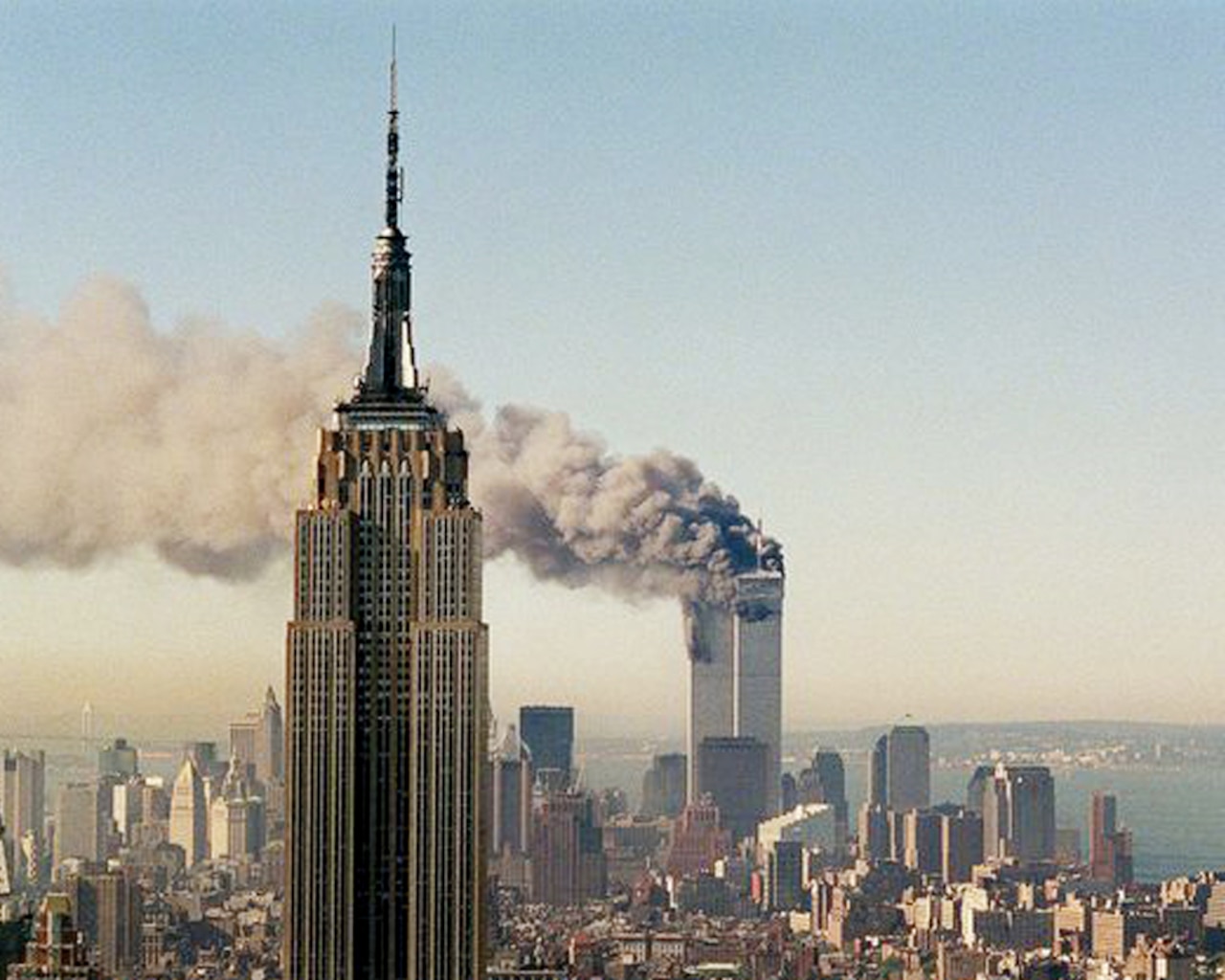
"I looked out my bedroom window," she said in an interview. "It was gorgeous clear blue sky, but little did I know that literally a black cloud of terrorism was just over the horizon."

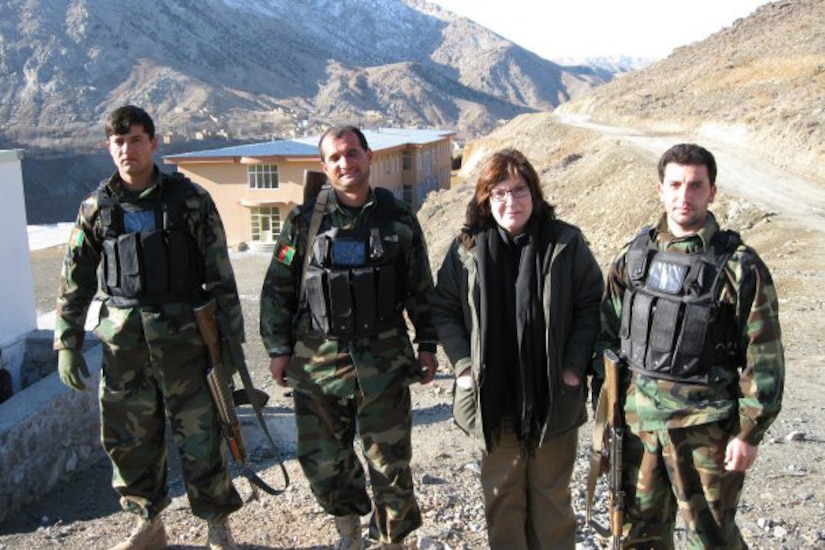
A woman and three men pose for a photo in rough terrain; mountains are in the background.

When the first plane hit the Twin Towers in New York, she immediately went to talk with people in the Pentagon. "I was sitting with other reporters in the office of the public affairs chief for the chairman of the Joint Chiefs. We're all looking at the TV, and the second plane hits. He looks at his aide, and he says, 'Get down in the hall, right now, find out what just happened.'"

Barbara went down the hall, too; She said a general coming out of the command center told her "It's terrorism."

She went back to the office space ABC uses at the Pentagon. "I opened the door to speak to Jack McWethy, the correspondent I'm working for," she said. "He looked at me, and he said a plane just hit us. He had seen it on TV."

Just then a Pentagon police officer ran down the hallway "yelling at the top of his lungs, 'Get out, get out, get out, we've been hit,'" she said. "These are not the words you expect to hear. We all moved very quickly to the nearest exit."

She left the building and walked to where the smoke was. "I turned left and got on the road near the old helicopter pad, and there it was — five stories of fire and smoke," she said.

"I'm looking at the building in flames, and I knew that was the side of the building where Navy Public Affairs was at the time," she said. "I had so many people I was close to there that my stomach was in knots."

It wasn't until about 1 p.m., after DOD had set up a press area at the gas station overlooking the impact area, that Starr met her friends. In the meantime, she was talking with people and trying to get an understanding of the scope of the attack.

Medical and military helicopters were landing near the building to evacuate casualties. More and more fire engines and ambulances came to the site. Pumper trucks were dousing the building, but there were areas the water couldn't reach and the flames actually grew through the afternoon.

I fully understand that 9/11 is shifting into history. But this is why the veterans community is so important. Because as these things do shift into history, the veterans are often the last voice there to remind all of us what has happened, what a terrible thing war is and what we lost."
Barbara Starr, CNN Correspondent

That day changed life for all Americans. Starr left ABC and moved to CNN where she became a correspondent and a familiar person giving the latest developments from the Pentagon and traveling the world telling the stories of U.S. service members doing the work asked of them. Starr reported from Afghanistan, Iraq, the greater Middle East, Europe and NATO, and Asia. She was one of the first American journalists to cover U.S. forces in Syria. And she's still going strong.

Starr also reported on the costs of the war with stories about those killed and those service members overcoming injuries sustained in the conflicts.

She remembers all that was lost that day. "I remember [Army] Sgt. Maj. Max Beilke," she said. "In American history, he was the last soldier to leave Vietnam in 1973. He was one of those killed in the Pentagon on 9/11."

She understands the significance of 9/11 to Americans. "I fully understand that 9/11 is shifting into history," she said. "Just as Pearl Harbor has, or the Battle of the Bulge, or Normandy, these huge military events. But this is why the veterans community is so important. Because as these things do shift into history, the veterans are often the last voice there to remind all of us what has happened, what a terrible thing war is and what we lost."

Friday, September 03, 2021

Remembering 9/11: America's Darkest Day Strengthens Employees' Patriotism, Resolve

Sept. 3, 2021 | BY Beth Reece , Defense Logistics Agency

United Airlines Flight 93 was soaring over Pennsylvania en route to Washington, D.C., on Sept. 11, 2001, when then-Defense Logistics Agency Director Navy Vice Adm. Keith Lippert ordered an announcement for all McNamara Headquarters Complex employees to shelter in the auditorium. Planes had already crashed into the twin towers of the World Trade Center and the Pentagon, and where the fourth plane was headed only God knew. 

Heavy smoke rises from the top of a building.

"The size of our building was a concern to me. It could've been a target," Lippert said two months shy of the attack's 20th anniversary. 

Fear flooded the building's basement as workers crowded together, some openly sobbing with worry that loved ones working at the Pentagon or on temporary duty at the World Trade Center had been caught in the horror. Others gazed in shock at overhead TVs, wondering how such tragedy and blood could spill over American soil. 

John Morris, the former supervisor of the Document Automation Printing Service at the Pentagon, was watching news anchors report on the devastation in New York City when he and his staff heard what sounded like heavy furniture moving on the floor above. Stepping outside the office, Morris saw employees running, one warning of a bomb explosion. It was the hijacked American Airlines Flight 77 slamming into the building's southwest corridor. 

Back at DLA Headquarters, Shirley Bergman, then a contract specialist for alternative fuels, agonized and wept knowing her husband was at a Marriott between the two 110-story World Trade Center towers interviewing senior economists for the U.S. Census Bureau. And Matthew Woodruff, now a general supply specialist at DLA Distribution San Joaquin, California, was just a sophomore in high school. All but one of his teachers halted class as students watched the horrific story unfold via news broadcasts.

A man stands next to shelves in a warehouse.

"I still remember how vivid it was. There was a lot of stuff my parents wouldn't even let me watch on TV because of the nature of the event," he said, admitting that, like most Americans, he'd never even heard the word al-Qaida until that day. 

Lippert made another announcement that employees should go home soon after Flight 93 crashed in a field in Shanksville, Pennsylvania. Most were eager to return the next day even as the nation mourned and despite delays from increased security.

"We always talked about warfighters first, but this really brought it home," he said. "The whole country responded more patriotically than we'd seen in the past, and I think everyone felt the importance of what they were doing." 

Homeland Response

The Customer Interaction Center, where agents help callers place orders and find details like supply availability and delivery status, went to 24/7 operations on 9/11. Shamon Pratt, a customer service specialist who was then an agent, remembers the phone lines being eerily quiet for a couple of days before they rang off the hook, forcing management to hire more agents to handle the influx of calls. 

A busy office is in full operation.

 
Employees across the agency scrambled to assist first responders. James Burke, a driver at DLA Distribution Norfolk volunteered to drive cots to the Pentagon for rescue crews working around the clock. Workers at DLA Distribution San Joaquin, California, and DLA Distribution Susquehanna, Pennsylvania, immediately began supplying items like boots, first aid kits and tents. And DLA Disposition Services staff provided gear including flashlights, shirts and sleeping mats requested by the Federal Emergency Management Agency for recovery teams in New York and Washington. 

When the U.S. launched airstrikes Oct. 7 at al-Qaida and Taliban training camps in Afghanistan, acquisition specialists were already working with manufacturers to meet anticipated needs for aircraft parts, food and other items. DLA's business doubled from $16 to $32 million within a year of the attack, then $40 million a year later. 

On the Front Lines

The agency took logistics to the battlefield by deploying DLA Support Teams to work alongside uniformed customers. By the height of the wars in Iraq and Afghanistan in 2008, more than 40 employees worked on DSTs in Afghanistan, Iraq and Kuwait to provide fuel, contract management, disposal services and asset visibility while fielding the latest body armor. 

Marian Hunter, a weapons systems support manager for DLA Aviation, deployed nine times before retiring in 2017. Being able to attend unit maintenance meetings and talk face-to-face with troops helped her better solve issues.

Two women in flak vests and hard hats stand on the tarmac.

"The end result is what we all want — well-equipped, well-protected warfighters," she said then. 

Woodruff is another of the hundreds of DLA employees who've since left home to support forces in harm's way. He deployed for eight months in April 2011 to DLA Distribution's theater consolidating shipping point at Forward Operating Base Deh Dadi II, where he helped distribute the material to units on the ground. 

The nation celebrated a victory during Woodruff's time in the warzone, and again, he saw it unfold via television. At breakfast in the chow hall On May 2, he watched President Barack Obama announce that U.S. Navy Seals had killed Osama bin Laden, the mastermind of 9/11.

Two men, one in uniform, stand amidst crates of supplies.

"I could have helped deliver the helicopter part that was used to transport those who found him. It was the littlest things — screws, washers, o-rings — that had the biggest impact there," he said. "When you realize the part you help provide means there's one less helicopter down, it becomes more than just a job."

The Human Toll

Twenty years after the tragedy that tested DLA's ability to support simultaneous wars, Lippert still remembers stepping into the Pentagon one day after the attack. He was there to meet with senior officials on the amount of money DLA would have for the next year, a meeting he was originally scheduled to attend the afternoon of 9/11. 

Airman perform maintenance on a helicopter.

"You could hear a pin drop. You could still smell the smoke, and there were armed guards all over the place with rifles and machine guns, something I never thought I'd see," he said. 

DLA employees who've been in Iraq and Afghanistan in the past 20 years say their pre-deployment training left no doubt their lives would be at risk. They deployed anyway, and all but two came home alive. Stephen Byus and Krissie Davis were both killed while serving in Afghanistan for DLA Disposition Services. 

A man poses for a photo.
A woman smiles at the camera.

The Promise: Never Forget

The vicious, unprovoked attacks that ripped apart Americans' sense of security 20 years ago resulted in the death of almost 3,000 people, 125 of them service members or Defense Department civilians and contractors. Those attacks remain the deadliest terrorist act in America's history, and aftershocks of the atrocity ripple through lives even today. 

A building lies in ruins.

Like Lippert, current DLA Director Navy Vice Adm. Michelle Skubic points to employees' courage, patriotism and resilience. 

"Just like the workforce of today, they understood that on America's worst day, DLA must be at its best," she said this week in a message to the agency.

Two women and a man attend a service.

The sharp memories of 9/11 urge employees like Woodruff to continually rededicate themselves to DLA's mission. American pride is alive and strong among DLA's members.

"9/11 taught us that we need to be resilient and not become complacent," Woodruff said. "It's like a game of chess. We need to be steps ahead of our adversaries."

Myers Remembers September 11, 2001, Says Lessons Still Can Be Learned

Sept. 3, 2021 | BY Jim Garamone , DOD News

When Air Force Gen. Richard B. Myers first heard of a plane flying into the World Trade Center on Sept. 11, 2001, he wondered how someone, on such a beautiful cloudless day, could do that.

Two men in old pattern camouflage uniforms speak.

Myers, a career pilot, who flew Wild Weasel missions over Vietnam hunting for enemy surface-to-air missiles, was on Capitol Hill that day preparing for a confirmation hearing to make him chairman of the Joint Chiefs of Staff. 

When the second plane hit the other World Trade Center tower, he knew it was an attack.

Myers retired from the military after serving as chairman in 2005. He is now the president of Kansas State University in Manhattan, Kansas, and he spoke about his experiences on September 11, 2001, in an interview.

Although Myers was the vice chairman, on that day he was serving as acting chairman as Army Gen. Hugh Shelton was over the North Atlantic heading to NATO meetings in Europe. 

Myers immediately left the Capitol to get back to the Pentagon. At that time, Flight 77 slammed into the Pentagon. "When I came across the 14th Street Bridge fire and black smoke were coming out of the Pentagon," Myers said. "It was one of those moments where I said, 'Okay, this is a dream,' because it just seemed surreal. I actually kind of slapped my face to make sure I was awake. And I just said, 'Okay, this is real.'"

"I got back and there was some talk about going to the continuity of government site, but I asked if the (National Military Command Center) was operating and we just headed there." 

So, one side of the Pentagon was on fire, while on the other side of the building America's defense leaders were putting into place defenses against further terrorist attacks in the United States, on U.S. military bases overseas or against allies and partners.

"We knew pretty quickly that al-Qaida was behind the attacks," Myers said. 

The United States knew Osama bin Laden was a danger and was looking for ways to get him before 9/11. "The [problem with] our intelligence at the time was we knew where he was, and where he had been, but we never knew how to predict where he was going to be," Myers said.

Looking back on the events of 9/11, Myers is proud of the way service members and DOD civilians responded to the attack. Even as half of the building still burned, thousands of Pentagon employees queued up to enter the building the next morning to do what they could to move forward.

That weekend at a Camp David meeting then-President George W. Bush gave the order to bring those who launched the attack to justice. "That was our marching order," Myers said.

Two men speak.

Looking back two decades later, Myers thinks there are still lessons to be learned. The main one he stresses is the need for any effort like this to be a whole of government approach. "One of the things that occurs to me is … that we're over reliant on the military instrument of power," he said. "Every problem turned out to be a military problem."

The State Department, the Treasury Department, the Department of Homeland Security, the intelligence agencies, and more need to meld together to address any threat facing the United States, its citizens and national interests. "I think that was a huge mistake early on, not asking State and Treasury and Commerce, Justice, to participate," he said. "We said from the beginning that the military, alone, was never going to solve the problem of Afghanistan. "

"The War on Terror is really a war of ideas more than anything else," he said. "The military can do only so much in that."

He noted that the Founding Fathers were afraid of concentrating too much power in the federal government. "James Madison would be proud: We were not very efficient," Myers said. "And we are not efficient when it comes to things like Afghanistan, where you need the whole of government, all of national power, to come to play on that."

As an aside, Myers said he is always surprised by the connections that still exist from 9/11. When he was on Capitol Hill, he didn't take an aide with him. He just grabbed a young Army intern Capt. Chris Donahue, to come along with him. Twenty years later, Army Maj. Gen. Chris Donahue, the commander of the 82nd Airborne Division, was the last American out of Afghanistan. "He saw the start and he saw the end," Myers said.

Myers understands the importance of 9/11 on his legacy. His official portrait that hangs in the Joint Chiefs of Staff hallway in the Pentagon has a small picture of him standing in front of the burned out wedge of the building.

National 9/11 Pentagon Memorial Renovations Complete

 Sept. 3, 2021 | BY Terri Moon Cronk , DOD News

Since 2008, the National 9/11 Pentagon Memorial has been a solemn, quiet escape for mourners to pay their respects to those who died at the Pentagon at 9:37 a.m., Sept. 11, 2001, when terrorists flew American Airlines Flight 77 into the west side of the building, killing 184 people onboard and employees inside the U.S. military headquarters.

The physical damage to the Pentagon was rebuilt in less than a year. 

The memorial was closed Sept. 9, 2019, for renovations, and was scheduled to reopen in May 2020, but because of COVID-19 restrictions on the Pentagon Reservation and other factors, it is not yet open to the public,  Sue Gough, DOD spokeswoman, said.

The renovations, now complete, remedied recurring light-system failures in the pools under the memorial benches, where water seeped into the fixtures. The entire electrical system also was replaced, including all bench lighting and the electrical conduit that feeds power to the light fixtures.

The memorial comprises hallowed grounds sheltered from the hubbub of surrounding Washington, D.C. Each of the victims is honored with a memorial unit — a cantilevered bench, a lighted pool of flowing water and a permanent tribute by name. Each memorial bench is made of stainless steel, inlaid with granite.

Described as elegant and simple, the Pentagon Memorial displays a timeline of the victims' ages, spanning from the youngest victim, 3-year-old Dana Falkenberg, who was onboard Flight 77, to the eldest, John D. Yamnicky, 71, a Navy veteran, also on the flight that morning.

The memorial units are situated to distinguish those who were inside the Pentagon from those who were onboard Flight 77. At the 125 memorials honoring the victims inside the Pentagon, visitors see the victim's name and the Pentagon in the same view. At the memorials honoring the 59 lives lost on the flight, visitors see the victim's name and the direction of the plane's approach in the same view.

The 184 memorial units are situated on the age line according to the year the victim was born. Shown by stainless steel strips that cross the memorial, the age lines begin at the zero line, which spans from the Pentagon Memorial Gateway to the memorial entrance. Etched into the granite zero line is the date and time of the attack: "September 11, 2001 9:37 a.m."

Readout of Secretary Mayorkas’s Engagement with Community Leaders Regarding Operation Allies Welcome

 WASHINGTON – In executing the Department of Homeland Security’s leadership role in Operation Allies Welcome – the  ongoing all-of-government effort to resettle vulnerable Afghans in the United States, including those who worked on behalf of the United States – Secretary of Homeland Security Alejandro N. Mayorkas met yesterday with more than 20 leaders of the Afghan-American community to hear their views and recommendations for how to successfully accomplish this resettlement.


Yesterday’s meeting follows another recent engagement that Secretary Mayorkas held with leaders of more than 35 national organizations to discuss ongoing resettlement operations. Participants in these wide-ranging discussions included Afghan-American organizations, resettlement agencies, domestic and international human rights organizations, and others.  Participants spoke of the need for timely communication, individuals’ needs assessments, cultural competency, language access, access to counsel, provisions of supplies, financial assistance, and other critical resources to support this challenging undertaking. 


During these engagements, Secretary Mayorkas heard directly from members of the Afghan-American community about how the federal government can continue working closely with this community to ensure Operation Allies Welcome is undertaken efficiently and in a way that is informed by cultural competency.  The Secretary also spoke with participants about the moral imperative to protect vulnerable Afghans, while protecting our national security and preserving our public safety.  All participants recognized the unprecedented and complex nature of this resettlement effort. Secretary Mayorkas recognized that this historic Operation reflects our Nation’s commitment to supporting those who assisted our country often at great risk to themselves and their families.  Secretary Mayorkas expressed his commitment to executing Operation Allies Welcome through collaborative and transparent partnerships with community leaders and others to achieve the shared goal of successfully resettling vulnerable Afghans in the United States. 


Yesterday, Secretary Mayorkas also visited Dulles International Airport and Ft. Lee to observe operations underway for Operation Allies Welcome.  At these sites, the Secretary observed the initial continuum of domestic resettlement efforts, which includes COVID-19 testing, immigration processing, counseling, and other medical services.


Secretary Mayorkas continues to frequently engage with partners and stakeholders at every level of government, including state and local leaders, Members of Congress, leaders in the private sector and non-government organizations, and other groups that are working around the clock to support this whole-of-America effort.


In each of these engagements, Secretary Mayorkas reiterates the Department of Homeland Security’s close and ongoing coordination with agencies across the federal government – including the Departments of Defense and State, the FBI, and other federal agency partners – to ensure that all Afghans are appropriately screened and vetted prior to entering the United States. Secretary Mayorkas also continues to reiterate his appreciation for many governors’ willingness to welcome vulnerable Afghans to our communities. 


Operation Allies Welcome is the federal government’s domestic initiative to resettle vulnerable Afghans.  
On August 29, 2021, President Biden directed the Department of Homeland Security (DHS) to lead the coordination of these ongoing efforts across the federal government. In coordination with the Departments of State and Defense and other federal agencies, DHS continues working closely with private sector, non-governmental, and international partners to streamline arrival processes and resettlement efforts as part of this historic operation, which has the dual goals of supporting those who have supported our Nation while protecting our national security and preserving our public safety.

For more information about Operation Allies Welcome, visit dhs.gov/allieswelcome.


Counting Cots


Air Force Tech. Sgt. Whitney O’Neill counts cots for Task Force-Holloman personnel at Holloman Air Force Base, N.M., Aug. 27, 2021. The Defense Department, through U.S. Northern Command, and in support of the Department of Homeland Security, is providing transportation, temporary housing, medical screening, and general support for Afghan evacuees at facilities across the United States.

Housing Setup


Air Force airmen set up the foundation of a housing tent as part of Task Force-Holloman at Holloman Air Force Base, N.M., Aug. 27, 2021. The Defense Department, through U.S. Northern Command, and in support of the Department of Homeland Security, is providing transportation, temporary housing, medical screening, and general support for Afghan evacuees at facilities across the United States.

Army Welcome


Army Sgt. Maj. Tamisha Love welcomes an Afghan child with a U.S. flag during reception operations at Fort Lee, Va., Sept. 1, 2021. The Defense Department, through U.S. Northern Command, and in support of the Department of Homeland Security, is providing transportation, temporary housing, medical screening, and general support for Afghan evacuees at facilities across the United States.

ISIS Militant Pleads Guilty to Role in Deaths of Four Americans in Syria

 ‘Beatles’ Member Admits to Participating in Hostage-Taking Scheme that Resulted in the Deaths of American, British and Japanese Citizens

WASHINGTON – A militant fighter for the Islamic State of Iraq and al-Sham (ISIS), a foreign terrorist organization, pleaded guilty today to all charges that were pending against him in the United States relating to his participation in a brutal hostage-taking scheme that resulted in the deaths of four American citizens, as well as the deaths of British and Japanese nationals, in Syria.

According to court records, from in or around November 2012 through on or about Feb. 7, 2015, former British citizen Alexanda Amon Kotey, 37, served as an ISIS fighter and participated in the captivity of American and European hostages in Syria. Kotey specifically participated in the seizure, detention and hostage negotiations for four American citizens – James Wright Foley, Kayla Jean Mueller, Steven Joel Sotloff and Peter Edward Kassig – each of whom died as hostages in ISIS custody. In addition, Kotey participated in hostage operations involving British, Italian, Danish and German nationals, among others.

“This guilty plea ensures that Kotey will spend the rest of his life in prison for the horrific crimes he has committed,” said Acting Assistant Attorney General Mark J. Lesko for the Justice Department’s National Security Division. “Although there remains much work to be done in this case, we hope today’s events provide some measure of justice for Kotey’s victims and their families as they continue to grieve the loss of their loved ones. I want to thank all of the agents, analysts and prosecutors who worked tirelessly on this investigation and prosecution – their efforts are proof that the National Security Division and our partners will not rest in our commitment to hold accountable terrorists who target and attack U.S. citizens anywhere in the world.”

“This case has always been focused on the victims and their families,” said Acting U.S. Attorney Raj Parekh for the Eastern District of Virginia. “Their resilience, courage, and perseverance have ensured that terror will never have the last word. The justice, fairness, and humanity that this defendant received in the United States stand in stark contrast to the cruelty, inhumanity, and indiscriminate violence touted by the terrorist organization he espoused. Today, through the voices and lives of the victims, Justice spoke, and it is those words that will resonate through history.”

“Years ago, Alexanda Kotey’s actions played out on the world stage, and those brutal crimes against Americans James Foley, Steven Sotloff, Peter Kassig and Kayla Mueller, as well as two British and two Japanese hostages are forever burned into the eyes of the American people,” said Assistant Director Steven M. D’Antuono of the FBI’s Washington Field Office. “This guilty plea will not lessen the suffering of those affected by his cruelty, but I hope it reminds the world of the FBI’s unwavering dedication to finding and prosecuting all individuals who inflict harm on U.S. citizens, no matter their location.”

“Today we take a moment to remember all of the victims who perished at the hands of the Islamic State of Iraq and al-Sham (ISIS) in Syria, and our thoughts are especially with the Sotloff, Kassig, Foley and Mueller families,” said Executive Assistant Director Jill Sanborn of the FBI’s National Security Branch. “Alexanda Kotey’s admission of guilt does not lessen the pain suffered by these families and others whose loved ones were taken from them by this heinous terror group, but we hope that this announcement will bring them closer to the justice that they deserve. I am proud of the unwavering dedication and tireless efforts of the men and women of the FBI and all of our partners – both domestic and international – to see justice served for these acts of terrorism.”

According to court records, Kotey and two other ISIS members supervised the terrorist organization’s jails and detention facilities at which the hostages were held and were responsible for transferring hostages between detention facilities. Kotey and his co-conspirators engaged in a prolonged pattern of physical and psychological violence against hostages that was meant as an effort to control the hostages. These actions were also intended to compel the victims’ family members and the U.S. government to pay large monetary ransoms for their release, in addition to compelling the U.S. government to agree to other terms and conditions for the victims’ return.

In addition to physically and psychologically abusing the hostages, Kotey and his co-conspirators participated in forcibly exposing the hostages to the murder of other hostages held by ISIS, including a Russian hostage who was killed in or about February 2014 and a Syrian prisoner who was executed on or about April 25, 2014. After a group of European hostages were forced to witness the execution of the Syrian prisoner, Kotey and his co-conspirators returned the hostages to the prison where they were being held with American and British hostages.

From August 2014 through October 2014, ISIS released videos depicting the beheadings of James Foley, Steven Sotloff and British citizens David Haines and Alan Henning. In November 2014, ISIS released a video depicting the decapitated head of Peter Kassig. In January 2015, ISIS released videos depicting the decapitated body of Japanese citizen Haruna Yukawa and the beheading of Japanese citizen Kenji Goto. On or about Feb. 7, 2015, Kayla Mueller’s family received an email from ISIS fighters confirming Mueller’s death in Syria.

Kotey was part of a group of four ISIS members who spoke with British accents and were referred to by the hostages as the “Beatles.” Kotey and alleged co-conspirator El Shafee Elsheikh, 33, whose case remains pending in the U.S. District Court for the Eastern District of Virginia, were captured together in January 2018 by the Syrian Democratic Forces as they attempted to escape Syria for Turkey. Mohamed Emwazi, who conducted the videotaped beheadings referenced above, was killed in November 2015 in a U.S. military airstrike in Syria.

Kotey pleaded guilty to all of the offenses charged in the eight-count indictment, consisting of one count of conspiracy to commit hostage taking resulting in death; four counts of hostage taking resulting in the deaths of the four Americans (James Wright Foley, Kayla Jean Mueller, Steven Joel Sotloff and Peter Edward Kassig); one count of conspiracy to murder U.S. citizens outside of the United States; one count of conspiracy to provide material support or resources to terrorists resulting in the deaths of U.S., British and Japanese nationals; and one count of conspiracy to provide material support or resources to a designated foreign terrorist organization resulting in the deaths of U.S., British and Japanese nationals.

Kotey faces a mandatory sentence of life in prison and is scheduled to be sentenced on March 4, 2022 by Senior U.S. District Judge T. S. Ellis, III.

The plea agreement entered in the case ensures that the defendant will serve the rest of his life in prison. Per the agreement, after 15 years of the defendant’s imprisonment in the United States, if the defendant has complied with all terms of the plea agreement and requests a transfer to the United Kingdom, the U.S. Attorney’s Office for the Eastern District of Virginia has agreed to take all reasonable measures under the law to support the transfer of Kotey to the United Kingdom. As part of the plea agreement, Kotey has agreed that, prior to any such transfer, he would plead guilty in a U.K. prosecution, accept responsibility for relevant violations of U.K. law, and face a sentence in the U.K. of life in prison without parole – a sentence which he has agreed would be a fair and proper punishment. If the actual sentence he serves in the U.K. is less than life for any reason, Kotey has agreed to serve the remainder of his U.S.-imposed life sentence in the U.K., if that is legally available, or to be transferred back to the United States to serve the remainder of his sentence.

Pursuant to the plea agreement, the U.S. Attorney’s Office for the Eastern District of Virginia and Kotey understand and agree that – even if all of the necessary preconditions are met – the acceptance of any such requested transfer would be subject to the discretion of the United Kingdom. As indicated in the plea agreement, should the U.K. government deny any such requested transfer, Kotey will serve his mandatory life sentence in the United States. 

The Department of Justice expresses its profound appreciation to our many foreign partners for their dedicated commitment to assist the United States in seeking justice for all the victims of these crimes.

This case is being investigated by the FBI’s Washington Field Office.

Assistant U.S. Attorney Dennis M. Fitzpatrick, Acting U.S. Attorney Raj Parekh, and Assistant U.S. Attorneys John T. Gibbs and Aidan Taft Grano-Mickelson, all of the U.S. Attorney’s Office for the Eastern District of Virginia, and Trial Attorney Alicia H. Cook of the National Security Division‘s Counterterrorism Section are prosecuting the case.

The Justice Department’s Office of International Affairs provided invaluable assistance.

Thursday, September 02, 2021

European Command Processing, Transporting Afghan Evacuees to U.S.

 Sept. 2, 2021 | BY Jim Garamone , DOD News

U.S. European Command is processing and transporting thousands of evacuees from Afghanistan to the United States and this process will become more intense in the coming days, Air Force Gen. Tod D. Wolters, the commander of U.S. European Command, told Pentagon reporters via video teleconference.

Thousands of service members in Europe are working tirelessly to process the evacuees and transport them safely to America. 

person at lectern in briefing room with seated reporters

U.S. European Command has received 155 inbound flights since August 20 and have handled 38,000 Afghan evacuees," Wolters said. "On the ground at this very moment, we have 12,000 Afghan evacuees at Ramstein Air Base in Germany, 5,000 evacuees in Rhine Ordnance Barracks in Germany, 2,500 evacuees and Naval Air Station Sigonella, Italy and 1,800 Afghan evacuees at Naval Station Rota in Spain," he said. 

The operations in Europe have become more efficient as the exercise moves on with service members processing up to 250 people per hour – up from 30 per hour. 

Since Aug. 20, 14,500 evacuees have been transported  from Ramstein, 1,500 from Sigonella and about 500 from Rota. The general thanked America's German, Italian and Spanish allies for their cooperation in the effort.

person on screen and person at lectern in briefing room.

The U.S. service members in Europe are doing this in addition to their main mission to protect the sovereignty and liberty of the continent, Wolters said. 

Wolters had a special shout-out to the thousands of volunteers who spontaneously rose up to assist with the evacuation efforts. He said the first day of the airlift, there were about 30 volunteers. That has swelled to thousands across Europe "who are doing everything from helping with food items, helping with clothing, serving as counselors, helping to organize, serving in assisting with security. They are tremendous force multipliers for us."

Wednesday, September 01, 2021

Guantanamo Periodic Review Board Media Invitation Announced September 14, 2021

 Sept. 1, 2021


The Department of Defense will allocate seats for news media at the Pentagon satellite viewing location on September 14, 2021, to cover unclassified portions of the Guantanamo Periodic Review Board for Ismael Ali Faraj Ali Bakush (ISN - 708).

Due to limited space availability, selection is not guaranteed. Upon selection, additional information on meeting time and location will be provided.

Media desiring to observe the hearing should send requests via email to osd.pentagon.pa.mbx.gtmo-press@mail.mil.

All requests must be received no later than noon ET September 9, 2021. Media members should include their name, position, sponsoring organization and contact information (cell phone and email address) in their request. Multiple names from the same organization may be submitted.

Further information, including media ground rules, can be viewed at the Periodic Review Secretariat website at https://www.prs.mil/.

Evacuee Assistance


Firefighters with Naval Station Rota Fire and Emergency Services pass out snacks and water to evacuees from Afghanistan at Naval Station Rota, Spain, Aug. 30, 2021. The naval station is supporting the State Department mission to facilitate the safe departure and relocation of U.S. citizens, special immigration visa recipients and vulnerable populations from Afghanistan.